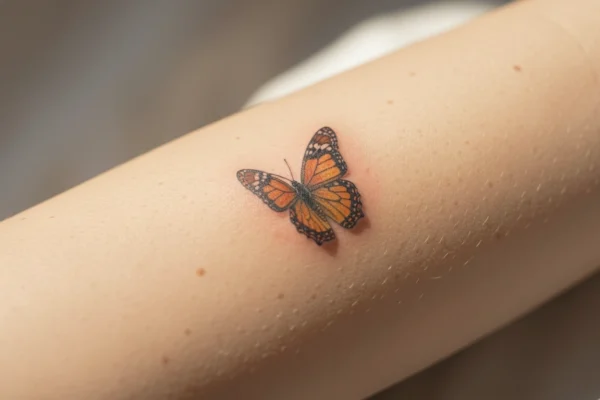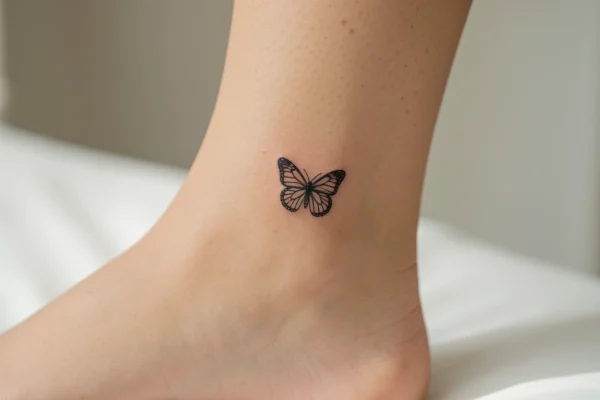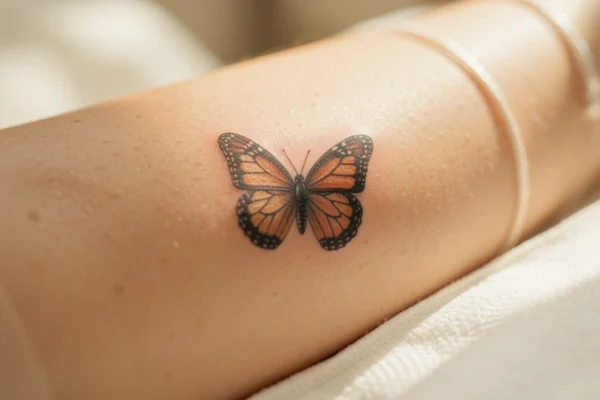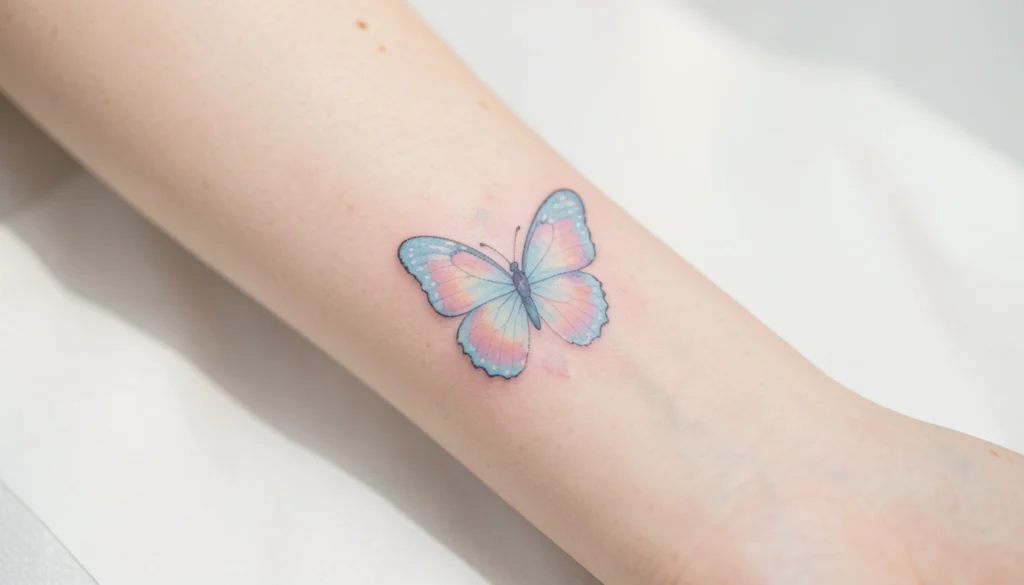
A watercolor small butterfly tattoo depends more on color wash and placement than on heavy linework, because soft pigments define the overall look and how the design reads as a small piece. Choosing the right balance of pigment concentration matters for clarity and for how the tattoo settles into the skin over time. This detail affects whether the wings appear misted or retain crisp edges.
Scale and placement are key decisions for this style, since a small watercolor butterfly needs room to breathe or it may blur into a single color patch. Compare a tiny wrist tattoo with a small placement on the rib or ankle where the artist can use slightly larger strokes and softer edges for a painterly result. Consider how movement and curvature of the body will spread or compress the color.
The ideas below show different placements, color mixes, and simple composition choices to help you decide the direction to take. Use these examples to note what you like about color intensity, wing shape, and how much line is used so you can ask an artist focused, specific questions.
20 watercolor small butterfly tattoo ideas to compare
Side leg watercolor butterfly
The leg side placement in this example shows how a larger canvas can hold a loose watercolor wash while still reading as a single butterfly. If you want soft bleeding edges and multiple blended hues consider the outer thigh or side calf where the skin is relatively flat and allows broader application. Ask the artist how they plan to contain the pigment and whether they will add light outline work to preserve shape.
Three small leg butterflies
Three tiny butterflies arranged in sequence use repetition to create movement along the leg. For this composition the spacing is important because watercolor fades into softer edges; keep a little gap between each motif to avoid the colors merging. If you want varied hues like blue and pink tell the artist whether you prefer distinct color fields per butterfly or a gradient that links them.
Shoulder watercolor butterfly
The back of the shoulder offers a classic spot for a small watercolor butterfly with a natural curve to echo the wing shape. Slight body movement can make the color appear dynamic; however the artist must plan pigment placement so the wings keep their proportions when the shoulder moves. If you want more contrast ask about a soft outline in gray or very thin black so the butterfly reads at a short distance.
Inner arm blue butterfly
A small blue and white butterfly on the inner arm explains how subtle negative space can create wing highlights without heavy ink. Inner arm skin can be more delicate so an artist may use gentler needle pressure and fewer passes to keep the watercolor look. Discuss whether you want white ink accents because those can fade more quickly and behave differently across skin tones.
Arm with floral watercolor
This example pairs blue and purple flowers with a butterfly motif to create a small scene rather than a single isolated image. When adding floral elements communicate how much detail you want: very small florals can clutter a small butterfly while looser floral washes will echo the watercolor style. Ask your artist to show how the palette will read from arm distance so the composition does not appear muddled.
Butterfly beside art supplies
A butterfly placed near artistic props suggests a tailored tattoo for someone who likes creative symbolism. The surrounding elements can be rendered loosely to keep the butterfly as the focal point. If you plan small adjacent details like brushes or a book, confirm the smallest readable size with your artist so lines do not blur during healing.
Flight of three butterflies
Multiple butterflies placed across opposite arms or spaced along one limb emphasize motion. For a watercolor approach the artist may vary saturation between individual butterflies to create depth. Decide whether you want each butterfly identical or slightly different in size and color to give a natural, hand painted feeling.
Stomach side tiny butterfly
A small butterfly on the side of the stomach can look intimate and delicate, but be aware the area moves with breathing and body shifts. A watercolor wash can soften well here, yet the artist should plan lines and pigment placement to withstand stretching during healing. Consider a slightly bolder edge or a light outline if you want greater long term definition.
Right leg watercolor splash
The right leg example demonstrates how broad watercolor splashes can form a butterfly when placed intentionally. If you enjoy a freer, painterly look ask the artist to show sketch variations that use splatter or soft gradients rather than rigid wing lines. Placement over fleshier parts of the leg will allow more color depth than very bony areas.
Arm with moon and stars
Incorporating celestial details on a butterfly wing is a creative customization that reads well when kept small and simplified. Stars and moon shapes require precise tiny linework, so confirm the artist is comfortable with small dots and micro shapes at the size you want. If the celestial features are to be white or pale, discuss pigment retention for those tones on your skin.
Yellow butterfly with flowers
A yellow butterfly with black spots alongside flowers uses contrast to help the motif stand out despite a watercolor style. High contrast elements like black spots help maintain recognizability as the colors settle. If you like this approach ask whether the spots will be solid pigment or blended to match the softer washes.
Right leg blue butterfly
A small blue butterfly with wings spread is a recognizable silhouette that works well on a leg where it can be scaled up slightly. For small sizes ensure the wing veins are minimal or artistically suggested rather than fully detailed which can compact into a dark area. Request a stencil preview to check wing proportions before inking.
Blue watercolor with yellow spots
This watercolor study with blue tones and yellow accents shows how complementary colors can give vibrancy without heavy lines. Yellow highlights can brighten wings, but pale pigments may fade faster so discuss aftercare and potential touch ups. If you want the yellow to remain vivid consider slightly higher saturation or planned refresh sessions with your artist.
Belly and back watercolor placement
Placing a butterfly to span belly and back areas is uncommon but creates a larger, artistic canvas that can carry more painterly detail. For a small butterfly keep the scale modest so the motif remains delicate; for a more expansive watercolor look consider increasing size so brushlike strokes do not lose definition. Discuss visibility and how clothing will interact with the placement.
Painted butterflies with splatters
Paper study images with paint splatters are useful references to show the artist the kind of texture you like. Translating splatter effects to skin requires controlled needle technique and careful color layering so the result looks intentional. Bring reference swatches and agree on scale because splatters that read well on paper may need to be adjusted on the body.
Wrist pink butterfly
A pink butterfly on the wrist is a classic placement for a small watercolor piece and is visible in everyday interactions. Wrist skin shows wear so pigment may fade faster than thicker skin on the arm, which means you should plan for potential color refreshers. Also consider how a bracelet or watch might rub the area during healing.
Small pink arm butterfly
Simple single color butterflies in pink keep the design clean while preserving the watercolor feel. For small single color pieces the key is pigment saturation and the artist s technique in applying soft edges. Ask to see healed examples from the artist of similar scale to judge how the pink settles across skin tones.
Blue arm butterfly
A straightforward blue butterfly on the arm shows that even limited palette designs can feel expressive when the wash is layered. Placement on the outer forearm or upper arm gives the artist space to make the watercolor readable from a distance. If you want subtle wing lines request a thin gray outline rather than solid black for a softer outcome.
Pair of blue butterflies
Two blue butterflies together can represent companionship or movement and benefit from slight variation in size to suggest depth. When planning matching pieces across limbs coordinate placement and scale so the two read well together in photos and in person. Confirm whether you prefer mirrored orientation or a staggered composition for more natural flow.
Side belly small blue butterfly
A small blue butterfly near the side belly is a gentle and private placement that keeps the design intimate. Because the area can stretch with body changes the artist may avoid very fine details and instead rely on color gradients to hold the shape. Talk through your lifestyle and how often you might want touch ups for areas that receive more friction.
Practical guidance for choosing size, placement and color
When deciding on a watercolor small butterfly tattoo start by testing the size with a printed stencil or temporary transfer so you can see how the color fields and wing shape read on your skin at the exact spot. Small watercolor motifs need slightly more space than a solid line piece because the colors are meant to blend and breathe. If you pick a very tight placement such as the wrist or ankle, be prepared for the artist to simplify details and use stronger contrast or a light outline so the butterfly remains legible after healing.
Color choice affects both visual impact and maintenance. Pale pastels look airy but will likely require touch ups sooner than saturated pigments, so talk with your artist about pigment selection and realistic expectations for retention on your skin tone. Also consider how the tattoo will interact with clothing, jewelry, and movement. A placement that is frequently rubbed or stretched will need more frequent color refreshers, while a protected spot will retain the watercolor effect longer. Before booking, ask to see healed photos of similar work from the artist to confirm their watercolor technique at the small scale you want.
Frequently Asked Questions
A watercolor small butterfly tattoo should be sized so the color washes have room to blend while the motif remains recognizable at a glance. For many people this means a minimum of about two to three centimeters across for clear wing suggestion, though placement and skin texture matter. If you want tiny details like wing veins ask the artist if they can reliably render those at your chosen size and show healed examples of similar work before proceeding.
Areas with moderate movement and thicker skin often preserve watercolor effects better than very mobile or thin regions. Upper arm, outer thigh, and the back of the shoulder provide a stable surface and less friction during daily life, which helps pigments settle more evenly. Inner wrist, side belly, or ankle are possible but require the artist to use crisper transitions or small outlines since those spots see more stretching and rubbing during healing and might need a touch up sooner.
Watercolor small butterfly tattoos can retain color but they generally fade faster than dense, highly saturated styles because their appeal comes from soft washes and lighter saturation. Longevity depends on pigment choice, how deeply the ink is placed, your skin type, sun exposure, and how often the area is abraded by clothing. Expect to discuss realistic long term expectations with your artist and consider planned refresh sessions or slightly stronger saturation if you want the colors to stay vivid for years.
Artists use a combination of diluted pigments, layered color application, and minimal or softened outlines to mimic watercolor for small butterflies. Techniques include feathered shading, light washes of color, and stippling to create texture without heavy lines. For very small pieces practitioners may rely on pigment blending and careful needle speed to avoid overworking the skin, plus occasional use of thin gray lines to protect the shape while preserving an overall painted look.
Pastel watercolor butterflies can look lovely on a range of skin tones, but contrast considerations change how the colors read. On deeper skin tones slightly more saturated pastel mixtures or added warm highlights can help the design pop, while lighter skin offers natural contrast for pale pigments. Placement is also important: choose an area with even texture and protection from frequent sun exposure to keep pastels from washing out quickly.
Combining a small butterfly with florals or subtle symbols works best when the surrounding elements are kept loose and stylistically consistent. Avoid packing too many tiny details right next to the butterfly because the watercolor approach relies on negative space and soft edges; instead use floral washes or single accent elements that echo the butterfly color palette. Talk with the artist about scale hierarchy so the butterfly remains the focal point and additional motifs support rather than compete with it.
Ask to see healed examples of small watercolor work, specifically butterfly pieces if possible, and inquire how they plan to translate paint like washes to skin at your chosen size. Request details about pigment brands, aftercare recommendations, and whether they advise a small outline for longevity. Also ask how many passes the design will need, what touch up policy they follow, and whether they can provide a stencil or temporary transfer so you can preview placement before the appointment.
Choosing a watercolor small butterfly tattoo comes down to balancing color intensity with placement and the level of outline you want. Narrow your choices by saving three favorites that differ in color palette, amount of linework, and placement so you can compare how each option fits your daily life. Bring those favorites to a consultation and ask for healed examples and a stencil preview to make a final decision that matches your expectations.