A compact wing shape and clean linework make a minimalist small butterfly tattoo read clearly even at tiny sizes, which matters because detail can blur over time. Choosing a simplified silhouette or a single line rendering affects how long the motif remains legible and how it will feel against your skin texture.
Scale and placement change the visual impact more than color does for small butterfly tattoos, so think about whether you want something discreet or a tiny focal point. A simple outline needs less surface area than a filled black or color version, so consider where you want it to sit and how clothes or movement will interact with it.
The ideas below show single butterflies, pairs, and tiny compositions in common placements and styling options to help you compare scale, line thickness, and placement. Use them to narrow down a few favorites and prepare questions to bring to an artist.
17 minimalist small butterfly tattoo ideas and placements
Shoulder blade single butterfly
This placement on the upper back shoulder emphasizes a small butterfly as a private accent that can peek out from clothing. For a minimalist small butterfly tattoo here, suggest delicate single needle work or a thin outline so the shape stays clear with shoulder movement. Ask your artist about size so it sits comfortably within the curve of the shoulder blade rather than crowding the collar or spine.
Thigh butterfly with stars
A tiny butterfly on the back of the thigh works well as a slightly more private piece with room for small surrounding elements like dots or tiny stars. If you like a minimalist small butterfly tattoo here, decide whether to keep the stars faint and sparse or to skip them for a purer silhouette. The thigh offers a flatter canvas, which helps very fine linework heal more evenly than some curved areas.
Side neck small butterfly
The neck is a bold but compact spot for a minimalist small butterfly tattoo because it is visible with short hair or open collars. For a discreet look, pick a tiny outline or single line motif rather than dense shading, which can appear heavier at that scale. Also consider that neck skin is thin and moves a lot so ask your artist about needle choice and how small is too small for crisp wings.
Back shoulder black and white
A black and white small butterfly on the back of the left shoulder is a classic minimalist placement that reads clearly when kept simple. For longevity, discuss line thickness with your artist so near wing tips lines are not so fine they break up as the tattoo ages. Placement near the shoulder seam can be adjusted slightly to sit on shoulder blade skin for a smoother healing surface.
Ankle tiny butterfly
An ankle butterfly is a go to for a minimalist small butterfly tattoo that moves with footwear and socks and can feel playful or elegant. The ankle is a high friction area so simple outlines usually hold up better than dot work or intricate textures. Talk with your artist about placement on the inner ankle versus the outer ankle as both show differently with shoes and pants.
Wrist side accent
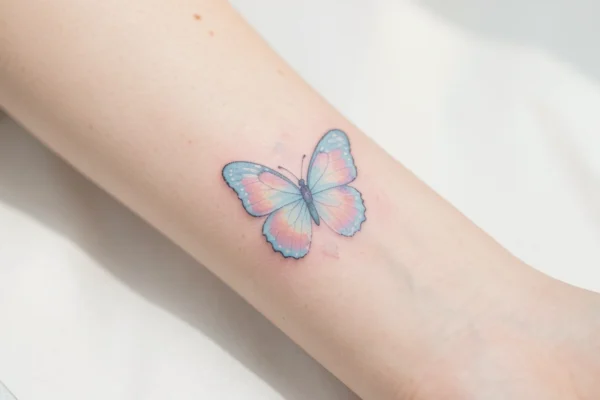
A tiny butterfly on the left side of the wrist reads like a personal bracelet and is easy to glance at when you want a subtle reminder. Because the wrist sees a lot of movement and sun exposure, minimalist single line work often keeps a delicate look without collapsing into indistinct marks. When preparing a small design for the wrist, mark the exact location with your artist to ensure the wings align with the arm lines.
Inner wrist black butterfly
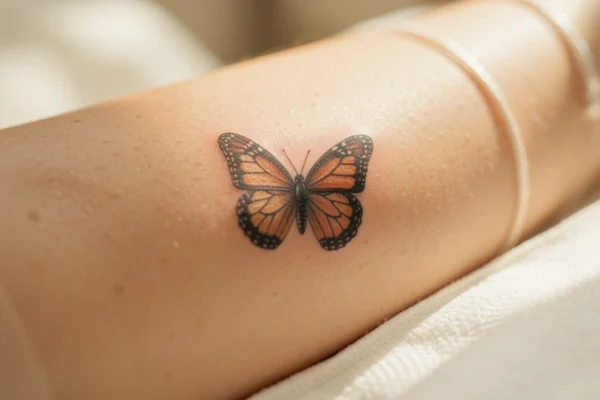
A small black butterfly on the inner wrist and back of the arm can be shown as a pair or a single motif to work with jewelry and watches. Solid black simplifies maintenance but can look denser at very small sizes so consider a slightly open wing area to keep the shape light. Decide in your consultation whether you want pure black or a hint of shading to define the thorax without filling the wings completely.
Blue trio along arm
Three small blue butterflies in a row show how a minimalist small butterfly tattoo can become a repeating motif while remaining subtle. If you are considering color, ask the artist about pigment choice for cooler tones and how color saturation affects fine line clarity over time. A spaced trio reads as a deliberate composition so plan the spacing so they flow with the arm rather than crowding a single spot.
Small ankle single
This tiny ankle placement emphasizes minimalism by keeping the butterfly compact and unadorned which is ideal for a first small tattoo. Because feet and ankles can fade faster, especially with exposure to shoes and socks, a slightly bolder outline at a small scale helps the motif remain visible. Confirm aftercare expectations for this area since moisture and friction can influence healing time and final crispness.
Calf small black and white
A small butterfly on the right calf gives more room and a flatter surface that supports slightly more detail in a minimalist small butterfly tattoo. If you want the look of a black and white photograph, consider asking for soft dot shading rather than continuous fill to keep the piece light. Placement near the outer calf will show when wearing shorts while keeping it private with longer pants.
Paired forearm accents
Small butterflies on the left forearm and right arm make a mirrored or complementary pair that reads as intentional placement rather than random dots. When planning matched minimalist small butterfly tattoos, measure distances from anatomical landmarks so both sides sit symmetrically. Keep linework consistent across both pieces so they age similarly and feel like a set.
Stomach placement tiny butterfly
A small butterfly on the stomach sits on a soft, flexible area where size choice affects how the motif moves with the body. Because the stomach stretches with posture and weight changes, simpler shapes with even line thickness tend to remain stable in appearance. Discuss with your artist whether to position it near the side waist or more central for visual balance under clothing.
Double flutter near elbow
Two small butterflies on the left side of the arm can curve around the elbow area to follow the arm motion and create implied movement. Avoid placing very fine lines directly over the elbow joint where bending can distort healing. Instead ask for a slightly more robust outline or sit the design just above or below the joint for longevity and comfort during healing.
Upper back small butterfly
A small tattoo on the middle of the back reads as a centered, discreet statement when kept minimal and simple. For a minimalist small butterfly tattoo on the back, consider a subtle placement slightly above the spine to align with body symmetry, or a shoulder area for an off center look. Discuss exact placement while standing to ensure the design sits where you expect when wearing different necklines.
Subtle arm side accent
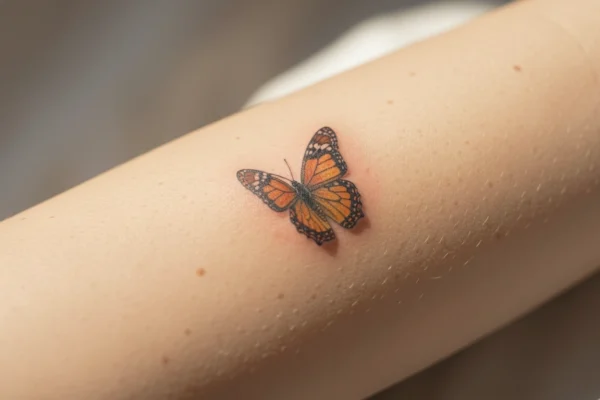
A small butterfly on the side of the arm is an underused placement that can be both visible and easy to cover. Minimalist small butterfly tattoos in this position do well with a single continuous line or a light outline to avoid looking heavy against the arm. When choosing size, test how the design looks from multiple angles since the side of the arm curves differently than the outer area.
Hand top tiny butterfly
A small butterfly on the hand is a conspicuous choice for someone comfortable with visible ink and frequent touch points. Hands are high wear areas which means very fine details can blur faster than on other body parts, so a minimalist small butterfly tattoo there should favor slightly bolder outlines. Discuss how often you use hand lotions and washing as these routines affect how fast hand tattoos fade.
Shoulder back minimal butterfly
A small butterfly at the back of the shoulder is similar to shoulder blade placement but sits closer to the upper arm and can read differently with sleeve lines. For a minimalist approach, keep negative space in the wing areas so the butterfly appears airy rather than solid. Bring reference photos to show the artist the precise wing angle and scale you prefer relative to the shoulder curve.
How to plan size, placement, and linework for small butterfly tattoos
When you want a minimalist small butterfly tattoo, the most important decisions are size and line thickness because they determine legibility and how the tattoo will age. Very fine single needle lines look elegant but they need enough space to stay crisp; artists often recommend a minimum wing span so the outline does not blur into a single shape after years of movement and sun exposure. Placement matters because skin texture and movement differ around the body. Areas with lower friction and fewer folds like the outer calf or upper back often hold fine detail better than the inner wrist or hand. If you prefer a high friction area for visibility, consider a slightly bolder outline or a tiny amount of open shading to preserve the silhouette.
Also think about surrounding composition and future plans. A minimalist single butterfly can stand alone or be a seed for later additions such as tiny stars, flowers, or a matching second butterfly. Before the appointment, mark a few size options on your skin with a washable marker and photograph them in the same light you plan to wear most clothing so you can judge visibility. Finally, bring clear references to the consultation and ask the artist about needle style, ink saturation at a small scale, and expected touch up needs so you can make an informed choice that matches your daily life.
Frequently Asked Questions
An ideal size for a minimalist small butterfly tattoo on the wrist is usually large enough to keep linework readable while remaining delicate. Many artists suggest a wing span of at least two centimeters to allow for fine lines and negative space. If you choose a smaller version under two centimeters, ask the artist about slightly thicker lines or simplified wings so the shape does not blur over time. Try marking a few size options on your skin and look at them in different positions so you can decide how much visibility you want versus how discreet you prefer the piece to be.
Placements that tend to preserve a minimalist small butterfly tattoo include areas with less friction and fewer changes in skin tension such as the outer calf, upper back, and shoulder blade. These locations offer flatter surfaces which help very fine linework heal more evenly and keep the silhouette clear. High friction areas like the hands, feet, and inner ankle can fade more quickly and may require touch ups sooner. When you pick placement, ask the artist about your daily activities and sun exposure to weigh visibility against long term maintenance.
Minimalist small butterfly tattoos work best with simplified features such as clean outlines, a single line body, or a tiny hint of veining because too much detail will not hold at small scale. If you want a hint of texture, discuss simple dot shading or short internal lines that are spaced enough to avoid merging. Complexity like small ornamental flourishes or tiny lettering can become muddled, especially on areas that move a lot. The safe path is to prioritize the overall wing shape and silhouette and treat additional elements as optional future expansions when you have a larger canvas.
Yes, you can combine a minimalist small butterfly tattoo with other tiny motifs such as stars, dots, or a small flower while keeping the overall look delicate. Plan spacing carefully so each element has breathing room and does not clutter the composition. For example, a single tiny star placed a few centimeters away reads as intentional rather than an accidental extra mark. Discuss how the motifs will flow with body contours so the grouping looks natural whether you are standing or moving.
Choose an artist with demonstrated experience in fine line and minimalist work because small butterfly tattoos demand consistent line depth and precise needle control. Look at recent photos of healed small pieces in the artist portfolio rather than only fresh work because healing shows how lines held up. During a consultation ask about needle sizes they use for small outlines and whether they recommend a touch up after healing. A clear conversation about expected results and maintenance helps set realistic expectations for a tiny piece.
To adapt a reference photo into a minimalist small butterfly tattoo, simplify the reference by reducing internal detail and focusing on the overall wing outline and proportion. Bring the photo to your consultation and ask the artist to create a few stencil sizes so you can compare how much detail survives at each scale. The artist can sketch options that remove busy textures and keep only the most essential lines to preserve recognizability. Discuss which aspects of the reference you most want to keep so the tattoo still feels personal while being practical for the chosen size.
Aftercare for a minimalist small butterfly tattoo follows the same basic steps as other tattoos but with attention to delicate linework during healing. Expect mild scabbing and itchiness as the skin repairs; keep the area clean and moisturized with the product your artist recommends and avoid picking at flakes. Because small tattoos can be affected by friction from clothing or jewelry, protect the spot from continuous rubbing and from prolonged sun exposure until fully healed. If you notice excessive redness or prolonged irritation contact your artist for guidance and follow their instructions for any recommended touch up once the piece is healed.
Choosing among minimalist small butterfly tattoo options becomes easier when you compare size, line thickness, and placement across a few favorites. Save three to five reference images that show the wing shape, the spacing you like, and the placement on the body, and note one or two specific features you want to keep. Bring those to your artist and ask for stencils at different scales so you can see how each will sit on your skin. The practical takeaway is to prioritize a clear silhouette at the chosen size and pick a placement that supports both visibility and long term clarity.