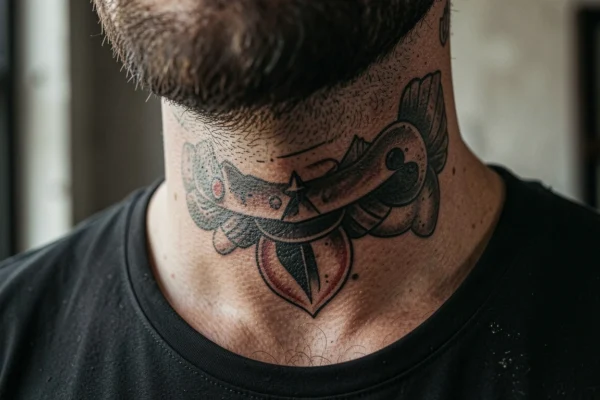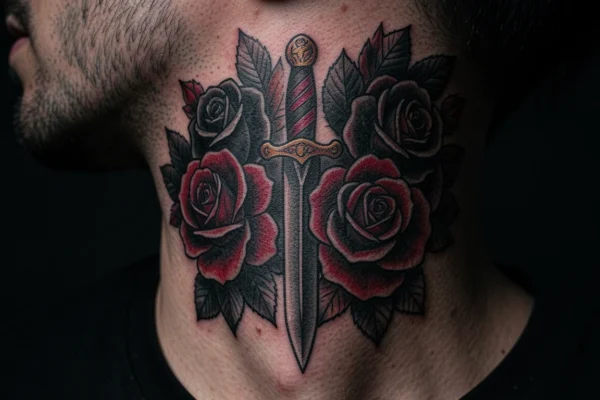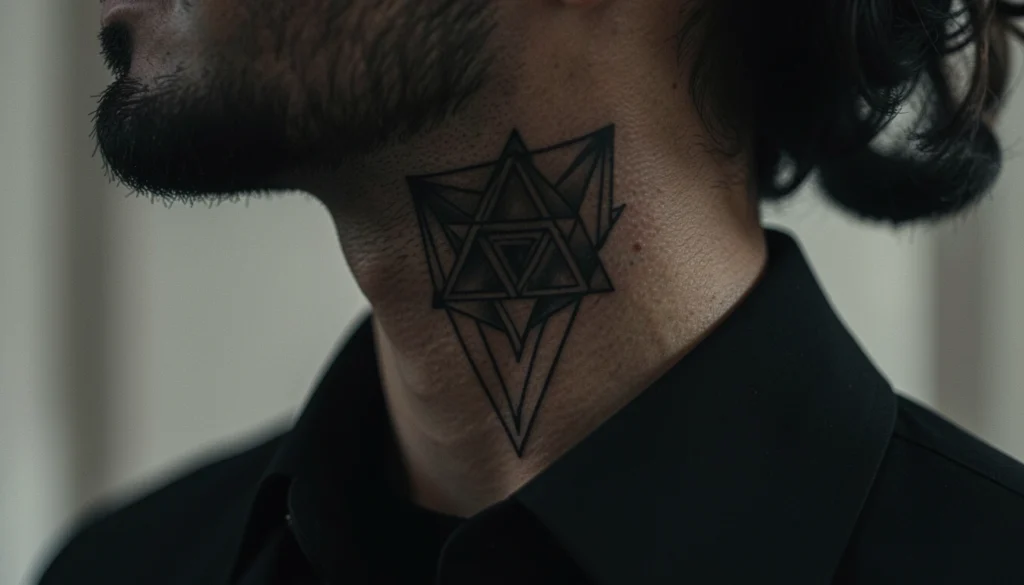
A tight geometric collar that wraps across the throat and under the jaw creates an architectural silhouette and that is a common choice for a geometric neck tattoo men consider because it emphasizes symmetry and crisp lines. Choosing this approach matters because the neck moves and stretches, which affects how small details hold up. Stencil placement and line weight determine whether the pattern will read clearly at normal viewing distance.
Compare a full nape and throat piece with a smaller nape motif when deciding scale and complexity. Larger designs allow delicate interlocking shapes and dotwork to breathe while smaller designs need bolder lines so the geometry stays readable. Also think about how facial hair, collars, and chest tattoos will interact with the composition.
The 17 pins below each highlight a different way geometry can wrap the neck, from full coverage patterns to negative space motifs and script integration. Use these notes to compare composition, placement options, and the questions to bring to an artist when you refine a design.
17 geometric neck tattoo men ideas to consider
Full collar geometric pattern
The image shows an intricate pattern covering most of the neck which suggests a full collar style that reads as a continuous surface rather than separate motifs. For this route plan a stencil that follows natural muscle lines so the geometry does not warp when you move. Ask the artist about line weight and whether they will use single pass lines, fine dotwork, or layered shading to keep the pattern legible over time.
Top and bottom neck bands
The design divides the neck into an upper and a lower band which frames the throat and creates negative space in the middle. This approach is useful if you want bold geometry without fully covering the front of the neck, and it works well with crew necks and shirts. When you meet your artist, discuss how the two bands will align with the jawline and where gaps should be to flatter facial structure.
Nape mandala inspired geometry
A nape centered, mandala like layout places the most detail at the back of the head and lets the pattern radiate outward, so symmetry is crucial. This placement is lower pain than the throat for many clients and reads well under short hair or a fade. If you plan to wear longer hair, confirm how visible you want the piece to be while it heals and afterward.
Chest and neck flow geometry
This pin pairs neck geometry with chest elements so the tattoo reads as a single composition across the collarbones. When extending geometry onto the chest consider scale changes so the shapes on the neck remain distinct from those on the torso. A consultation should include photos of your chest area so the artist can design connecting curves that follow bone landmarks.
Back of neck bold lines
The emphasis here is on clear black and white contrast at the back of the neck which helps simple geometric shapes stay visible at a distance. This kind of high contrast is forgiving for daily wear and ages predictably if the lines are sufficiently thick. Confirm with the artist how closely packed the lines will be and whether any areas will be left intentionally blank for breathing room.
Flower of life nape motif
A flower of life or similar sacred geometry pattern at the nape relies on perfect repetition and proportion, so precise stencil alignment matters. Because the pattern repeats, small inaccuracies become visible, so choose an artist experienced with radial geometry. Decide whether you want the pattern centered on the spine or offset slightly toward one side to complement other tattoos or body asymmetry.
Chest and neck continuity
This example shows neck geometry that continues into chest work, creating a visual flow where shapes transition from vertical on the neck to horizontal across the chest. To avoid overcrowding, have the artist vary line density between the two areas. Bring a photo of your planned shirt styles so they can suggest the best uppermost edge for the neck design.
Beard friendly neck geometry
The pin pairs a geometric neck piece with facial hair which affects how much of the tattoo will be visible. When you have a beard, the lower edge of the neck design should be placed with expected beard length in mind so the pattern reads intentionally rather than appearing cut off. Discuss how grooming habits might alter visibility and whether the design should extend beneath a typical beard line.
Black and white line study
The drawing style in this pin highlights a detailed line study where geometry is rendered with thin, deliberate lines and careful spacing. Drawings like this are useful in the consultation because they show the intended line paths without skin texture. Ask the artist to convert the drawing into a stencil and to mark where any lines may need bolder rendering to survive skin migration.
Script and geometry mix
This design layers letterforms over geometric fields which creates contrast between organic script and structured geometry. When combining letters with geometric elements, define which has visual priority and adjust spacing so the script remains legible. Bring exact spellings and font references so the artist can test how the text interacts with surrounding geometry.
Nape geometric blockwork
Blocky black and white geometry at the nape uses simple shapes to create a strong silhouette against hair and clothing. This approach is low fuss because it relies on positive and negative space rather than micro detail. Talk to the artist about edge crispness and whether small filler shapes will be added to soften transitions between large blocks.
Floral geometry at lower neck
This piece places a floral element that reads as geometry where petals are built from repeated lines and circles, bridging ornamental work and geometry. It is a good option if you want an organic subject expressed through geometric repetition. Decide whether petals will be shaded or left as line work and confirm how the tattoo will sit against the upper chest.
Abstract geometric reference photo
A stylized black and white abstract image like this can be adapted into a neck stencil by mapping key lines onto neck contours. Keep in mind that a reference on a flat surface may need proportion adjustments to wrap smoothly around the neck. Ask an artist to produce a mock stencil on tracing paper so you can check how the main lines follow your anatomy.
Upper and lower linear accents
This design shows parallel lines on both the upper and lower neck which frame the throat area and emphasize horizontal symmetry. Such linear accents are versatile and can be scaled up into denser patterns or simplified as single bands. Confirm how far the lines should wrap toward the sides of the neck and whether they will curve with the trapezius muscles.
Dense chest and neck composition
Here the neck is visually integrated with an already dense chest tattoo which creates a cohesive heavy composition across the upper torso. For a smooth transition, the artist should vary motif scale so neck geometry does not compete with chest detail. If you already have chest work, bring healed photos and let the artist plan connector shapes to match ink tone and density.
Back of neck centroid pattern
A centered motif on the back of the neck uses a clear focal point and simplifies alignment, making it easier to keep the geometry symmetrical. This is an efficient option for a single session because the area is compact and contained. Discuss how large you want the focal circle relative to the base of the skull to ensure the piece suits your hairstyle.
Minimal neck geometry accent
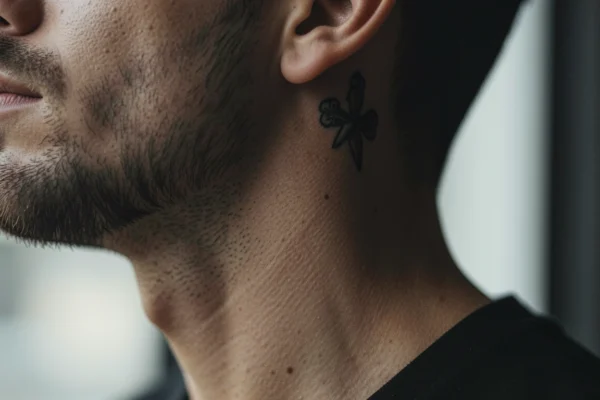
A small, minimal geometric mark on the side or lower neck provides the geometric aesthetic without committing to full coverage and suits someone testing the look. Minimal pieces rely on crisp, even lines so choose an artist experienced in precision work. Plan placement so that shirts and collars do not obscure the motif unless you prefer it subtle.
Practical guidance for planning neck geometry
Start by deciding how much of the neck you want covered because the area you select changes scale, line weight, and healing considerations. A nape motif can be highly detailed because the surface is flatter and less exposed to sunlight and shaving, while the front of the neck will need bolder lines and slightly more space between elements. During consultation present multiple reference images that show the design at similar scale and with comparable body placement so the artist can map the stencil to your anatomy and propose any necessary simplifications.
Talk openly about hair and clothing habits because they determine visibility and how the tattoo will integrate into daily life. If you have facial hair or plan to grow a beard, clarify where the design should stop to avoid appearing cut off. Ask about session planning; a full collar may be best split into two sessions to allow precise work and to reduce skin trauma. Finally, verify aftercare instructions specific to neck skin and choose a professional with portfolio examples of neck geometry rather than general geometric work on other body parts.
Frequently Asked Questions
Pain varies by placement, individual tolerance, and technique, but the neck is generally more sensitive than the upper arm because the skin is thinner and sits over tendons and small muscles. Front of the neck and immediately under the jaw tend to be more reactive than the nape. Plan for shorter sessions or breaks, and discuss numbing options and session pacing with your artist to manage comfort.
Size depends on desired detail and visibility; larger pieces allow fine interlocking shapes and dotwork, while small motifs require heavier lines so geometry stays legible. Consider how the design will look with facial hair and clothing; a very detailed small piece may blur over time if the lines are too close. Ask the artist to mock the design at several sizes on tracing paper so you can see how spacing translates to your neck.
Maintainable linework starts with appropriate line weight and spacing which your artist will recommend based on your skin type and the neck location. Avoid crowding tiny details where skin rubs against collars or where shaving occurs, because those actions accelerate fading. Regular sun protection and gentle care during healing help preserve crisp edges, and occasional touch ups every few years can revive lost contrast if needed.
Yes, geometry on the neck can be connected to chest work to create a unified composition, but the artist must vary scale and density to avoid visual competition. Neck elements should typically be a touch bolder so they remain distinct next to larger chest motifs. Bring healed photos of existing chest tattoos so the artist can design transition shapes that match line weight and tone for a cohesive overall look.
Shaving beforehand depends on placement and your grooming routine; artists often ask for the area to be clean shaven so they can stencil and work without obstruction. If you keep a beard, discuss exactly where the tattoo should stop relative to typical beard length to avoid the tattoo being consistently hidden or looking truncated. If you prefer not to shave, show the artist your usual facial hair so they can adapt placement and edge treatments accordingly.
Pick an artist with portfolio examples of neck geometry or highly precise line work on similar body areas because the neck magnifies misalignment and uneven lines. Look for photos of healed pieces to check how their lines age, and ask about their stencil process and whether they mark on the skin for symmetry checks. During consultation ask to see work done with comparable line weights and request a mock stencil to preview placement before inking begins.
Session length depends on size and complexity; a small nape motif might be finished in one hour, while a full collar with dense geometry can require two to four hours or multiple sessions. Artists often split extensive neck work into stages so they can maintain accuracy and manage skin trauma. Expect your artist to recommend a plan that balances detail retention with healing time, and schedule touch up review after the piece has fully healed.
When narrowing choices for a geometric neck tattoo men should focus on placement, scale, and how the design will interact with hair and clothing. Save a small selection of favorites that show different approaches to line weight, negative space, and transition into chest work, and note what exactly you like about each one. Take those references into your consultation and ask for a mock stencil so you can see how the geometry will sit on your neck before any ink is applied. A clear takeaway is to prioritize readable geometry and a stencil that follows your anatomy.