Choosing scale and line weight defines whether minimalist small cute tattoos read as delicate accents or as tiny bold marks, and that choice matters for visibility and healing time. The phrase minimalist small cute tattoos covers designs that rely on economy of line and compact composition so they stay clear at small sizes.
Compare single line drawings to small filled shapes when you consider placement, skin texture, and future fading. A thin outline will look more delicate on flat skin such as the inner wrist while a small filled shape can remain readable on areas that move or tan.
The gallery below presents eleven simple designs and practical notes to help you compare line, placement, and customization options before a consult with your artist. Each entry explains why the idea works and what to ask about during your appointment.
11 minimalist small cute tattoos to consider
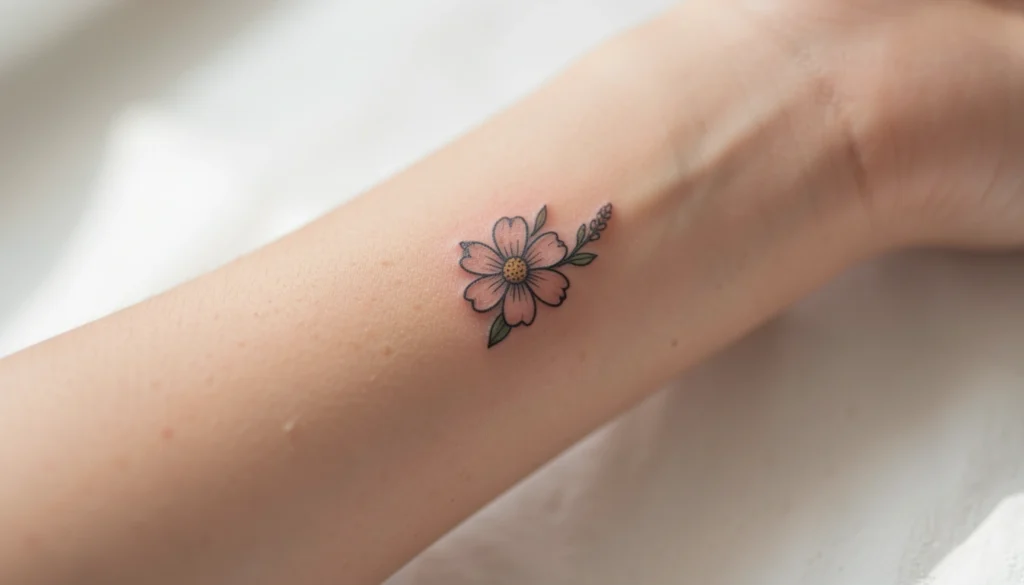
Wristside tiny flower
This small flower placed on the left side of the wrist reads as a subtle personal accent. For tight floral motifs, ask your artist about simplifying petals into cleaner lines so the tiny petals do not blur over time. Consider inner wrist placement if you want easier coverage, or outer wrist if you prefer it visible with bracelets.
Small butterfly wrist mark
The little butterfly near the left wrist suggests motion while staying compact. For this motif decide whether you want open line wings or a small solid fill because thin wing lines may fade sooner on moving skin. Bring reference photos to show desired wing shape and scale so the artist can set line thickness for lasting clarity.
Feminine black and white study
A black and white small tattoo emphasizes contrast and silhouette over color. On small pieces that rely on negative space, strong black lines maintain definition better than faint strokes. When you prefer a delicate look, ask about single needle work and whether a slightly larger size will improve long term readability without losing the minimalist feel.
Wrist ink with chain accent
A small wrist tattoo combined visually with a bracelet creates a layered accessory effect. Think about how jewelry will sit over the ink during healing and choose a placement that avoids constant rubbing. If the design will sit under a chain, discuss shallow placement with your artist to reduce irritation and potential scabbing from contact.
Small ghost outline on leg
A tiny black outlined ghost on the outer calf is playful and reads clearly with bold contour. Outlined shapes on legs tolerate slightly thinner lines than hands because the skin is less active. If you want added personality, ask about minimal facial details or a small filled eye that will remain visible without adding clutter.
Sketchbook floral cluster
Several small flower sketches on paper show how a cluster can be spaced for skin application. When translating a sheet of sketches into tiny tattoos, decide whether to place them as a grouped cluster or as separate single blooms. Grouped compositions need careful spacing so lines do not merge as the skin ages.
Leg bandage and blooms
The bandage and flowers motif adds a playful narrative while staying small on the leg. Small illustrative themes like this benefit from clear, simplified shapes so the bandage remains readable next to petals. Consider whether you want the bandage to look graphic or slightly shaded and ask the artist how shading at small scale will age.
Subtle stomach butterfly
A compact butterfly on the stomach sits on a less exposed surface which can protect the tattoo from sun and friction. Tummy skin can stretch with weight change so confirm how much margin around the motif will be needed. Small symmetrical designs need careful centering so they read balanced when you are standing.
Monochrome motif set on gray field
A set of different minimal motifs shown in black and white helps you compare line thickness across styles. Use such a sheet to pick the best line weight for your chosen skin area. Ask the artist to draw scaled test lines on your skin so you see how small details will hold up against your natural texture and movement.
Tiny foot cat emblem
A small cat on the foot reads as a discreet charm that suits close shoe wear and summer exposure. Feet experience a lot of wear and may need touch ups sooner than other areas, so discuss aftercare and expected fading. If you want a life like cat silhouette, ask whether a slightly larger size will save you from early blur.
Miniature finger paw
A tiny paw on the side of a finger is intimate and highly visible in close conversation. Fingers age differently than other body parts and thin lines can spread faster, so choose slightly heavier lines or a small solid shape for lasting clarity. Confirm with your artist how finger placement will impact touch up frequency and what aftercare differs from other areas.
How to plan size placement and line choices for small tattoos
When you choose minimalist small cute tattoos, the main factors to weigh are the line thickness the amount of fill, and the skin area you prefer. Thin needle work reads as delicate at first but may lose crispness faster on active areas like fingers wrists and the sides of the stomach. Small filled shapes and slightly bolder lines improve longevity and reduce the chance that tiny petals or dots will blur into an indistinct mark.
Placement decisions affect both visibility and care. Areas that see constant friction such as the hands and feet will need more frequent touch ups and careful initial aftercare, while protected zones like the inner arm or upper thigh preserve detail longer. Bring several reference images to your appointment and ask the artist to draw the proposed scale directly on your skin so you can see how the motif interacts with natural lines and movement. That step helps you decide whether to scale up a bit for better durability or to keep it as a delicate accent.
Frequently Asked Questions
Very small minimalist tattoos can look lovely but the smallest sizes carry a higher risk of losing definition. Factors that affect longevity include line thickness, placement, and your skin texture. To keep a tiny motif readable choose slightly bolder lines for active areas, or pick a protected spot like the inner arm if you want very fine detail. Ask the artist to mark the proposed size on your skin and to recommend needle configuration so lines will age predictably. Planning a small increase in scale often preserves clarity without changing the intended subtle look.
The best placements balance visibility with how much movement and friction the skin sees. Inner wrist, inner forearm, and upper thigh hold fine lines well because they do not stretch or rub as much. Fingers, hands, and feet are charming for tiny pieces but tend to fade faster, so expect touch ups if you choose those areas. Consider whether you want the tattoo to be a daily visible accent or a private token and ask the artist to draw the design at scale on your skin to judge wear, coverage, and how jewelry or clothing will interact during healing.
Line weight matters because very fine single needle lines can blur over time on active sites. For tiny cute motifs, discuss using a slightly heavier line or minimal solid fills to maintain contrast. Solid dots and small filled shapes often outlast ultra thin outlines. If you prefer a delicate look, an artist can suggest outlining the main shape with a modest line and keeping interior detail to a minimum so the image reads clearly as it ages.
Bring clear close up photos that show the motif at actual size or include a coin for scale. Include images that show line weight and the degree of simplification you like so the artist understands how much detail to keep. If your reference shows multiple styles choose one or two favorite elements to avoid confusion. During the consult ask the artist to redraw the image to your preferred scale on your skin so you can see how the size and placement will look in real life.
Aftercare for small tattoos follows the same principles as for larger pieces but the margins for error are smaller. Keep the area clean and avoid rubbing from clothing or jewelry while it heals, because small details can be disrupted by excessive scabbing. Use the product recommendations your artist provides and avoid prolonged sun exposure in the first weeks. Because tiny tattoos are more sensitive to early irritation, watch for unusual scabbing and contact your artist if large areas of ink lift so you can address potential patching or touch ups promptly.
Pick an artist whose portfolio shows a lot of clean small work rather than just large pieces. Look for consistent line quality and examples of tiny motifs that have been done recently because technique evolves. During a consult ask about needle choice, recommended line thickness, and expected touch up needs. A good artist will provide honest advice if your idea is too detailed at the intended scale and will offer alternatives that preserve the concept while improving long term results.
Yes small motifs can be planned as future elements of a larger composition but you should discuss spacing and orientation before you get inked. Leave enough room between pieces so they do not merge as skin changes, and think about visual flow for a future connection. Work with an artist who can sketch potential link lines or filler that will integrate the pieces harmoniously later, and keep images of each small tattoo so your artist can match line weight and style when expanding the design.
Minimalist small cute tattoos reward careful decisions about size, line, and placement more than elaborate pieces do. Narrow your choices by deciding whether longevity or maximum delicacy matters most, then save three to five favorites that illustrate the line weight and placement you prefer. When you meet your artist, show those saved examples and ask for an on skin mock up so you can see scale before committing. That step helps you leave with a tiny tattoo that looks intentional and continues to read well over time.