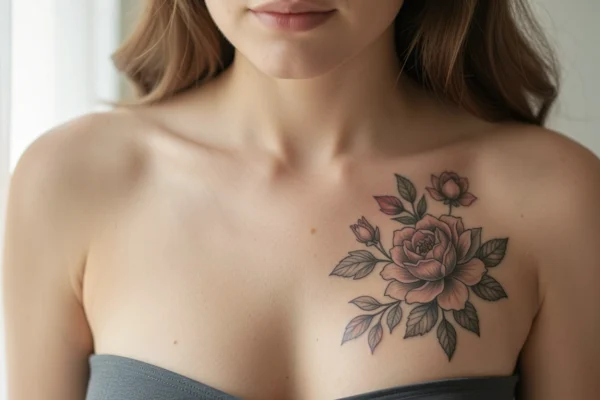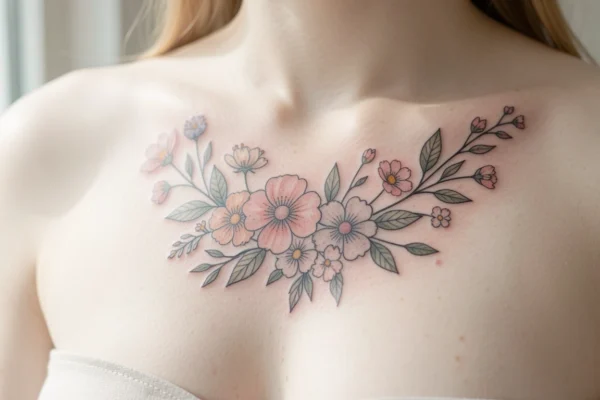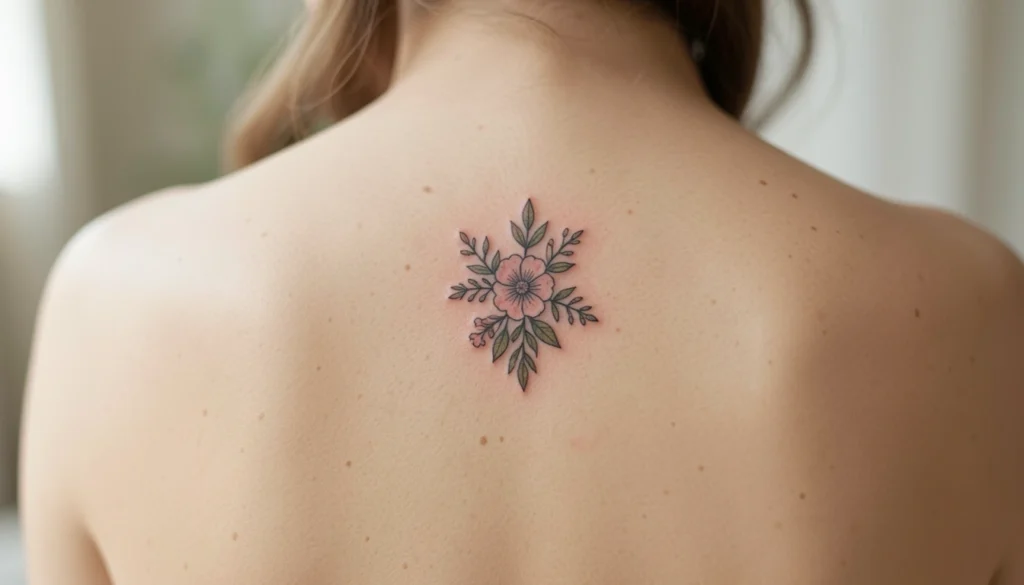
A small cluster of blossoms placed near the upper spine or shoulder blade can make floral small back tattoos read as a delicate focal point rather than a full back piece. Choosing how the flowers sit against the curve of your spine or the slope of the shoulder makes a big visual difference and affects how much detail will remain readable over time.
Scale and line weight are practical decisions for these designs because the back offers room to expand yet many small pieces rely on fine lines to stay light and subtle. Fine line florals need slightly more space between elements, while compact silhouettes can use heavier outlines to keep shape through healing and aging.
The gallery below groups ideas that range from single stem work to small scattered sprays so you can compare composition, placement, and how a piece might be customized before you meet an artist.
25 small floral back tattoo ideas to compare
Single stem near spine
The photo suggests a single stem placed along the upper center back that reads like an anchor. This kind of placement follows the spine or sits just off center to flatter posture and clothing lines. Discuss line thickness with your artist so petals stay distinct without turning into a blur if you later add shading or extend the piece.
Botanical sketch with vines
This black and white sketch shows a flower with trailing vines that land naturally on the lower half of the bloom. Sketch style suits small back tattoos when you want organic movement without a heavy block of ink. Ask whether the vines should remain thin to keep the delicate look or slightly bolder to prevent break up during healing.
Shoulder blossom cluster
The design sits at the shoulder blade suggesting a compact cluster instead of a long arrangement. Placement on the shoulder blade works well for showing the tattoo in summer clothing and keeping it private under shirts. If you prefer more longevity in detail choose slightly thicker outlines and limit tiny dots that can spread with time.
Back panel with scattered flowers
This image implies multiple motifs arranged across the upper back rather than one central piece. A scattered layout allows you to add elements later and keeps each motif small enough to stay delicate. When planning this approach, mark where clothing or bra straps sit so you avoid cutting key parts of the design in half when you wear different tops.
Centered single flower
A single centered flower can act like a small pendant on the back and is an easy reference to bring to a consult. This choice is low commitment in scale and easy to conceal or reveal. For a clean look request a reference showing how the bloom sits against skin curvature so the artist can contour petals to the body.
Delicate line drawing on paper
Paper sketches like this are useful for showing composition without color or shading. If you favor a drawn aesthetic bring a printed reference and ask the artist how to translate thin pen lines to tattoo needles while maintaining clarity. Consider asking for a slightly thicker edge on key outlines to avoid lines fading into blur over years.
Low back small bloom
A lower back placement is visible under cropped tops while staying hidden for more formal looks. Small blooms here should account for movement and washing to keep the design from stretching unevenly. Talk to your artist about how the skin in that area responds to needle work and whether some shading will help the flower retain contrast.
Subtle mid back accent
This example shows a modest motif placed on the upper back that complements existing tattoos nearby. A small accent works well as a filler between larger pieces or as a standalone. If you have other tattoos consider matching line weight or ink tone for cohesion across pieces.
Fine line floral sketch
Fine line drawings translate to quiet, minimalist florals that read like jewelry on skin. These need slightly more negative space so tiny elements do not bleed together. Ask your artist for a stencil placement test so you can see how the spacing will look at actual size before inking begins.
Under rib back flow
A floral that sits low on the back near the ribcage will move with breath and posture, creating subtle shifts in angle. For small designs in this location choose a compact silhouette so the main shapes remain readable. Discuss whether a little shading will help the petals separate from the skin tone, especially if you plan on a smaller scale.
Long stem plant drawing
A drawn plant with long stems suggests a vertical composition that follows the spine or ribs. Vertical pieces are good if you want the option to extend upward or downward later. Clarify with your artist where the stem will end so you know how clothing and movement will interact with the design.
Small shoulder spray with arrow
This design combines tiny flowers with an arrow element centered on the upper back area. When mixing motifs keep scale consistent so the arrow does not overpower delicate petals. If the arrow is symbolic to you, discuss how to simplify its detail to match the floral style while preserving its meaning.
Neckline floral accent
A small cluster at the nape of the neck reads as a subtle accent that is easy to hide with hair or show with an updo. Neck placement requires a confident artist because lines must be precise on a curved, small canvas. Before booking ask to see healed examples from the artist for similar placements so you can judge long term legibility.
Chest and shoulder connection
Here floral work crosses from the upper back onto the chest and shoulder, creating a connected feel that frames clothing necklines. A small connected layout needs coordinated spacing so neither side feels crowded. If you enjoy symmetry consider mirroring elements or leaving a central gap to highlight the collarbone.
Asymmetrical back spray
An asymmetrical spray placed to one side of the back keeps attention off center and can look more casual than a centered piece. This arrangement is ideal when you want a unique silhouette that pairs with shoulder movement. Plan the flow so stems taper naturally toward natural lines of the body for a harmonious effect.
Single shoulder flower
A single flower placed on the upper left shoulder area reads as a discreet accent that works with short sleeves. For a small single bloom, ensure the center detail is not so tiny it will blur over time. Request a mock stencil while standing to check how it sits when you move your arm and shoulder.
Back center bloom
A centered back bloom is a classic small back tattoo choice that can later become the seed of a larger piece. Centered designs benefit from symmetry and a clear focal point so petals and leaves do not look lopsided. Ask whether a little surrounding negative space will help the bloom read more clearly from a distance.
Blue floral ink study
Color studies showing blue flowers can guide decisions about pigment intensity and shading. Small color tattoos age differently than black ink and may require occasional touch ups to keep hues lively. Talk to your artist about pigment choices that will complement your skin tone and how much saturation will be needed at the chosen size.
Leaves and blooms across back
A balanced mix of leaves and blooms across the upper back creates a natural, wearable pattern that is still modest in overall coverage. Combining shapes gives visual interest while keeping each element small. If you hope to add more pieces later, plan where new stems could attach to existing leaves to preserve harmony.
Minimal single flower sketch
A minimal sketch is straightforward to scale larger or smaller and is often a lower investment session. Such pieces look intentional when placed slightly off center on the back. Before committing, ask the artist to show a scaled stencil so you can confirm the size feels right against your shoulder blades and clothing lines.
Background floral framing
The idea of framing the upper back with flowers behind the shoulders creates a soft border that complements tops with wide necklines. This approach uses repeated small motifs to create noticeable coverage while keeping each element petite. Discuss whether subtle shading will help the group form a cohesive frame without turning into a heavy area of ink.
Side rib floral placement
A flower on the left rib side reads as an intimate choice and sits low on the back near the torso. Placement here experiences more stretching with movement so outline clarity matters. If you want intricate petal detail choose a slightly larger scale or plan for thicker linework to preserve contrast as skin ages.
Artful mixed back tattoos
This photo shows several motifs across the back that together create an artful collage without covering the entire area. A mixed approach is great if you want variety and may add or remove pieces over time. Coordinate with your artist to maintain consistent spacing and similar shading style for a unified look.
Curved back florals along spine
Curved arrangements that follow the spine tip into a feminine, flowing composition that is visible with many clothing choices. Following natural curves helps the tattoo appear integrated with posture rather than stuck on. Before inking make sure the stencil aligns with your spine and that you can stand in a relaxed position for the artist to mark the placement accurately.
Left side shoulder floral
A single flower on the left shoulder blade seen here acts as a modest accent that leaves room for future additions on the right. This placement is easy to conceal and tends to age gently if lines are balanced. Discuss whether adding subtle leafwork would help the flower sit more naturally on the bone structure of the shoulder blade.
How to plan and customize a small floral back tattoo
When planning floral small back tattoos, prioritize how the design will sit with your anatomy. The back offers broad canvas but small pieces still need breathing room around fragile linework to remain legible. Start by marking intended placement on your skin and view the design from a few steps away; if petals blend into one another from that distance the artist may need to push scale slightly larger or strengthen key outlines. Consider how clothing and daily movement will reveal or conceal the tattoo and whether you may want to expand the motif later. If you plan a colored flower, ask about pigment choices and how they behave on your skin tone so you know the likely fading pattern and maintenance needs.
Also think about session length and pain tolerance since small, highly detailed work can take as long as simpler medium pieces. If you prefer minimal downtime split the work into two shorter sessions with a clear plan for how the first session will look healed. Bring several printed references that show different line weights and spacing, and ask the artist to produce a stencil placed on your body so you can check flow and symmetry. Finally, agree on realistic expectations for longevity and touch ups in the consultation so the finished piece remains the look you want for years to come.
Frequently Asked Questions
Size matters because fine details can blur as skin changes. For small back florals choose a size that gives each petal and leaf two to four millimeters of line to preserve shape, and discuss slightly thicker outlines with your artist to protect delicate areas. If you want very fine line work consider placing it where the skin is less prone to stretching and ask to see healed examples from the artist so you can judge long term clarity.
Upper center, shoulder blade, and nape placements suit tiny florals because they sit on relatively flat areas that do not stretch as much as the lower back. Placement near the spine creates a vertical anchor while shoulder blade placements can be shown or hidden easily with clothing. Prior to inking test a stencil in different postures so you can see how the design looks while standing, reaching, and bending to avoid unexpected distortion with movement.
Black and white offers higher contrast and usually ages more predictably, which helps small details remain legible. Color can add depth and personality but may require touch ups sooner to retain brightness on small areas. Talk to the artist about the pigments they recommend for your skin tone, how much saturation is realistic at the chosen scale, and whether subtle shading or selective color will enhance rather than overwhelm the tiny composition.
Bring a clear reference and ask the artist to simplify complex elements into a compact composition that translates well at small scale. The artist will often remove tiny texture details, enlarge primary shapes, and suggest stronger outlines to maintain recognition. Request a stencil test and consider minor placement shifts so the main features align with natural contours like the spine or shoulder blade for a flattering finished piece.
Ask to see healed work that matches the style and placement you want, and inquire how they handle fine lines at small sizes to ensure longevity. Discuss line weight, potential need for touch ups, and whether the design will allow for future additions without crowding. Also confirm session length so you can plan breaks and aftercare, and request how the shop manages stencil placement so you can approve the exact location before inking begins.
Yes, many small back florals are designed as starter pieces that can be extended into larger compositions later on. Discuss with your artist where additional stems or motifs could attach so the initial work will not block expansion paths. Choosing a style and palette that can scale up, and leaving space around the small piece, will make future additions easier and ensure a cohesive overall result.
Prepare by moisturizing the area in the weeks leading up to your appointment and avoiding sunburn or tanning which can affect stencil adhesion. Schedule a single focused session for small work or split into two if you prefer shorter sittings, and plan to wear clothing that gives the artist easy access to the chosen placement. Follow the artist’s aftercare instructions closely to support healing and minimize the need for early touch ups.
Choosing among floral small back tattoos is easiest when you narrow by placement, desired visibility, and whether you prefer color or line work. Save three to five favorite images that show the elements you like most and note whether you prefer heavier outlines, subtle shading, or a drawn look. Bring that short list to a consultation so your artist can combine those features into a single sketch that fits your back and your lifestyle. A clear plan about size, placement, and future expansion will leave you with a design that reads well now and remains workable later.