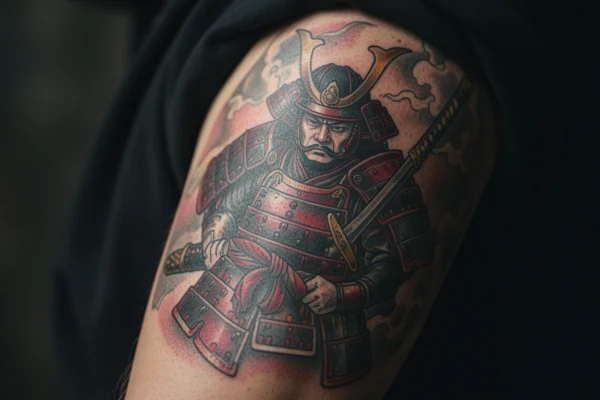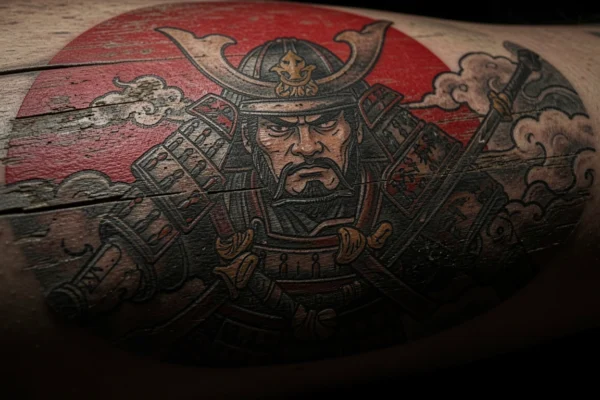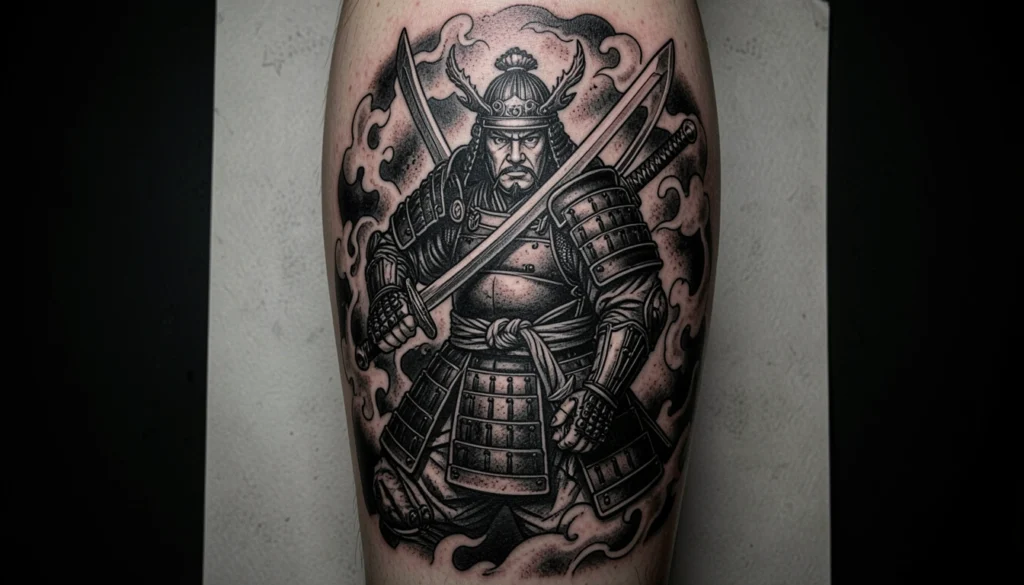
The smell of coffee and ink on my kitchen table when I sketched my first samurai still takes me back – I stayed up until dawn tracing armor plates and imagining how it would sit on skin. That little late-night obsession turned into a full-on crush with blackwork japanese warrior tattoo styles; there’s something about the stark blacks and ancient energy that feels honest and loud without shouting.
I wrote this because I get asked all the time where to find inspiration and how to make a warrior piece feel modern and personal. I’ve sat in three different shops while artists translated my messy references into clean blackwork lines, and that awkward process taught me what choices actually matter.
You’ll find a curated set of pins below and my honest notes on each – from placement ideas to little tweaks that make a blackwork japanese warrior tattoo sing.
These 12 Blackwork Samurai & Warrior Ideas Will Make You Want to Book a Session
Pirate Skull Samurai Vibe
That skull-in-a-hat design reads instantly bold and cinematic. It’s not a traditional samurai scene, but swap the hat for a kabuto helmet and you have a cool fusion piece that would translate well into blackwork japanese warrior tattoo style. I once sketched something similar and my friend actually asked for a matching half-sleeve – small world.
Dragon Breath Energy
Dragons and warriors are a classic pairing; this black-and-white dragon with fire would frame a samurai beautifully. Imagine the dragon wrapping around a shoulder blade while the warrior stands on the chest in stark blackwork contrast. If you like dramatic silhouettes, this could be the anchor for a larger blackwork japanese warrior tattoo concept.
Leg Piece Texture
This leg tattoo shows how blackwork density reads on curved surfaces. The way the lines breathe around the calf makes me think a samurai’s armor plates would look excellent here. Consider the movement of your muscles when you pick placement – I learned that the hard way with a forearm piece that warped slightly as I ran.
Minimalist Warrior Shot
Clean, photo-referenced compositions like this show how powerful restraint can be. A blackwork japanese warrior tattoo doesn’t need a field of motifs to tell a story; a single confident silhouette can be more evocative. Try to collect a few reference photos and let your artist pick the best elements instead of forcing everything at once.
Tattooed Woman Study
I love designs that show tattoos on lived skin – it helps you picture scale realistically. This drawing of a tattooed woman gives ideas for arm placement and how a warrior motif could curve with the bicep. When I showed similar pins to my artist, she suggested subtle negative-space highlights to make the armor pop.
Arm Portrait Reference
Seeing a design on an actual arm is underrated and honestly very practical. If you’re leaning toward a sleeve with samurai elements, this kind of pin helps you imagine transitions from shoulder to wrist. You could blend a bold blackwork japanese warrior tattoo with smaller traditional motifs for a layered look.
Armored Man Illustration
That man-in-armor drawing feels like a study in posture and weight. Artists love references that show how armor sits on a body because it informs shading and line direction. If you want authenticity, bring both historical refs and stylized pins so your tattooist can marry accuracy with your vibe.
Masks and Florals Mix
Two masked figures with flowers in the foreground make a moody, narrative scene that would layer beautifully around a warrior figure. I’m always drawn to floral contrasts because they soften the brutality of blackwork while keeping drama. Think about integrating local flora or a favorite bloom as a personal signature.
Dual-Sword Dragon Play
Here’s a bold idea – a dragon clutching swords mirrors a samurai gripping blades, which creates instant storytelling. Combining these elements can be a striking blackwork japanese warrior tattoo when composed so both figures complement each other. If you want movement, ask your artist to exaggerate the dragon’s spine and the swords’ angles.
Samurai With Twin Blades
This samurai illustration is so classic it almost whispers “tattoo.” The pose and dual swords would convert well into a back or chest piece in solid blackwork. I originally wanted a similar pose for my own back piece, but then realized I wanted more negative space – wait, actually… that tweak made all the difference.
Skull and Knife Backpiece
Dark imagery like a skull with a knife reads heavy, and paired with samurai iconography it can feel dangerously cool. For some people that intensity is exactly the point; for others you might soften it with a lantern or wave patterns. Remember that a blackwork japanese warrior tattoo can be intense without losing balance if you plan negative space well.
Mysterious Sword Holder
The person holding two swords has a cinematic silhouette that would translate into a killer forearm or rib piece. I showed a pin like this to an artist once and we ended up turning the cloak into block black to make the figure read from a distance. If visibility is important, choose a design that reads well both up close and across a room.
How to Actually Make This Work For You
Stop collecting dots on a board and start thinking about the story and placement – that’s the first real move. Bring 3-5 pins that show the vibe you want (not every element) and be honest about pain tolerance and how visible you want the work to be; I always tell people that sleeves change how clothes fit, so try temporary transfers first. Talk to your artist about scale and intervals between sessions so the blackwork stays saturated without overworking the skin, and consider asking for a grayscale mock-up on tracing paper to preview flow. Choose an artist who actually posts healed photos of blackwork japanese warrior tattoo pieces because healed contrast is the real test, not fresh, swollen pictures. Plan your session breaks around social commitments and travel – heavy blackwork heals differently than delicate color, and you’ll want to protect it. Lastly, accept that designs evolve; a reference should guide not dictate, and letting the artist adapt details to your anatomy usually produces the most striking result.
Frequently Asked Questions
Costs depend on size, artist, and where you live – think hundreds to thousands. A detailed back piece will be pricier than a small forearm samurai, so budget for multiple sessions and tipping if the artist is skilled.
Chest, back, and sleeves are go-to spots because they allow for scale and movement in the composition. If you want something visible and bold pick the forearm or calf, and for dramatic narrative choose the back or chest.
Aftercare and sun protection are everything – keep healed skin moisturized and use SPF so blacks don’t fade into gray. Also, pick an artist known for dense black fills and clean linework so the piece heals with strong contrast.
Absolutely, and it often looks amazing when done right. Ask your artist to blend motifs like waves or chrysanthemums with heavy black silhouettes or geometric negative space for a contemporary take.
I hope this little collection sparked something – whether you’re assembling a reference board or ready to book, save the pins that made you pause and show them to an artist. If a blackwork japanese warrior tattoo feels right, share a few of your favorites with a friend who’ll appreciate the vibe – and if you ever want to chat placement choices, I’m here, seriously.