


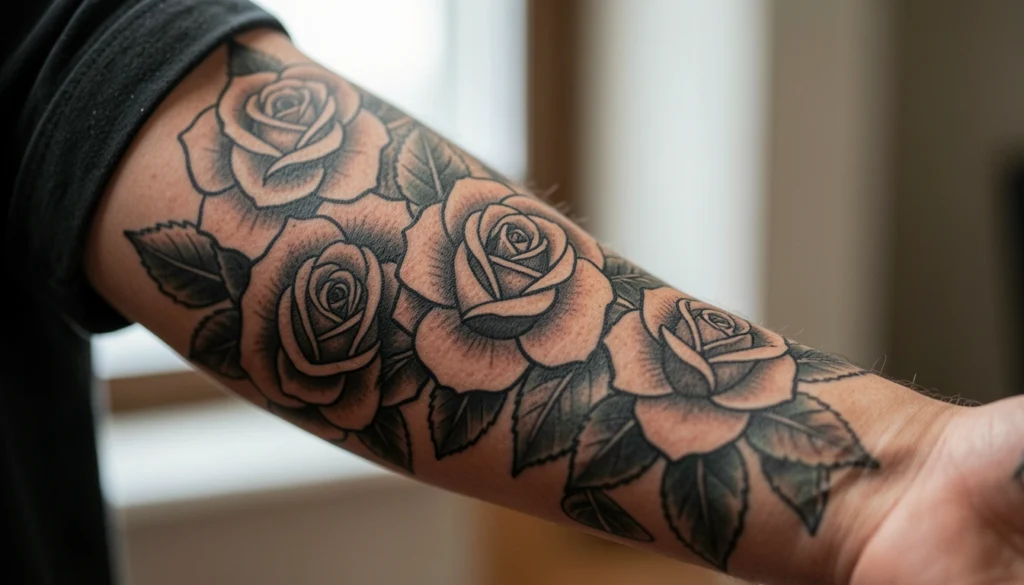
A balanced mix of bold outlines and solid fills helps traditional men arm tattoos stay readable and coherent across an entire forearm or full sleeve; that balance is what often defines the look and how it reads at a distance. Choosing motifs that share a scale and line weight matters because small fine detail can disappear when pieces wrap the arm or age. The choice between a single large motif and a composed set of smaller traditional pieces determines session planning and visual flow.
Think about how much negative space you want between motifs and whether you prefer a connected sleeve or separate patches that can be added to over time. Placement high on the bicep, on the outer forearm, or wrapping around the arm all change how motifs read when you move. That affects whether a dragon, flower, ship wheel, or animal will look crisp and balanced.
The pins below are organized to help you compare motif type, placement, and overall density so you can pick a direction to discuss with an artist. Each entry highlights what to ask about composition, scale, and readability so you leave the consultation with clear next steps.
33 traditional men arm tattoos to consider
Layered arm gallery
This image represents a layered arm approach where multiple motifs share the same arm space. When many pieces sit together it is important to ensure consistent line weight and a clear focal point so the whole arm reads as a collection rather than a cluttered patchwork. Ask an artist about unifying details such as matching outlines or repeating color keys to tie disparate designs together.
Dense sleeve composition
The composition shown suggests a dense sleeve where motifs are placed close to one another. Dense work can deliver a bold visual statement but needs careful spacing so each element retains identity. Discuss with your artist how much background shading or open skin you want between images to preserve clarity while still achieving coverage.
Single motif forearm
A single motif on the forearm focuses attention and often allows larger, more detailed line work without crowding. This approach is useful if you want one element to be dominant and still be legible from a distance. Consider scale so the design follows the curvature of the forearm rather than being flattened against the skin.
Casual lifestyle photo reference
A relaxed shot with a quirky prop highlights how a tattoo will look in everyday scenarios. When choosing a design keep in mind how it will be visible while performing ordinary actions. If a motif sits on the inner arm or near the wrist, try photographing that area against different backgrounds to see how contrast affects readability.
High density arm detail
This look shows many motifs closely spaced to create a rich surface. High density requires consistent execution to avoid muddiness as the piece ages. Ask your artist how they plan line thickness and shading transitions so small areas do not merge over time.
Motif with glass element
An image that includes a wine glass inside a tattooed arm illustrates how props in reference photos can suggest scale and orientation. When you bring reference images include at least one shot that shows the arm flat so the artist can judge size and placement of a similar motif. Clarify whether the prop matters to the final design or only to the photo context.
Snake motif on leg
This pin shows a snake centered on the leg but the motif translates well to arm work if you want a long flowing image. Snakes wrap and follow muscle contours so planning how they move around the arm is crucial. Ask an artist to sketch the serpent path over your arm so curves complement rather than fight the anatomy.
Classic spider web arm
A spider web is a compact traditional element that can anchor a small area near the elbow or wrist. Its radiating lines need crisp geometry so the piece does not blur over time. If you want a web as filler, request slightly bolder lines and modest spacing between strands to keep it readable as the skin ages.
Full arm dual view
Photos showing both arms and the upper body are useful when considering symmetry or separate sleeves that relate to one another. Decide if you want mirrored motifs or distinct themes on each arm. A consultation sketch comparing both sides helps avoid unintended repetition and keeps the story intentional.
Close up sleeve texture
A close up of a tattooed arm reveals texture and line work choices relevant to traditional style. Notice how spacing supports the main shapes. When reviewing references point out which lines or filler you like most so the artist can match that level of contrast and spacing.
Single arm focal piece
A single focal piece on the outer arm stays visible in short sleeves and tends to age gracefully if proportioned correctly. For a strong silhouette request a bolder outline around the primary motif. That preserves the image when the skin shifts and the colors settle.
Subtle arm placement
When references show a small arm tattoo consider whether you want that level of subtlety or prefer an enlarged, more detailed version. Small traditional images can be striking but ask the artist about minimum practical size for the level of detail you want. Some elements look better when scaled up slightly to preserve crisp edges.
Ship wheel and roses
A ship wheel paired with roses is a classic nautical composition that balances geometric and organic shapes. Placing the wheel where the arm curves helps it sit naturally while roses can wrap or frame the piece. Discuss whether you prefer a tighter composition or room around the wheel for other supporting elements.
Shoulder and arm connection
When a tattoo spans shoulder and arm, plan transitions so the design flows with the deltoid and bicep contours. A top heavy motif may sit best on the shoulder with supporting images cascading down the arm. Ask the artist to map how each motif moves over the muscle so the piece does not appear disjointed.
Dragon arm artwork
Dragons are long form motifs that can wrap the arm and create movement. For traditional style select a version with bold scales and a clear head silhouette so the creature reads from a distance. Clarify whether you want the dragon to wrap fully around or to sit mainly on one plane of the arm.
Casual selfie reference
Selfies give a realistic view of how a tattoo looks in everyday posture but can distort scale. Bring flat images of the design area along with candid shots so the artist has accurate proportion references. If a selfie angle places the motif awkwardly, request a projected mockup to check placement.
Minimal arm study
Minimal traditional motifs can be effective if you like clean iconography rather than full coverage. These designs require exact line and spacing choices to keep personality without extra filler. Confirm with an artist how those choices will look as the tattoo ages so you retain strong edges and clear shapes.
Chest and arm integration
When tattoos cross between chest and arm, plan the connecting elements carefully so the transition feels intentional. Larger motifs on the chest often need secondary images to lead the eye onto the arm. Ask your artist to propose bridging elements that match the same line weight and shading approach.
Simple outer arm emblem
An emblem placed on the outer arm is ideal for visibility and tends to remain a focal point under short sleeves. Choose a size that fits the center of the outer bicep and ask the artist to mock up how the emblem will look at that scale. Consider whether you want a heavy outline to increase longevity.
Hourglass motif with props
An hourglass pairs well with other symbolic traditional elements and often benefits from surrounding motifs that complement its vertical shape. Vertical elements should follow the arm axis so they do not distort when muscles flex. Ask about anchor points like anchors or roses to balance the hourglass visually.
Everyday phone shot
A casual phone photo shows how a tattoo looks in informal contexts. Use these kinds of images to check how much of a design shows when you use your hands. If visibility at the wrist or forearm matters for you, make that a priority in size and placement discussions.
Another dragon variant
Comparing dragon references helps define whether you want a traditional interpretation or a more detailed rendering. Traditional dragons work best with simplified scales and strong silhouette. Decide if the head position should face outward to read as an assertive focal point when your arm is relaxed.
Floral arm accent
Flowers are versatile supporting motifs that can frame a primary image or stand alone as a modest piece. In traditional work roses and similar florals often use solid shapes to hold up next to bolder icons. Discuss petal size and placement so they do not compete with nearby imagery.
Small classic placement
Small classic placements are useful for testing a style before committing to larger coverage. If you begin with a small traditional piece you can expand with related motifs later. Ask the artist about spacing reserves for future additions so new work integrates smoothly.
Black and white sun motif
Black and white traditional motifs rely entirely on contrast and line work. A sun motif in that palette needs clear rays and a strong central disk to remain legible. If you prefer monochrome check that shading approaches are bold enough to hold up without color.
Tiger motif emphasis
Tiger imagery makes a strong statement when placed on the upper arm or forearm where movement enhances the sense of power. Coordinate facial direction and stripe placement so the tiger looks natural along the arm curve. Clarify whether you want the animal in profile or facing forward for the desired effect.
Eagle and cross composition
An eagle holding a cross mixes religious and patriotic iconography common in traditional tattoos. Placement that shows both wings or the talon action clearly helps the composition read. If symbolism matters, discuss subtle changes an artist can make so the meaning is represented accurately and with respect.
Leg and arm combined gallery
Seeing tattoos on arms and legs together helps if you plan multiple body areas. Similar motifs across limbs can create a cohesive personal style. Ask about repeating elements that will unify different placements without making them identical.
Arm cluster overview
Clustered arm tattoos require a common visual language to remain readable. Decide if you prefer matching outlines across motifs or slight variations to emphasize hierarchy. An artist will often suggest a connecting background or thin borders to preserve legibility in clustered areas.
Shoulder to arm photo study
Standing photos show how garments interact with shoulder and arm tattoos. If you frequently wear short sleeves, place signature motifs where they will be seen. Request a mockup showing common shirt sleeves and consider how the tattoo will peek from clothing edges.
Small arm detail repeat
Repeating small traditional images along the arm can create rhythm without committing to full coverage. Keep each motif large enough for the lines to hold over time. Ask about uniform spacing and whether you want slight variation so each piece feels unique.
Tiger with floral background
A tiger paired with floral elements blends ferocity and ornament. When combining aggressive animal imagery and softer florals, choose pairings that pick up key shapes. Confirm whether you want the tiger to dominate or to share equal presence with the flowers.
Bearded style reference
A portrait style reference that includes facial hair shows how clothing and personal style interact with arm tattoos. Use these references when presenting a vision of how tattoos fit into your overall look. If coordination with existing facial or chest hair matters, mention it during the consultation so the artist can propose complementary placements.
How to plan and prepare for traditional arm work
Start by deciding whether you want a single anchor piece or a series of smaller images that can grow into a sleeve. That decision drives session length and appointment pacing. For a single anchor piece you will need a larger block of time to complete outlines and shading in a way that looks cohesive. For multiple smaller images plan sessions spaced out so the skin has time to heal and you can evaluate how each new addition affects the overall flow.
Next, gather reference images that show the arm area in similar poses and lighting so the artist can judge scale. During the consultation talk about line weight, filler options, and how motifs will wrap the muscle. Ask the artist to sketch the design directly on your arm or provide a printed mockup mapped to your anatomy. Finally discuss long term maintenance such as how bold outlines and solid fills age compared to very fine detail; this will help you choose a style that matches how often you are willing to refresh or touch up the work.
Frequently Asked Questions
Choose a design by deciding whether you want a single focal piece or multiple complementary motifs that can form a sleeve over time. Consider how visible you want the work to be in short sleeves, and gather references that show the arm area flat and in natural poses. During a consultation discuss scale with the artist so the chosen line weight and shading will be readable at the intended size. Ask the artist for a stencil or paper mockup that maps to your muscle contours so you can test orientation before any needle touches the skin.
A size that keeps detail clear for traditional men arm tattoos depends on line thickness and the complexity of the motif. In general traditional motifs need enough surface area for bold outlines and solid fills to hold up, so very small versions of complex images can lose definition. If you want detailed faces, animals, or intricate patterns make the piece larger and allow the artist to use slightly thicker lines than they would for tiny ornamental work. Discuss minimum practical size with your artist and request a digital or paper mockup to confirm legibility on your arm.
Yes you can combine different traditional motifs on the same arm and make them look cohesive by agreeing on a consistent line weight, color key, and spacing plan. Use repeating elements like a shared background shape, recurring color accents, or matched outline thickness to unify the composition. Work with your artist to create a connective strategy such as small filler motifs, ribbon shapes, or negative space islands so new pieces do not seem tacked on. Planning a few motifs at once instead of adding them randomly helps the whole arm age more gracefully and keeps the visual hierarchy clear.
Adapt a reference photo by providing images that show the arm area both flat and in typical poses so the artist can judge how the motif will sit on the muscle. Avoid showing only angled or distorted selfies because they can mislead scale and orientation. Ask the artist to redraw the motif onto a template of your arm and to propose adjustments for curves, such as elongating shapes that will wrap. Accept a mockup or stencil trial so you can visualize the final placement before inking begins.
Ask an artist about their experience with traditional line work and their approach to line weight and filler. Request to see healed photos of similar scale pieces and ask how they handle transitions between motifs when working on sleeves. Discuss the session plan including how many hours per visit, aftercare expectations, and whether touch ups are included. Also ask about how they will map the design to your anatomy and whether they will provide a stencil or drawn mockup for you to approve before starting.
Placement considerations include how the arm moves and which surfaces you want visible in everyday clothing. Outer bicep and forearm placements are most visible under short sleeves and are good for primary motifs, while inner arm and near the elbow can be harder to show and may require simpler shapes. Also consider how seams on shirts interact with tattoos, and whether you want a design that wraps fully around the arm or sits on one plane. Discuss these points with your artist so they can plan flow and anchor points that respect muscle contours.
Prepare skin by keeping it well hydrated in the weeks before appointments and avoiding sunburn or significant tanning in the area to be tattooed. Schedule sessions allowing sufficient healing time between visits, typically several weeks depending on your skin and the artist recommendation. For large pieces plan sessions by area and by function, for example outlines in one session and shading and color in later sessions. Confirm aftercare instructions with your artist and ask about realistic timelines for finishing a full sleeve or an extended arm project.
When narrowing choices for traditional men arm tattoos focus first on placement and scale, then on whether you want continuity across the arm or a looser collection of smaller pieces. Save a few reference images that show the motif size and the arm orientation you like and note which specific elements appeal to you. Bring that curated set to a consultation and ask the artist to map a mockup so you can visualize how the pieces will interact before you commit to sessions. A clear visual goal plus an agreed plan on spacing and line weight will make the final piece age better and match your daily wear preferences.


