A tiny, well spaced clover has to read from a distance, which matters when you choose a small four leaf clover tattoo and decide how much leaf detail to include. The way the leaves connect and the stem angle change how crisp the motif looks at tiny sizes.
Scale and placement are directly tied to line weight and color choice, so think about whether you want solid shapes, fine outline, or a splash of green. A small piece that sits on a wrist will behave differently than the same design on an ankle, foot, or ribcage in terms of aging and visibility.
The ideas below show variations you can compare by composition, size, and color so you can pick a clear direction before your artist consultation. Each pin note highlights a visual choice and a question to ask your tattooist.
21 small four leaf clover tattoo ideas to consider
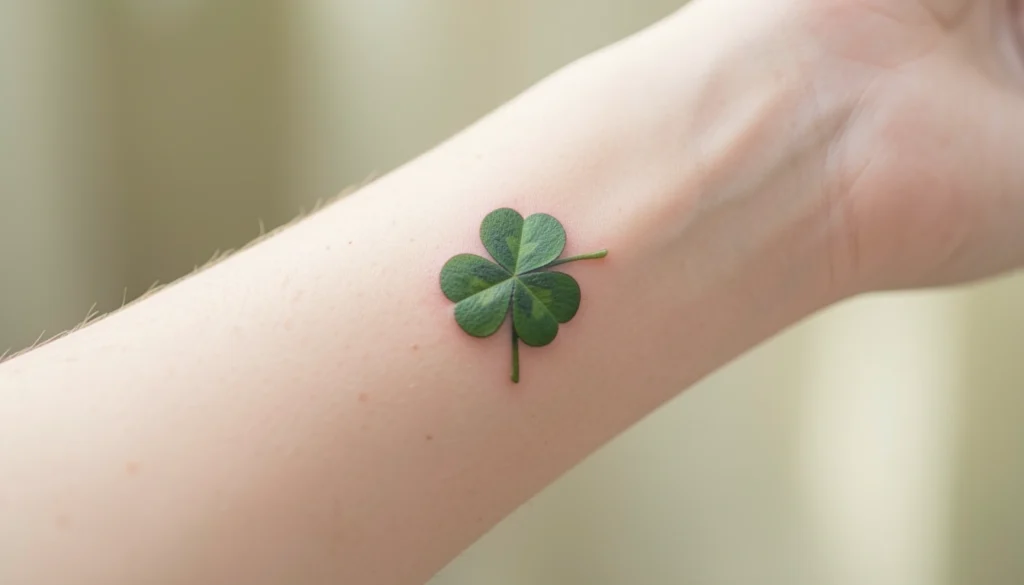
Tiny wrist clover
This item suggests a small clover placed on the arm near the wrist, which is a classic location for a modest symbol. A wrist tattoo of this size benefits from slightly bolder lines so the leaves stay distinct as the ink settles. Ask your artist about line thickness and how strong the stem should be so the shape remains clear over time.
Side of leg placement
A clover on the side of the leg gives a narrow vertical canvas that works well for a single small motif or a tiny cluster. Because the skin here can stretch, consider a compact design with fewer internal lines so details do not blur during healing. If you want color, discuss how green ink will appear against your skin tone in low light.
Paper sketch of green shamrocks
This pin shows two stylized green shamrocks drawn on paper, useful as a starting point for color and spacing ideas. Translating paper color to tattoo ink changes how saturated the green will look, and you may prefer slightly darker shading to preserve contrast. Bring a printed reference so the artist can match the tone and leaf curvature you prefer.
Minimal black ink clover
A black line drawing of a four leaf clover emphasizes silhouette over texture, which is often the most legible choice at very small sizes. This approach tends to age predictably because it avoids tiny shaded areas that can blur. If you favor black only, ask for slightly thicker outlines and simplified inner spaces so the clover reads from a short distance.
Wrist micro clover
The wrist is shown again with a petite four leaf clover, highlighting how a central compact shape fits well along tendons and veins without requiring a large area. Because the wrist moves frequently, talk with your artist about avoiding extremely fine lines that could break up. A small negative space in the leaf centers can help maintain a crisp look.
Foot clover near toes
A clover on the foot sits on thinner skin and is exposed to friction from shoes, so choose durable line work and expect touch ups might be needed over years. Positioning near the toes or on the top of the foot allows a tiny design to stay discreet. If you prefer color, ask about pigment migration in high friction areas.
Matching wrist and hand clovers
This pair of small green clovers on the wrist and hand shows how repeated tiny motifs create a visual connection without taking much space. If you want matching elements, make sure the proportions are consistent so they look intentional rather than mismatched. Consider whether both will be exactly the same size or deliberately slightly varied for a balanced look.
Arm placement on outer forearm
An outer forearm location offers a flat surface where a small clover can be scaled up slightly while remaining discreet. This spot is good when you want the option to add complementary elements later. Discuss spacing so any future additions align with the stem and leaf orientation of the original clover.
Lower side rib clover
The lower side ribcage is a more private placement that suits small personal symbols, but skin there can change with weight fluctuation and pregnancy. Keep a small clover compact and avoid tiny internal details to reduce distortion risk. If planning for future life changes, check how the artist adjusts design placement on curved surfaces.
Arm and foot matching pair
A small green clover repeated on different body parts shows how color links separate placements visually. When matching across skin types, confirm ink mixing and shade consistency so the green looks similar in both spots. You might also ask the artist to document the ink codes used for future touch ups.
Wrist single leaf cluster
This small wrist clover emphasizes a compact silhouette that sits well centered on the inner wrist. For very small pieces, solid leaf fills often preserve shape better than tiny shaded gradients. Check how the clover aligns with wrist lines so it sits naturally when your hand is at rest.
Leg placement close up
A clover on the leg can be slightly larger without losing subtlety, and a close up photo encourages you to think about leaf shape and negative space. If you want the clover to look organic, ask the artist to soften the leaf junctions rather than having perfectly geometric lobes. That choice affects the design tone more than size does.
Black ink botanical sketch
A black and white drawing captures the botanical shape without color, a good model when you want a classic approach. Sketch style often uses thin interior lines to suggest texture so be cautious about translating very fine lines to a tiny tattoo. Ask the artist which lines they would simplify to improve longevity.
Foot side clover near arch
A clover on the side of the foot near the arch will be partially protected from shoe friction, which helps color stay truer. Small shapes here should avoid extremely fine details that can blur with movement. If you want a discreet mark, keeping the design under three centimeters helps it remain subtle.
Lower stomach placement
A small clover on the lower stomach can be a private design that looks centered and intimate. This area flexes with core movement, so compact designs with minimal thin lines are safer for clarity. If you plan to add a personal date or name later, reserve a small margin around the clover for future ink.
Clover symbol with heart center
A stylized clover with a heart at the center adds a symbolic twist that can make the motif feel more personal. Special interior elements like a tiny heart require careful scaling because small interior shapes can close in during healing. Discuss whether the heart should be outline only or filled so your artist can plan line weight accordingly.
Stomach placement during pregnancy
A clover on the side of the stomach shown on a pregnant person highlights how body changes affect placement decisions. If you are planning pregnancy, consider locations that are less affected by stretching or choose a small design that can tolerate mild distortion. Talk with your artist about future flexibility and possible touch ups.
Simple wrist icon
This tiny wrist clover relies on a clean silhouette for instant recognition, which is often the most effective approach for very small motifs. Consistent leaf proportions help the symbol feel balanced on a narrow wrist. If you like symmetry, ask for measured leaf spacing so the clover does not appear lopsided.
Ankle micro clover
An ankle placement keeps the clover low profile and easy to conceal with socks or shoes. Because the ankle bone creates a shallow surface, small compact designs with no tiny interior strokes are best for keeping the edges crisp. Request a small mock up on paper to preview how the clover sits over the bone.
Decorative clover wallpaper motif
Seeing a clover rendered as a decorative element on a textured background helps you think about stylization rather than literal leaves. For a tattoo, choose whether you want natural curves or graphic simplification because each reads differently at small scale. A graphic clover often benefits from bold fills that keep the shape intact.
Inner arm clover with stars
An inner arm clover accompanied by small stars shows how tiny accents can create a sense of movement around the main motif. When adding extras, make sure the secondary marks are sized and spaced to avoid clutter. Discuss with your artist whether the stars should be dots or micro shapes so they do not merge with the clover over time.
How to choose scale, placement, and finish for a small clover
Deciding on a small four leaf clover tattoo comes down to three linked choices. First, pick the scale you want and then match line weight and fill so the symbol will remain legible. Very small tattoos need slightly thicker outlines or solid fills to prevent tiny details from blurring, while slightly larger pieces allow delicate inner lines and subtle shading.
Second, place governs movement and friction so choose a site that fits your lifestyle. High friction areas like the top of the foot or side of the shoe will fade faster and may require touch ups, while the inner wrist and forearm often hold detail better. Third, finish matters; black only is reliable and ages well, while green ink adds personality but will show changes in tone depending on skin tone and sun exposure. For any decision, bring three reference images to your consultation and ask the artist to draw a few size mock ups directly on the skin so you can see how the design sits in motion.
Frequently Asked Questions
For a small four leaf clover tattoo, a common practical size is about one to three centimeters across depending on placement and the level of detail you want. Very tiny pieces under one centimeter need simplified silhouettes because small internal lines and tiny negative spaces can close up during healing. If you want a tiny heart or stars inside the leaves, increase the overall size so those extras remain readable. Bring a printed reference and ask your artist to draw size mock ups on your skin so you can evaluate legibility before the needle starts.
Good spots for a small four leaf clover tattoo include the inner wrist, ankle, outer forearm, side of the foot, and lower rib or hip area if you prefer discretion. Inner wrist and forearm provide a flat surface and predictable aging while the foot and ankle are exposed to friction and may fade faster. Consider how visible you want the tattoo to be in day to day life and whether you need to hide it for work. Ask your artist to place temporary sketches so you can test how the clover looks with clothing and movement.
Yes you can use green ink, and it is a common choice for clover motifs, but there are a few factors to check first. Green tones vary widely so discuss shade selection and how it will sit against your skin tone, because lighter greens can lose contrast and darker greens may read almost black at small sizes. Green pigments can also fade differently based on sun exposure and skin chemistry, so arrange a follow up appointment for color refresh if you want long term vibrancy. If you are uncertain, a black outline with subtle green fill or a small green wash can give color without risking loss of shape.
The amount of detail that fits depends on final size and line weight; simple silhouette and minimal interior texture are safest for very small clovers. Tiny veins or decorative dots inside leaves look attractive in sketches but may blur into each other once healed if the leaves are too small. If you want ornamental elements like a heart at the center or micro stars around the clover, increase the overall scale so those extras remain distinct. During your consultation, ask the artist which interior lines they would remove or keep so the clover preserves its intended look across time.
Combining a small four leaf clover with other symbols is possible but requires careful spacing and scale planning to avoid a cluttered appearance. For example, tiny stars, a faint date, or a micro heart can complement the clover if they are positioned at a comfortable distance and sized to match visual weight. If you want a linked composition across two sites such as wrist and foot, make sure the motifs are proportionate so they read as a set. Bring all reference images and discuss a cohesive layout so the artist can draft a composition that keeps each element legible.
To prepare, collect three to five reference images that show the clover shape, leaf style, and any color you prefer, and decide on a shortlist of placements to show the artist. Hydrate well, avoid alcohol the day before, and wear clothing that allows easy access to the target area so the artist can stencil and adjust placement. Ask the artist about their preferred ink shades and request a skin mock up so you can confirm size and orientation. Finally, discuss aftercare instructions and the possibility of touch ups if you want to keep the clover crisp long term.
Adapting a reference into a small four leaf clover tattoo means simplifying or enlarging elements until they remain clear at your chosen size. Photographic images or highly detailed drawings should be reduced to essential contours, and interior texture is often replaced with selective shading or solid fills. Work with your artist to determine which lines to keep so the clover keeps its personality but will not blur after healing. Ask for a drawn stencil and try it on for size and placement so you can agree on a final simplified version before inking starts.
Choosing a small four leaf clover tattoo becomes easier when you separate scale, placement, and finish into distinct decisions. Save a few reference images that show different leaf shapes, line weights, and placements, and note specifically what you like about each example. When you go to the consultation, ask the artist for mock ups on skin and for their proposal on line weight and color so you can narrow to one clear option. The most practical takeaway is to pick two sizes you like and test the stencils on your skin before committing to the final version.