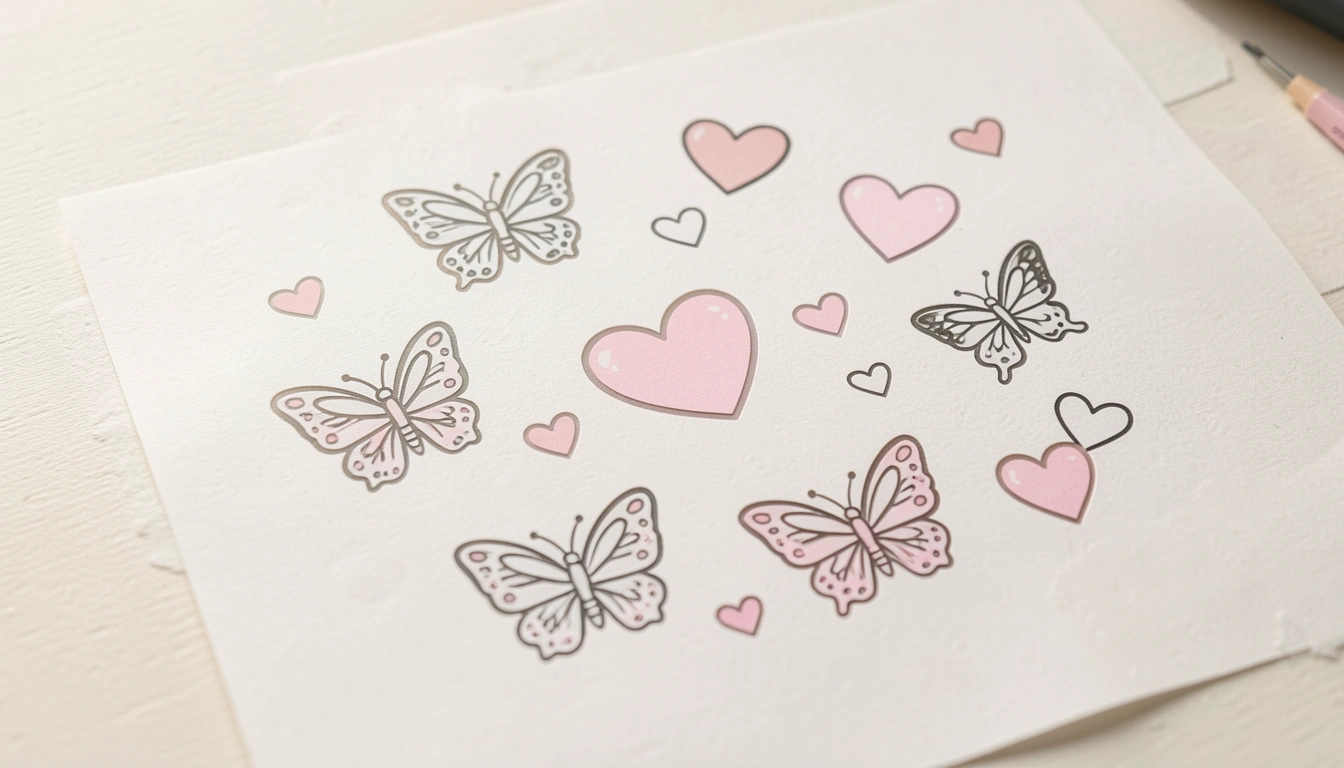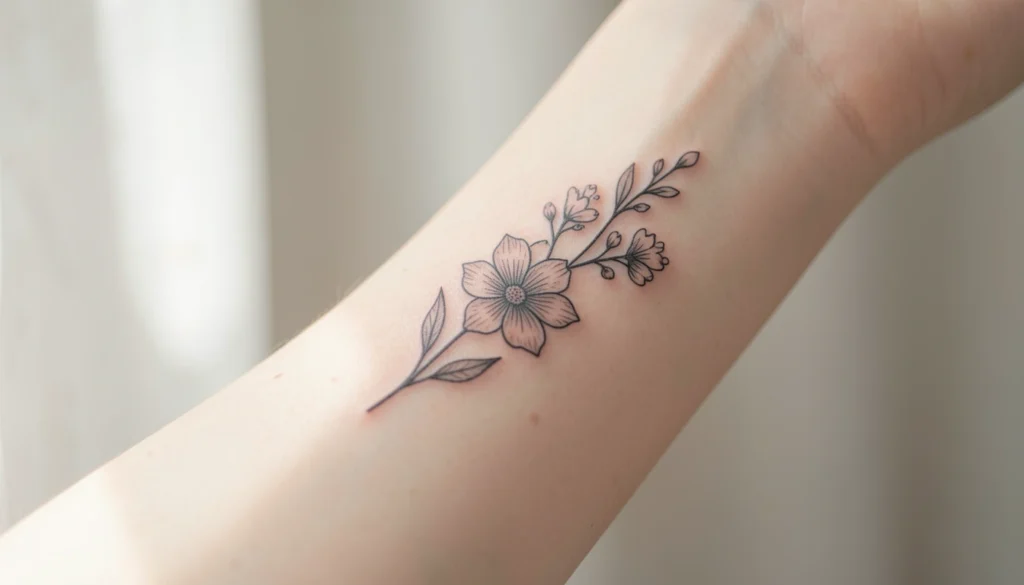
Choosing a single fine line motif or a compact symbol is one of the smartest approaches when thinking about small first tattoo ideas because those designs keep detail readable at a tiny scale. Small motifs like stars, leaves, or a single word translate well to many placements and are easier to modify later.
Think about where the skin moves and how the design will sit there. Scale and spacing matter more than color for a first small tattoo since tight detail can blur over time and some areas require bolding to stay crisp.
The gallery below helps you compare line work, playful motifs, and placement options so you can pick two to four favorites before booking a consult with an artist.
21 small first tattoo ideas to compare and try
Delicate wrist emblem
The tattoo paired with a wrist chain suggests a compact emblem that works well on the inner wrist or forearm. For a first piece consider a simple outline or single color to keep the design sharp where a bracelet or watch might overlap. Ask your artist to show a stencil so you can check how it sits next to jewelry and whether slight resizing helps readability.
Minimal bird sketch
A small black and white bird drawing reads as a tidy single motif that can be placed on the rib, ankle, or behind the ear. Line weight matters here because thin lines convey delicacy but may fade sooner. Discuss whether a touch of shading or slightly heavier outlines will keep the bird identifiable after several years.
Playful micro dinosaur
A tiny dinosaur lifting a barbell brings personality and humor to a small first tattoo idea and suggests places like the outer forearm or calf where there is flat space. For playful designs like this think about gesture and negative space so the motif stays readable at thumb nail to quarter sized scales. Bring reference images so the artist can adapt proportions for clarity.
Olive branch accent
An olive branch as a slim motif suits the forearm or bicep and can be stretched slightly without losing its identity. For a first tattoo consider a single branch with simplified leaves rather than a dense cluster so each leaf remains distinct. Talk with your artist about whether to orient the branch along natural lines of the arm for a cleaner look.
Small chest butterfly
A tiny butterfly on the chest reads intimate and can be scaled to sit above a collar or near the sternum. Fine wing detail looks lovely up close but will blur with time, so a slightly simplified wing pattern or modest shading will help it age gracefully. Consider how visibility under clothing affects your daily wear and future expansion.
Dragonfly with heart
A dragonfly combined with a small heart makes for a symbolic yet compact piece that suits the forearm or outer thigh. The heart gives a focal point so the artist can use it as a visual anchor while keeping the dragonfly wings simplified. Ask to see healed photos of similar two motif pieces to judge line spacing and balance.
Symbolic eye motif
An eye with radiating lines reads well as small artwork when the lines are controlled and not too close to the pupil. For sensitive areas keep the design compact and avoid excessive fine rays that can blur into a single tone. Suggest a clean outline and minimal interior shading so the eye retains its shape over time.
Tiny star placement
Stars are classic first tattoo ideas because they scale down without losing meaning and sit nicely behind the ear, on the wrist, or near the collarbone. A five point star with moderate line weight will stay readable longer than an ultra thin outline. If you want several stars decide now whether they should be clustered or spaced so the artist can plan composition.
Torso line drawing
A simple black and white torso sketch suggests using negative space and single lines to describe form. Small figurative pieces work best when simplified to essential lines so the image does not become muddy at small scale. Placement on the rib or side requires attention to curvature so ask for multiple stencil views.
Subtle arm mark
The small arm tattoo in this image shows how a tiny mark can function like a personal accent rather than a statement. Consider how it will look with clothing and jewelry and whether you want it to read as part of a future sleeve. A compact motif that echoes your hand or wrist shapes will feel intentional rather than an afterthought.
Hand detail near laptop
A tattoo on the hand or side of the finger is immediately visible and will face more wear than an upper arm piece. If you are drawn to a finger or hand mark, plan for thicker lines and occasional touch ups. Discuss with your artist whether a dot or tiny symbol is better than delicate script for longevity.
Simple sky star
A single celestial star can act as a small first tattoo idea that is easy to place and quick to heal. For night sky motifs, consider small dots as accents and avoid extremely thin lines that might vanish when the skin shifts. A balanced composition with a clear center point keeps the eye from reading the mark as random ink.
Thigh twin fish
Two small fish on the thigh show how repeating motifs can be scaled down while preserving movement and relation. Space the fish apart enough so each silhouette remains distinct when clothes compress the area. The thigh provides forgiving canvas for compact art and is a great spot for first timers who want privacy while healing.
Tiny shoulder heart
A small heart on the shoulder or near the clavicle reads as a personal accent and suits minimal line work. When a piece sits near a joint, keep the lines slightly bolder to avoid premature fading from constant movement. Test a stencil on the day of consult so you can see how clothing and posture change the shape.
Whimsical cat motif
A small cat with quirky elements like tiny forks creates a narrative in miniature and is a strong example of how compact art can still feel unique. For novelty motifs choose bold outlines or selective shading to keep personality without excess detail. Confirm that the cat silhouette is recognizable at the intended final size.
Mushroom charm
A mushroom symbol is an easy to scale motif that works on the forearm, ankle, or behind the ear. Keep spots and gills simple for a small tattoo so the cap reads clearly. Ask the artist whether a small area of solid color or light stippling will hold better than micro line details.
In studio close up
This close up suggests the value of inspecting line work at the stencil stage. For a first tattoo watch how the artist handles fine lines and small fills, and ask to see healed examples of similar scale. The studio view is a reminder to pick an artist whose small work looks crisp after healing, not just fresh off the machine.
Ankle word accent
Small script on the ankle like a single word fits first timers who want a discreet line of text. Choose plain letter forms and ask the artist to increase letter spacing slightly to avoid the letters merging as the ink settles. Consider the font size on a paper print at the exact centimeters you plan to tattoo to confirm legibility.
Heartbeat line
A minimalist heartbeat line is a tiny, geometry based idea that suits the forearm or chest. Straight segments read well at small sizes compared with intricate curves. If you want to personalize it, ask the artist to incorporate a single dot or a discreet initial so the motif stays simple but meaningful.
Centered chest mark
Small chest tattoos can be very private and allow for slightly more vertical detail than neck or hand placements. Because the chest moves with breathing, keep the motif compact and avoid long thin strokes that cross muscle lines. Request a low contrast option if you prefer the piece to sit subtly under clothing.
Paired hand symbols
Small marks on each hand shown here emphasize symmetry and personal marking. Hands experience more friction and will need touch ups over time, so plan to simplify details and accept possible reworking. If you want long term clarity consider placing slightly higher up on the wrist where abrasion is lower.
How to plan, scale, and place a tiny first tattoo
When choosing a small first tattoo focus first on scale and line weight because those two factors determine how readable the design will be after healing. A simple symbol with clean, slightly bolder outlines will retain shape better than ultra thin filigree. During a consult ask the artist for a stencil at actual size and request photos of similar healed work; this shows you how the motif ages and whether the chosen placement needs a size adjustment.
Placement decisions should consider skin movement, sun exposure, and daily wear. Areas like the inner forearm, upper thigh, and behind the ear vary in how often they rub against clothing or get sun, and those elements affect long term contrast. Before your appointment pick clothing that allows easy access, hydrate skin in the weeks prior, and bring two or three favorite references so the artist can combine elements while keeping the piece small and legible.
Frequently Asked Questions
A practical size for many small first tattoo ideas is roughly the area of a quarter to a half dollar but the exact size depends on the motif and placement. Very fine detail becomes unreadable when shrunk too far so choose a size that preserves main shapes and spacing. Ask your artist to print a stencil at the intended size so you can see it on your skin before committing and adjust slightly larger if lines look cramped.
Pain varies a lot between people but generally fleshy areas such as the outer thigh, upper arm, and calf are more comfortable than bony zones like the ribs, hands, and feet. Skin thinness, nerve density, and proximity to bone influence sensation so even a small tattoo can feel sharp in the wrong spot. If pain is a major concern pick a fleshy site, schedule a short session, and talk to your artist about slower machine speed or short breaks during the appointment.
Small tattoos can hold simple detail but they do not suit dense textures or very thin script because ink spreads slightly as skin heals. Lines placed too close together risk merging into a blur a few years after the session. To preserve clarity ask the artist to simplify patterns, increase spacing between key elements, and show healed examples of similar scale. A skilled studio will recommend whether a slightly larger size or a small area of solid color will keep the design legible long term.
You can combine motifs but small combined designs need breathing room so the eye can distinguish each element. Two mini symbols placed side by side may work if they are spaced and simplified, while overlapping or intricate combinations will lose definition. If you like multiple ideas consider two tiny tattoos placed near each other or a single compact composition where one motif serves as the focal point and the second is a minimal accent.
Prepare by sleeping well, staying hydrated in the days before, and moisturizing the area so the skin is healthy but not oily on appointment day. Avoid alcohol and blood thinning medications unless cleared by a professional, and wear clothing that exposes the chosen area easily. Bring references and any questions about aftercare, and arrive with realistic expectations about session length because even small pieces need time for careful line work and stencil checks.
Small tattoos are often easier to remove with laser than larger pieces because less ink needs treating, but color, ink depth, and age affect how many sessions are necessary. Covering a tiny fine line tattoo may require a heavier, larger design to mask the original, especially if lines are close together. Before committing ask both your artist about cover up strategies and a licensed removal specialist about realistic expectations for laser removal based on your skin and ink colors.
Look for an artist whose portfolio shows healed small work and clear line work rather than only fresh photos, because healed pictures reveal how their tattoos age. Check that they have experience with the style you want and ask to see examples at the same scale. During a consultation discuss line weight, stencil sizing, touch up policies, and whether they recommend simplifying any reference to suit a tiny canvas. A confident conversation and relevant healed photos are the best indicators of a good match.
Small first tattoo ideas are easiest to narrow down by picking a style and a placement you actually wear and see. Save three to five favorite pins that show size and placement clearly, note what you like about each, and bring that selection to an artist consult for a focused conversation. The most useful takeaway is to confirm a stencil at actual size before the needle touches your skin so the finished piece matches your expectations.