A large black work tattoo relies on bold, solid black shapes and clear negative space, and that choice changes how the design reads at a distance and how it ages. When you choose large black work you commit to strong graphic contrasts, so the placement and surrounding skin become part of the composition. Consider those factors early because they limit or expand what the artist can include.
Scale matters more than fine detail with this approach because thin lines can disappear into solid black fields, while simple silhouettes stay legible for many years. Think about how much of the surface you want covered and whether the piece should flow with muscle and bone or sit as a flat panel. That decision will determine the level of contouring and the amount of negative space the artist uses.
The ideas below compare different placements, motifs, and how artists resolve detail inside heavy black areas so you can pick a direction. Each entry notes a practical question to bring to a consultation and a change to consider if you want more or less visual weight.
17 large black work tattoo ideas from Pinterest
Bugs and insects sleeve
The insect motif shows how individual smaller elements can sit inside a larger black work layout without getting lost. For a forearm or full sleeve, ask the artist how they will balance solid black fields with fine anatomy lines so that antennae and legs remain readable. If you want those tiny features preserved, request slightly larger insects or a band of negative space around each figure.
Ornate leg placement
Leg tattoos provide long vertical canvas and work well when large black shapes follow muscle and bone. For thigh or calf pieces, decide whether the design should wrap fully around or sit on the visible front plane. A lot of black coverage on the leg can make movement read differently, so ask how the layout will look standing and sitting.
Single arm statement piece
A solitary arm panel emphasizes silhouette over internal detail, which is ideal for bold black work. Consider a composition that respects the elbow crease and natural arm taper to avoid visual breaks. If you want a focal motif, plan how large that element must be to maintain clarity once surrounded by heavy black areas.
Intricate black and white arm
This example shows detailed linework inside a monochrome palette, which demonstrates the tension between fine detail and broad black fields. Ask your artist whether they will use stippling, thin lines, or small negative pockets to hold detail against a dark background. If your skin tone contrasts less with black, request slightly larger line weights for longevity.
Inked portrait on torso
Portrait style work in solid black requires simplifying facial detail into planes and key lines so features read without mid tone shading. For a torso placement, consider the curve of ribs and how breathing will change the image. Prepare a photographic reference and ask the artist how they would reduce tonal values to bold shapes while preserving likeness.
Relaxed arm composition
The seated pose highlights how a large black work tattoo looks in casual positions and how the piece interacts with clothing. If you prefer coverage that is visible when you dress up or down, test placement against likely garments.Discuss options for edges that taper into skin or abrupt borders that frame the composition.
Mixed arm and torso art
When art crosses from arm to torso choose continuity or clear separation between panels so the eye reads the piece as intentional. A continuous black field can unify both areas but it may require multiple sessions and careful contour mapping. Clarify session planning and how the artist will maintain consistent black density across visits.
Skeleton motif on arm
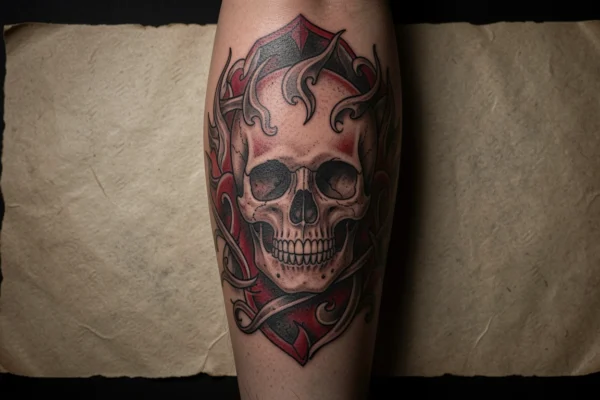
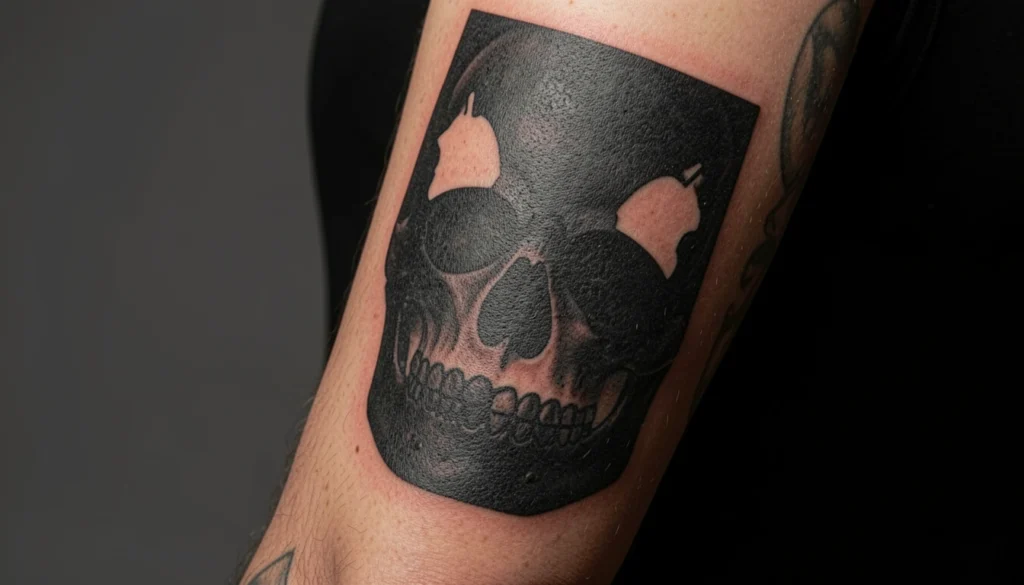
Figurative motifs like a skeleton translate well to black work when the artist simplifies bones into graphic shapes. For anatomical designs decide how literal you want the imagery to be versus a more stylized silhouette. A practical question is whether to let small interior lines remain or convert them into negative space to avoid muddiness.
Swirl shoulder composition
Circular or swirl patterns around the shoulder look dynamic and can emphasize musculature, but they need careful placement to avoid distorting with movement. Ask the artist to mock up the design at full scale and check it in the mirror across shoulder positions. Consider whether you want the pattern to fade into skin at the edges or hold a clean, geometric boundary.
Sketch style face study
Sketch like portraits rely on expressive line weight more than on large black fills, which can be a striking contrast within a black work approach. If you want sketch qualities, ask how the artist will translate light pencil marks into permanent ink while keeping high contrast. You might request selective areas of solid black to anchor the composition.
Back panel organic shapes
Large back pieces allow dramatic use of solid black because there is a wide uninterrupted canvas. For a back panel decide if the image should center on the spine or offset to one side to complement posture. Discuss session order and how long blocks of black will be healed safely over multiple sittings.
Full body chest and hands
When a design covers multiple small and large planes like chest and hands, the risk is inconsistency in black density and edge crispness. Hands and fingers demand touch ups more often because skin there receives more wear. Plan a maintenance schedule and ask about ink saturation techniques suited for those areas.
Ornate arm and leg pieces
Connecting arm and leg ornamentation visually requires motifs that repeat or mirror across limbs for cohesion. If you want matching elements, agree on scale and spacing so the design reads like a set rather than unrelated parts. Also discuss timing to ensure pigment is consistent if sessions happen months apart.
Abstract black and white lines
Abstract line work benefits from large black anchors so the composition still reads at a distance, and the contrast will define the rhythm of smaller lines. Consider whether you want symmetry or asymmetry for visual movement. Ask your artist for a full size stencil to test how the lines will flow with body contours.
Paired arm compositions and motifs
Pairing motifs across both arms creates balance but requires precise scale matching so the pieces do not compete. Decide if they should be mirror images or complementary themes, and check how they look with both arms relaxed and lifted. For symmetry you may need matched sessions to maintain pigment tone and edge quality.
Figurative cross and figure
Figurative religious iconography in black work often simplifies form into strong silhouettes that convey symbol without fine shading. Ask how the artist will carve facial and hand detail into negative space. If meaning is important, bring references and be prepared for the artist to propose adjustments so the piece reads clearly at the intended size.
Hands holding line drawing
Simple line compositions like intertwined hands depend on confident line weight and selective black fills to hold weight. For small placements request stronger line thickness so details remain visible over time. If you want the imagery to be bold rather than delicate, convert some interior areas to solid black to anchor the drawing.
How to plan, size, and maintain a large black work tattoo
When planning a large black work tattoo start with the canvas and the design language. Think about the areas of your body where the skin moves the least for large uninterrupted fields and where the contours will enhance the composition. A design that follows natural lines like the shoulder curve or rib flow will integrate better than a rigid rectangular panel. Ask the artist to provide a full scale stencil and try it on in different positions so you can see how gestures, clothing, and posture affect appearance.
Size choices also affect detail and healing logistics. A huge single session block of black will be more taxing on skin and may require multiple sittings to avoid overworking the area. Discuss session length, how the artist layers black to avoid patchiness, and the likely need for touch ups. Finally, consider long term maintenance and sun protection; these factors will influence how the piece ages and whether you want more negative space to help preserve visual balance as ink naturally settles.
Frequently Asked Questions
Choose size based on distance and detail needs. For bold shapes that remain readable choose areas at least several inches across so the negative space and solid black maintain separation. If you want small motifs inside the black areas increase their scale or add thin negative borders. Discuss with your artist how line weight and promised coverage will look after healing and years of wear.
Black work often remains visually strong because solid pigment resists loss of contrast that affects light shading. However black work can still blur if lines are too thin or if heavy blocks are poorly saturated. Longevity depends on artist technique, skin type, placement, and sun exposure. Talk to your artist about pigment saturation methods and plan for touch ups if you choose high friction areas.
Large uninterrupted planes like the back, chest, thigh, and outer arm provide ideal canvases for bold black work because they allow broad shapes without constant distortion. Areas with frequent movement such as the inner elbow or sides of fingers may require adapted design to avoid rapid blurring. Choose placement with both visibility and wear in mind and have the artist test a full scale stencil in different positions before inking.
Fine detail is limited inside large black fields because tiny lines can get lost against solid pigment over time. If detail is essential ask the artist to increase the scale of those elements or to isolate them with negative space or lighter shading techniques that are compatible with black work. A balanced approach is often to reserve very fine elements for perimeter areas where contrast and visibility are better.
Photorealistic imagery must be simplified into shapes and key lines for black work to keep reading clearly. Provide the reference and request the artist create a reduced value study that emphasizes primary planes of light and shadow. Expect the artist to drop subtle mid tones and convert them into negative space or solid blocks so the image retains likeness without relying on gray shading.
Ask to see portfolio examples of sustained black coverage and healed work so you can judge edge crispness and saturation consistency. Discuss their technique for building large solid areas and how they avoid overworking skin. Also ask about their session plan, expected number of visits, maintenance and touch up policy, and how they handle color mixing or dilution if you plan to add contrast later.
Large black fields can scab differently from line work and may require staged sessions to avoid excessive trauma. Proper aftercare is essential to prevent scab picking which can cause patchy black areas. Plan for at least one touch up after full healing to even out saturation and check edges. Your artist can advise on sunscreen and long term care to maintain contrast.
Choosing a direction for a large black work tattoo becomes easier when you compare placement, scale, and how much interior detail you want to keep. Save a handful of favorite pins and note whether you prefer solid silhouette, selective detail, or flowing panels that follow muscle. Bring those references to a consultation and ask for a full scale stencil preview so you can see how the piece sits on your body before committing. The most practical takeaway is to prioritize readable shapes and a realistic session plan to protect the work over time.