Sharp, precise linework and balanced symmetry help geometric star tattoos for men read clearly at small and medium sizes. The way points align and negative space is used affects how crisp the star looks over time, so this design detail matters from the first consultation to long term wear. Choose whether you prefer a bold, graphic silhouette or a constellation of fine geometric elements.
Scale and placement are practical choices that change what design features work best. A small star on the wrist needs fewer internal lines than a shoulder or chest piece where more complex geometry and shading are readable. Think about how the piece will sit near muscle movement or existing tattoos so the geometry keeps its intended proportions.
The ideas below show a variety of directions for geometric star tattoos for men, from minimal single stars to integrated compass and celestial motifs. Use the notes to compare visual weight, suggested placement, and what to ask your artist so you leave the studio with a design that stays clear and intentional.
25 geometric star tattoo ideas for men
Classic single outlined star
This simple black and white star focuses on clean outer lines and even points. For men who want a discreet, versatile mark, the design works well on the wrist, behind the ear, or on the ankle. Ask your artist to space the points deliberately and keep inner angles open so the outline does not blur into a blob as it ages.
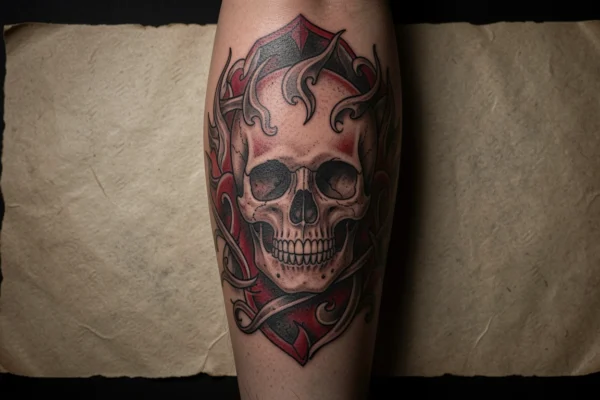
Leg star with surrounding imagery
A star placed on the leg often sits with other motifs or shading that extend around the calf or thigh. This example shows how a star can act as a focal point while leaving room for background texture or subtle dot work. Consider how the leg moves when you walk and ask for slightly thicker outer lines if the tattoo will be exposed to frequent sun or abrasion.
Small ankle star with arrow
Combining a star with a simple arrow adds directional meaning and a visual line that elongates the placement. On the ankle the design reads best when kept compact and the arrow is rendered with clear spacing to avoid blowout. If you want the arrow central to the composition, request that the artist keep the arrow shaft a touch bolder than inner star lines for contrast.
Compass center star
A compass motif that uses a star at its center blends geometric precision with navigational symbolism. Placed on the upper arm or chest, the design benefits from symmetry and careful centering so the points align with the body axis. Talk with your artist about whether you want cardinal markers or a purely abstract star to keep the overall look more geometric than illustrative.
Solid black star sketch
A solid black geometric star reads boldly and ages predictably when the edges are uniform. This approach works well on forearm, calf, or shoulder where the shape can sit alone as a statement. If you prefer a softer edge, ask for a small border of skin tone between filled black and any adjacent shading to preserve crisp lines.
Intricate chest integration
When a geometric star integrates into a larger chest piece, it becomes an anchor for surrounding motifs and negative space. This placement allows for finer internal geometry because the body area is large enough to hold detail. Before the session, mark out proportions and ask the artist to stencil the design so you can check how symmetry falls over the collarbone and pectoral curve.
Minimal compass star
A small compass style star in black and white keeps the concept geometric while remaining minimal. Typical placements include the inside forearm or the area above the wrist where the compass can be rotated slightly to suit arm orientation. Discuss whether you prefer ink that contrasts strongly or soft gray shading to suggest depth without compromising the geometry.
Thigh star on the side
Stars placed on the thigh give designers room to play with layered geometric shapes and background fills. On a curved surface like the thigh consider how muscle contours will affect perceived symmetry when you move. If you plan to add color or a galaxy background, ask the artist to map out where highlights and darks will sit so the star remains legible.
Shoulder point star
The shoulder is a classic location for a geometric star because the rounded surface holds a balanced composition. For men who want a design that can expand into a sleeve later, place the star toward the outer shoulder so adjoining work can flow. Confirm that the stencil aligns with the deltoid muscle to avoid skewed angles when you raise or lower your arm.
Circle of stars motif
Arranging multiple geometric stars in a circular formation creates a medallion effect that suits the chest, back, or upper arm. The repeated elements emphasize rhythm and symmetry so consistent spacing is essential. Ask your artist for a mockup with measured spacing so the circle reads uniform rather than hand drawn and lopsided.
Sleeve connector star
Stars can act as connector pieces between existing tattoos on the arm, helping to move the eye across the sleeve. A geometric star with simple inner lines helps create visual breaks without adding heavy contrast. When combining with older work, have the artist consider matching line thickness so the new star fits cohesively with the rest of the arm.
Moon and stars pair
Pairing a geometric star with a crescent shapes a small narrative and adds celestial balance. The pair can be small and subtle on the wrist or placed on the ribcage where there is room to separate forms. If the crescent curves around part of the star, discuss spacing so the two elements do not merge as the tattoo settles.
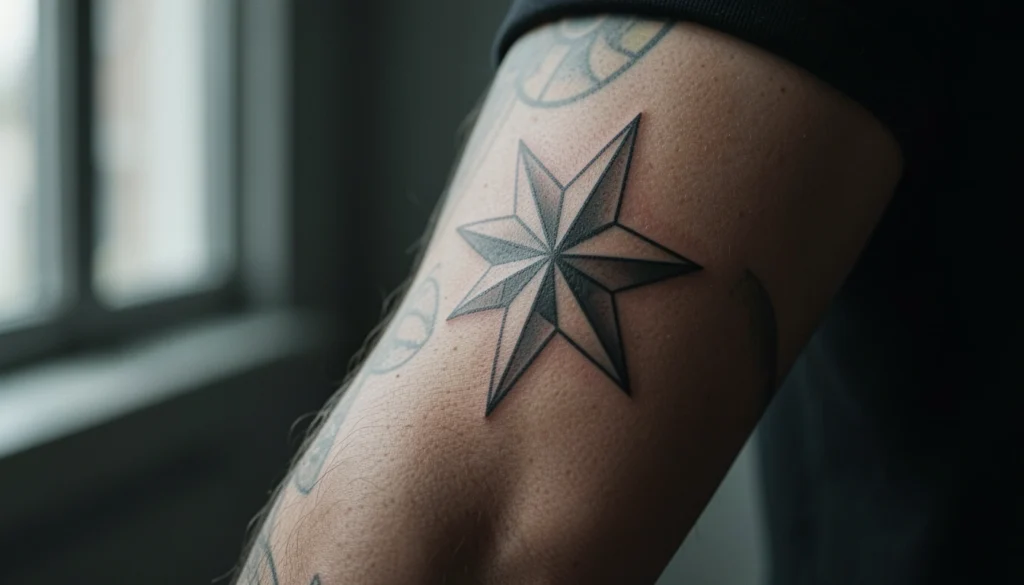
Single arm star placement
A solitary star on the arm is versatile and scales well from palm side wrist to bicep. For a masculine aesthetic choose slightly thicker outer lines and keep inner geometry open so the shape does not fade into the surrounding skin. If you want future additions, leave measured negative space around the star for smooth expansion.
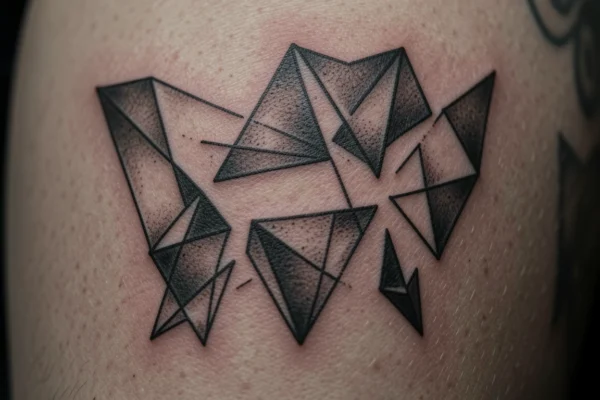
Abstract geometric star
An abstract interpretation breaks the star down into intersecting lines and voids for a modern look. This approach works well on flat planes such as the chest or the inner forearm where the geometry can be appreciated up close. Ask for a high contrast stencil view so you can verify internal intersections do not create unintended thin details.
Back star centerpiece
Using a star as a back centerpiece lets you experiment with scale and surrounding filigree. Large format allows for precise radial symmetry and for the artist to layer subtle shading that supports geometric edges. Before you commit, view the design in several poses so the vertical centerline of the back aligns with the star center.
Intricate middle medallion
A complex star placed centrally on the chest acts like a medallion and can include concentric geometry and dot work. Because the chest moves with breathing, make sure inner lines are not so fine they will spread. Ask your artist to show how the piece will look both at rest and when the chest expands so you can assess how the geometry behaves with motion.
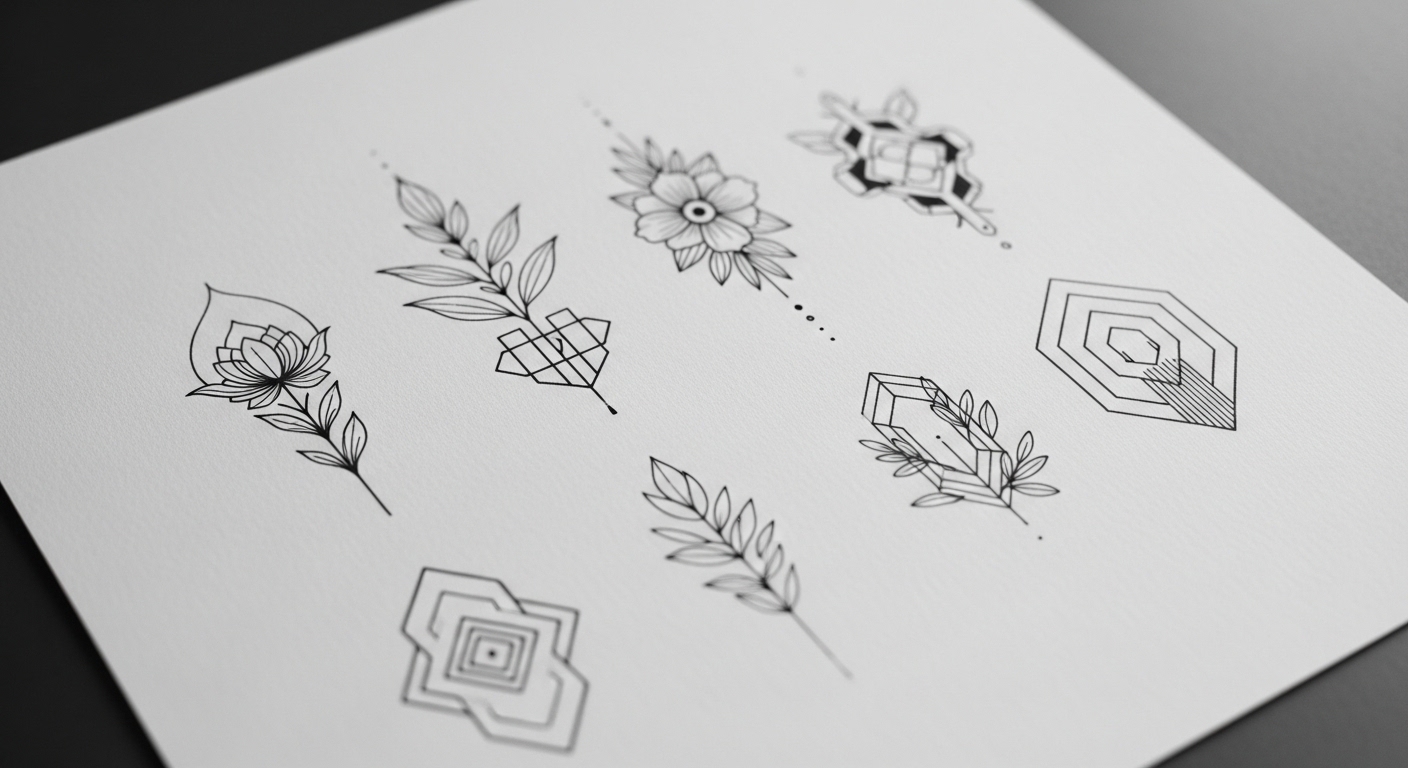
Black and white star set
A black and white study of star shapes highlights how contrast defines form without relying on color. This is a good option if you want a cohesive collection of stars that sit together across the body. Discuss whether you want pure black fills, stippled shading, or open linework to keep the set visually balanced.
Triangle and galaxy composition
Integrating a triangle with stars and a galaxy motif brings geometric framing and cosmic texture into one piece. The triangle can act as a stage for small star elements and background shading to suggest depth. If you like this layered idea, plan for session time that allows the artist to place linework first and then add tonal fills in a follow up visit if needed.
Sunburst style star lines
Using radiating lines and dots around a star creates a sunburst quality that emphasizes the central geometry. This approach looks strong on the sternum or the upper arm where the rays have room to extend. Confirm the length of the rays and the density of the dots so the composition feels deliberate rather than busy.
Compass photo reference
Photographic compass references help show how a star sits within a navigational device and how shading can support geometry. If you want a realistic compass style, choose a larger placement to preserve fine detail. Bring the photo to your consultation and ask which areas the artist might simplify to maintain crispness over time.
Chest integrated design
A central star woven into a chest composition can carry symbolic weight and provide an organizing motif for future pieces. Since the chest may be exposed to sun, discuss ink saturation and contrast choices that help the design maintain visible edges. If you plan to add color later, map out where the star will remain monochrome versus colored.
Shoulder star with chest flow
A shoulder star that continues onto the chest creates a dynamic diagonal flow which can look very masculine and intentional. This type of piece benefits from a bold outer frame and internal geometry that echoes the chest design. Talk to your artist about gradients and how to keep the star distinct when it shares space with other black and gray elements.
Starburst line study
Starburst line studies reduce the motif to repeated angles and radiating strokes for a minimalist but impactful tattoo. These read well on the forearm or the back of the neck when kept small and evenly spaced. Ask for a print of the stencil so you can inspect how the negative space reads before the needle touches your skin.
Planetary system with star
Combining a geometric star with a scaled planetary layout creates a narrative about order and cosmos. This layout suits longer surfaces such as the outer forearm or the rib area where the planets can be spaced along a line. If you want consistent proportions, ask your artist to measure planet sizes relative to the star so the overall composition feels intentional.
Cross and compass fusion
Joining a star with cross and compass elements produces a symbolic piece that blends directional and spiritual themes. Placement on the upper back or chest gives the artist space to balance each symbol and maintain geometric clarity. Before inking, request to see how the three elements sit together in different sizes so you can choose the best scale for reading from a distance.
What to consider when choosing a geometric star tattoo
Start by deciding how much internal detail you want because geometry that looks intricate on paper can crowd on skin if the piece is too small. Thin intersecting lines and tiny negative spaces require a larger canvas so the pattern stays distinct as the tattoo ages. For compact placements like the wrist or ankle, favor simpler outlines and a few internal rules of symmetry to preserve clarity.
Next consider body movement, sun exposure, and how the star will integrate with existing work. Areas that stretch frequently need slightly bolder lines and larger spacing between elements. Bring a few reference images to your consultation and ask the artist to create stencils at different scales. This way you can compare how symmetry reads at each size and pick the version that fits your body and future plans.
Frequently Asked Questions
Size depends on placement and detail. Small pieces under one inch are best when the star is simple with bold outer lines and minimal interior geometry. For internal patterns and intersecting lines plan for two to four inches or larger so the negative space holds up. Discuss scale with your artist and ask to see stencils at different sizes to judge readability on your chosen body area.
Common placements include the forearm, shoulder, chest, back, and thigh. Each location changes how the geometry sits because the surface curvature and muscle movement can alter perceived symmetry. For example the forearm and upper arm give a flat plane for crisp lines while the shoulder and chest offer larger areas for complex designs. Consider future expansion and pick a spot that allows breathing room around the star if you may add work later.
Finely detailed geometry requires more surface area to avoid blurring over time. Lines closer than about one to two millimeters can merge as the skin ages so artists often recommend slightly wider spacing and occasional bolder anchor lines. If you want very tight internal patterns, plan for a larger piece and ask the artist to test the design with a stencil and a magnified reference. Prioritizing clear negative spaces and measured line thickness will help the star remain legible long term.
Yes, stars pair well with compasses, moons, arrows, and galaxy elements to create a theme. The key is to keep a consistent visual language so the motifs share line weight and spacing. When blending styles decide whether you want everything geometric or a mix of geometric and soft shading. During your consultation bring examples and ask the artist to harmonize the components so the star does not get lost among denser imagery.
Start by identifying which features you like in the reference for example point angle, inner geometry, or surrounding elements. Ask the artist to redraw the star with measured proportions so the apexes and inner intersections align perfectly. Request versions with incremental simplification to see how less detail affects the overall feel and readability. This iterative approach helps you land on a custom design that reflects the reference but functions well on skin.
Ask how they handle line thickness for small geometric work and whether they adjust for placement movement. Inquire about their approach to stenciling and how they verify symmetry before starting. It is helpful to request photos of previous geometric pieces of similar scale and placement so you can assess how their lines age and how they maintain crisp intersections. Clear communication about these technical details reduces surprises and improves the final result.
Follow the aftercare instructions from your artist which usually include keeping the area clean and applying a recommended moisturizer sparingly. Avoid picking at scabs and limit heavy sun exposure while the skin is vulnerable because UV light can fade crisp black lines early on. Keep clothing from rubbing the fresh tattoo and avoid soaking the area in pools or baths until the outer layer of skin has healed sufficiently. If swelling or unusual symptoms appear contact your artist or a medical professional for guidance.
Choosing among geometric star tattoos for men comes down to scale, how the design will sit on your body, and whether you want it to stand alone or become part of a larger composition. Save a small selection of three to five references and note what you like about each for example line weight, spacing, or how the star interacts with other elements. Bring those notes to a consultation, ask for stencils at the sizes you prefer, and take the time to confirm how symmetry reads before the first needle stroke. That focused approach leads to a geometric star that fits your body and stays clear over time.