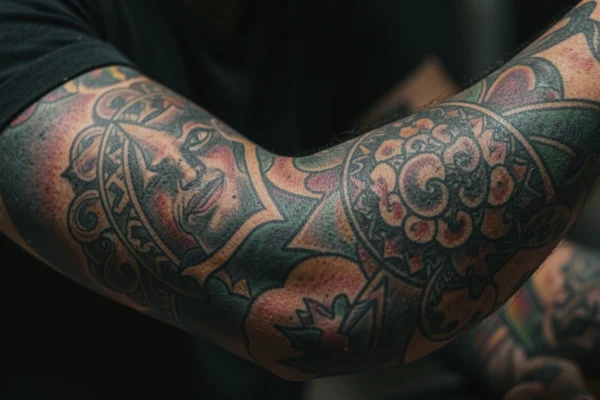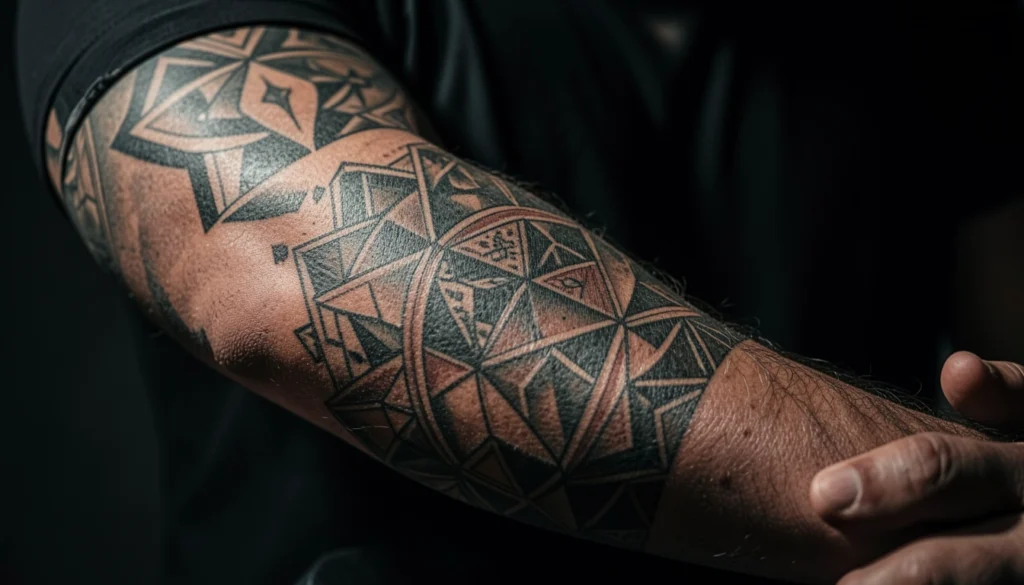
Choosing clear, repeating geometry across the forearm and bicep matters when planning geometric full sleeve tattoos for guys because regular patterns read better on moving skin than tiny, isolated details. The way shapes flow into the shoulder determines whether the sleeve looks cohesive from a distance and up close.
Scale and negative space are practical choices to weigh next; larger polygons and bands keep the design legible while preserved skin breaks let the eye rest. Consider whether you want a tight repeating pattern that wraps the arm or larger geometric zones that mix with figurative elements.
The ideas below compare visual directions and technical needs so you can narrow options before a consultation. Expect notes on composition, placement, and questions to bring to your artist.
17 geometric full sleeve ideas for guys
Repeating polygon bands
This concept uses repeating polygons that wrap the forearm and connect at the elbow to form continuous bands. Repeating shapes make the sleeve appear unified when viewed from different angles, and they tolerate natural skin movement better than highly detailed micro work. Ask your artist about line weight and spacing so the geometry remains crisp after healing and over time.
Geometry with photographic contrast
Here the arm geometry sits alongside areas that read like photographic contrast, creating a visual push and pull. That contrast can emphasize geometric panels by using strong black shapes next to lighter negative space. If you plan to mix photorealism with geometry, clarify which parts are primary so the artist can sequence sessions and choose needles that support both styles.
Intricate tessellated shoulder
A tessellated pattern across shoulder and upper arm creates an intricate cap that can flow into a sleeve. This approach relies on precise symmetry and repeatable units so alignment at seams matters. During the consult, request to see how the pattern maps to your shoulder contours and how the artist will match repeat units at session breaks.
Nature motifs inside geometry
Combining trees and animals within geometric frames offers a contrast between organic shapes and rigid structure. This preserves narrative scenes while keeping an overall geometric language for the sleeve. Decide whether the natural elements should be fully detailed or suggested with simple silhouettes so the geometry remains the dominant organizing device.
High contrast black and white panels
Black and white geometry creates bold panels that read well at a distance and age predictably if line weight is appropriate. Solid black shapes can anchor a sleeve and provide balance between detailed sections. Discuss how much solid black you want vs fine line work so tattoo sessions can be scheduled to allow adequate healing between dense black fills and delicate line sections.
Layered motif montage
A montage of geometric motifs stacked along the arm gives the sleeve a modular feel where each band has its own pattern. Modular planning makes it easier to add or remove sections later without reworking the entire sleeve. If you may expand or revise the sleeve later, ask the artist to leave transition zones with spare negative space to blend future work.
Single line geometry flow
Long single line geometry that flows from wrist to shoulder emphasizes movement and reads as one continuous form. This direction needs careful mapping so curves sit correctly over joints and muscles. Bring photos of your arm in relaxed and flexed positions for the artist to plan how lines will move with the skin.
Plant framed geometric panels
Using plant imagery inside geometric frames softens a strict pattern while keeping overall structure. The contrast lets you mix small realistic touches with larger geometric scaffolding. When choosing this approach, specify whether the plants are decorative or symbolic so the artist can balance detail with negative space appropriately.
Arm cap and sleeve blend
Blending a dense geometric cap over the shoulder into a looser sleeve below creates visual hierarchy that leads the eye naturally. A heavier shoulder anchor can offset finer geometry on the forearm to prevent overloading any single area. Clarify whether you want the shoulder to be the dominant piece or a supporting element so tattoo sessions can sequence from anchor outward.
Black geometric shading work
Shading within geometric shapes adds depth while keeping edges sharp when done with consistent technique. Soft shaded gradients can sit inside crisp polygons to create the illusion of dimensional blocks without lifting the style into realism. Ask about needle groupings and stippling options to achieve the tonal transitions you want without losing pattern clarity.
Negative space focal points
Negative space used as focal points breaks up dense geometry and directs attention to specific shapes. These light areas can be skin tone or very light shading and are effective for creating breathing room. Be explicit with your artist about which shapes should feel like visual rests because negative space placement affects the sleeve rhythm.
Fine line geometric details
Fine line geometry can create a textured look but it requires thicker supporting elements to remain legible as the tattoo ages. Keep the smallest details in protected areas away from frequent friction and be ready to discuss touch up plans with your artist. This direction is great when you want a detailed look that still reads as a single geometric composition.
Bold block geometry
Bold blocks of geometry provide strong silhouette and are forgiving on varied skin types. Large black or filled shapes can anchor a sleeve and contrast with finer motifs elsewhere. If you prefer a graphic, poster like quality, prioritize larger shapes and discuss how large fills will heal on your skin tone.
Asymmetric geometric panels
Asymmetric panels skip exact mirroring for a more organic mechanical look where pattern density shifts along the arm. This creates visual interest and lets the artist adapt geometry to musculature. For asymmetry, show preference for which side of the arm you want heavier detailing and ask how the artist will balance the opposite side visually.
Minimalist geometry accents
Minimal accents use simple geometric marks spaced along the arm for a subtler full sleeve effect without full coverage. This keeps the sleeve wearable in varied settings while retaining a strong style. If subtlety is important, discuss line thickness and spacing to avoid the design reading as scattered dots rather than an intentional composition.
Dense geometric mosaics
Mosaics made of many small shapes create texture and complexity across the sleeve, especially on larger arms where detail has room to breathe. These require longer sessions and careful planning so patterns do not collapse into visual noise. Work with the artist on sample patches and mockups to confirm that the mosaic reads as organized pattern at normal viewing distance.
Sketch style geometric draft
Sketch style geometry uses rough edges and irregular lines that mimic a drawn draft while keeping a geometric theme. This look can feel more personal and less mechanical than perfect repeat units. If you like a hand drawn aesthetic, ask your artist to show freehand studies on skin so you can preview how that looseness translates on the arm.
How to plan a geometric full sleeve for long term success
Start by prioritizing the reading distance of the design because geometric sleeves are meant to make an impact both close up and from afar. Choose a primary motif such as repeating polygons or mosaics and then define supporting elements like negative space or solid panels. A single dominant motif keeps the sleeve cohesive, while variation in scale and density prevents monotony. During the consultation, request stencils or digital mockups that map designs to your arm in multiple positions so you can see how lines and shapes align when the elbow bends and the wrist turns.
Next, discuss technical details with the artist that affect longevity. Line weight, needle grouping, and spacing determine how crisp fine geometry will remain after healing. Ask about session order because heavy black fills and delicate line work need different healing times. Also talk about touch up expectations and how often you may need refresh work, particularly for areas that see friction from clothing or daily activity. Finally, consider skin tone and placement to choose contrasts that will remain readable, and schedule your sessions with realistic gaps so the skin recovers properly between dense and fine work.
Frequently Asked Questions
Choose scale based on how often you want the details to read at a normal viewing distance and how active your skin is in the target area. Larger polygons and bands read well from across the room and are more forgiving on elbows and other moving surfaces. Finer tessellation looks intricate up close but can blur over time, especially where clothing rubs the skin. To decide, ask your artist for a mockup at full size and view it from arm length and three to five feet away. This helps reveal whether the chosen scale will maintain clarity when you move or after a few years of normal wear.
Yes, movement affects geometric patterns because skin stretches and compresses over joints which can change shape alignment. To reduce distortion, designers place repeat units away from high stretch zones or use larger modules that tolerate movement. Artists often plan lines to follow muscle direction and place transition zones at natural skin breaks so a pattern appears continuous when the arm is relaxed. During your consultation, request to see stencil placement with your elbow flexed and extended so you can judge how the geometry reads through common motions.
Ask about their experience with geometric work and request healed photos of full sleeve pieces done on real clients to evaluate consistency. Inquire about line weight choices and needle setups for balancing fine detail and solid fills. Discuss session timing and how they plan to sequence dense panels versus fine line areas so healing does not compromise adjacent work. Also confirm touch up policies and how they approach mapping geometry to your specific arm shape and proportions. These concrete topics reveal whether the artist can deliver the precision geometric work you want.
Completion time varies widely based on coverage, level of detail, and how much solid black is involved, but expect multiple sessions over several months. Simple repeating bands may be done in fewer visits if they are large and bold, while mosaic style sleeves with many small shapes require longer sessions and more total time. Allow for healing between sessions and possible touch ups, especially for fine line or very dense black areas. Your artist can give a realistic timeline after seeing your arm and the chosen design complexity.
Yes, mixing geometric frames with plant or animal imagery is a common and effective approach to create contrast and narrative. Use geometry as an organizing scaffold to house figurative work or to create negative space windows that frame scenes. Be specific about which sections you want to read as symbolic and which should be decorative so the artist can balance detail and simplicity. Combining styles requires technical versatility, so choose an artist comfortable in both geometric and figurative techniques to ensure a seamless blend.
Aftercare follows standard tattoo practices but with attention to areas of dense black and places that received fine line work since they heal differently. Keep the sleeve clean and moisturized according to your artist instructions and avoid tight clothing that rubs the new tattoo, particularly over repeat patterns where friction can blur crisp edges. Expect different healing looks across sections and follow up with your artist for any early touch up needs. Sun protection after healing is important to preserve contrast and prevent premature fading of geometric lines.
Budget depends on the artist rate, complexity, and number of sessions required; geometric sleeves that rely on precision may cost more because of the extra planning and stencil work. Expect to pay for multiple long sessions rather than a single short visit and factor in touch up appointments if fine details need reinforcement. Prices vary by region and artist skill level, so get estimates during consultation and compare portfolios rather than choosing solely on price. Always plan for quality because precise geometry and proper execution have a big influence on long term satisfaction.
Narrow your choices by deciding first whether you want bold, readable shapes or intricate fill work that rewards close inspection. Save three to five favorites and note what you like about each for scale, negative space, and placement before meeting an artist. Use those notes to guide a focused consultation and to decide on a session plan that balances anchors and detail. That process helps ensure your geometric full sleeve communicates the look you want while remaining practical to execute and maintain.