


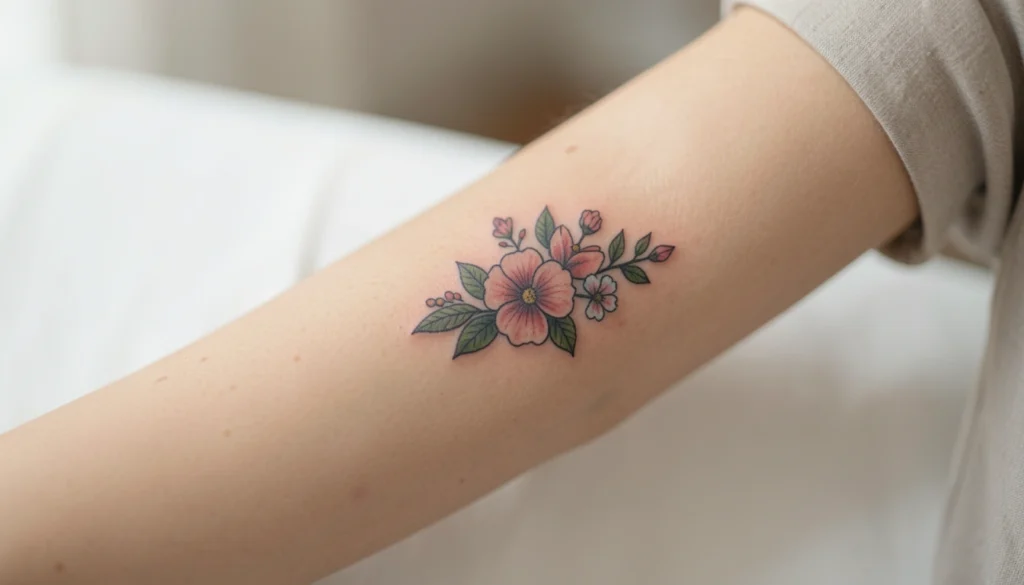
Delicate single stem motifs sit well on the outer forearm when choosing floral small arm tattoos for women because they keep detail readable at a small scale and follow the arm line. Small pieces that emphasize clear silhouettes and a few strong lines age more predictably than densely shaded miniatures.
Deciding between a vertical sprig and a horizontal sprig matters for how the tattoo moves with clothing and arm gestures. Vertical placements look graceful when the arm is relaxed while horizontal motifs can tuck neatly near the wrist or inner arm.
Below are twenty practical examples with short notes to help you compare line weight, placement, and customization so you can pick a direction before your studio visit.
20 small floral arm tattoo ideas to consider for floral small arm tattoos for women
Single stem with tiny blooms
The pin description mentions tiny flowers growing out of a small flower on the left side of the arm, which suggests a design built around a main bloom with delicate secondary buds. That structure reads well at small sizes because the primary bloom anchors the eye and the little extras add movement. Ask your artist about slightly thicker main outlines so the focal bloom keeps contrast as the tattoo ages.
Classic single blossom photo
A simple flower on the arm can work as a standalone statement or as part of an eventual sleeve. When you like a single blossom, consider whether you want it centered on the outer forearm or placed nearer the shoulder for a subtler reveal. Clarify with your artist how much negative space to leave around the bloom so the piece does not feel crowded on smaller arms.
Shoulder to arm continuity
A design that bridges shoulder and upper arm creates a gentle flow that reads larger than an isolated wrist mark. If you are drawn to a tattoo that continues up toward the shoulder, plan the stem direction so it complements clothing lines and shoulder curves. Request a preview sketch showing how the motif sits when your arm is relaxed and when it is lifted.
Wrist side floral band
Flowers and leaves near the left side of the wrist suit a wrap or band look and can be scaled modestly without losing clarity. The wrist area is high movement so thinner stems are elegant, but ask for slightly bolder main lines to prevent early blurring. Think about whether you want the motif to peek from under sleeves or sit fully on display.
Layered blooms and sketch notes
Multiple small flowers grouped together can read like a single textured mark from a distance and still reveal detail up close. The taped paper in the pin description suggests a design draft or reference layers. Bring reference images and ask the artist to show line weight options so you can choose the density that complements your skin and arm size.
Small side arm blossom
A left side arm placement keeps the tattoo visible without being central when you wear short sleeves. For compact floral pieces, position testing with tracing paper or temporary transfers helps you confirm sightlines and comfort. Consider whether you want the piece closer to the elbow crease for interaction with arm movement or nearer the tricep for a quieter placement.
Raised arm display
A tattoo designed to look intentional when the hand is raised can create a playful reveal. If you plan to show the design in gestures, ask an artist to check visibility at different arm angles. Small florals with a clear silhouette are easier to recognize in motion than detailed scenes which can blur into an indistinct shape.
Minimal single flower
Small single flower marks on the arm emphasize clean outline and negative space. When you prefer minimalism, a crisp black outline and selective dot shading keep the image readable. Decide whether you want subtle color washes or strict monochrome, and ask to see both options on a tracing so you can compare clarity at the chosen scale.
Delicate forearm blossom
A central forearm flower offers visibility and symmetry when aligned with the arm bones. This location is forgiving for slightly larger small tattoos and supports some interior shading without losing shape. If you want the piece to remain discreet when you wear long sleeves, place it a little higher toward the inner forearm.
Wrist accent flower
Small flowers on the left side of the wrist work well as accent tattoos that pair with bracelets. When choosing a wrist spot, consider how rings or watches will frame the piece. Ask your artist about slightly rounded edges and soft shading to avoid the stenciled look that can make tiny petals appear boxy over time.
Thick stem, small petals
A design with a firmer stem and small petals trades delicate detail for structural clarity which helps longevity. If you favor that contrast, request the artist emphasize the stem and main contours while rendering petals with lighter line work. This approach keeps the silhouette strong and the floral character intact as the tattoo ages.
Religious and floral mix
A small cross paired with flowers blends symbolism and botanical imagery into a compact composition. When combining motifs, ensure the elements are balanced so neither dominates at the chosen size. Discuss scale relationships with your artist and whether small text or dates should be included, because lettering may blur if placed too tiny next to the floral elements.
Back of arm accent
Placing a small flower on the back of the left arm creates a subtle detail that is revealed when you reach or lift the arm. This spot suits vertical stems that follow the natural line down toward the elbow. Ask for a placement stencil and wear the clothing you typically would to judge how often the piece will be visible in day to day life.
Wrist side classic
Repetition of a wrist side bloom across references suggests this is a popular compact spot for small arm florals. If you like a design repeated in a style set, consider having the artist create small variations so each tattoo feels unique. That also helps if you later want to add connecting stems or tiny filler motifs between pieces.
Tiny wrist marker
A subtle tattoo on the wrist can function like jewelry that does not need maintenance. For a minimal marker, confirm with your artist that any dots or fine lines are not below the studio minimum size. Some studios will slightly enlarge the original reference to ensure clean lines and longer lasting detail.
Small clustered petals
Clusters of small flowers form a compact visual texture that reads as an intentional unit rather than separate tiny marks. When you choose clustering, discuss spacing so each bloom has breathing room and the negative space creates shape. That planning helps avoid a muddy appearance as the tattoo softens over years.
Single isolated bloom
An isolated small flower on the arm emphasizes simplicity and makes later additions easier. If you think you might expand the piece, make sure the orientation and stem direction support future growth. Ask your artist to leave subtle anchor points in the sketch where new elements could naturally connect.
Minimal arm accent
A tiny motif on the arm that is discreet in size still needs intentional line weight choices to remain legible. Request a sample of the proposed line thickness drawn on paper at actual size. Seeing the sketch at scale helps you decide whether the piece feels too soft or just right for everyday wear.
Small outer arm bloom
Flowers placed on the outer arm are visible and photograph well when you want to share the design. If you prefer less attention, move the placement slightly inward or toward the back of the arm. Discuss contrast and potential small color accents with your artist so the piece reads well in both natural and artificial light.
Paired hands with flowers
Two hands holding with tattoos shows how small floral marks can play a role in coordinated or matching pieces. If you plan matching tattoos with a partner or friend, agree on scale and line style rather than exact replication, because skin tone and placement can change how similar pieces look. Talk with your artist about minor adjustments that keep a shared theme while fitting each person.
How to choose size, placement, and line work for small floral arm tattoos
Selecting the right size and line weight is the most practical decision for floral small arm tattoos for women because it dictates long term readability. Small floral designs need balance between fine detail and structural outlines. Very thin detail looks delicate in the chair but can blur into a soft gray patch over several years. Ask your artist about a minimum line thickness and how much interior shading is safe for your chosen size and placement. A slightly bolder outline around the main bloom with softer internal lines often preserves the floral form while keeping the appearance delicate up close.
Placement choices change how the tattoo interacts with movement and clothing so consider visibility and context. The wrist and outer forearm are very visible and suit simple motifs, while the back of the arm or near the shoulder creates a quieter reveal. Bring several reference images and ask for temporary transfers or tracing paper tests so you can see the composition on your arm in different positions. Finally, discuss color saturation and aftercare expectations with the artist so you understand how maintenance choices and sun exposure can affect the piece.
Frequently Asked Questions
The best placement depends on the look you want and how often you want the tattoo visible. Outer forearm and wrist are common for visibility and photography but they receive more sun exposure and movement. Inner forearm and back of the arm are quieter and can protect fine detail. Try temporary transfers or tracing paper on the exact spot to judge sightlines and how the tattoo sits when you move. Discuss with your artist where natural lines on your arm will complement the stem direction so the design looks intentional whether your arm is relaxed or active.
A size that keeps the main elements large enough for slightly thicker outlines will age better than ultra fine tiny marks. For floral small arm tattoos, ask the studio about their minimum recommended size for lines and letter spacing. Often a bloom two to three centimeters across with a clear outline and simple internal shading avoids early blurring. If you want tiny buds, have them slightly separated or bolder in outline so they do not all merge as the ink settles. Your artist can redraw the reference at suggested size so you can see the amount of detail that will remain crisp after healing.
Clean single needle line work reads well for minimal pieces but requires artist experience to keep crisp edges, while a mix of bold outlines with soft gray or dot shading offers durability and a delicate look. Fine stippling inside petals can suggest texture without heavy ink saturation. Avoid dense realistic shading in a very small area because the ink concentration can blur. Ask your artist to show examples of their small floral work that are at least a year old so you can judge how different techniques hold up over time on skin similar to yours.
Color can add a subtle lift to small florals, but pale pastel washes will fade faster and may need touch ups to retain hue. Strong saturated color in small shapes can hold if applied by a color specialist and if the pigment sits evenly. Consider your skin tone because some colors show differently and may require slightly larger color areas to remain visible. Discuss with the artist which pigments they prefer for small work and ask to see healed examples. Also plan for sunscreen and aftercare to slow fading, and be prepared that small colored spots might need refresh sessions over the years.
Start with a composition that has natural anchor points for future additions, such as a stem end or a small open space near the bloom. When combining motifs over time, keep line weight and shading consistent so the pieces look intentional together. If you plan a connecting piece later, ask the artist to suggest orientation and stem direction that will flow into a larger cluster or a line of small motifs. Bringing reference images for both the initial piece and potential additions helps the artist plan spacing so new work can attach seamlessly without overcrowding the original tattoo.
Ask about the studio minimum size for line and text so your design will remain legible. Request to see healed photos of small floral work on similar skin tones and placements to judge their technical control. Ask which needle grouping and pigment types they recommend for fine detail and color stability. Confirm expected appointment time and a realistic price quote for the exact size, including any stencil revisions. Finally, ask about aftercare recommendations and typical touch up policies so you know what maintenance the artist expects for small, detailed pieces.
Collect clean reference photos that show the overall silhouette you want and a couple of close ups for line style and petal shape. Include images that show placement on an arm so the artist can see how similar pieces sit on anatomy. Make notes about preferred orientation, whether you want dot shading or color washes, and any symbolic details you want included. Avoid overwhelming the artist with too many conflicting styles; instead pick a few complementary references and trust the artist to adapt them into a single cohesive small design that fits your arm.
Small floral arm tattoos for women work best when you prioritize silhouette and line weight over tiny interior details. Narrow your choices to three to five references that vary placement and line style, note what you like about each one, and bring those favorites to a consultation. Ask the artist to place a temporary stencil so you can wear the mockup and test visibility in different clothing. Making decisions about scale and orientation before you sit down will ensure the final piece reads well now and in the years to come.


