Choosing fine line work and modest scale preserves detail and keeps a delicate wolf tattoo for women readable over time, especially on places like the ankle or ribcage where skin moves. The level of shading and the thickness of lines determine how the fur texture and facial features will age, so those choices matter from the start. Think about whether you want a stylized outline or a small portrait that requires tighter line control.
Compare placement, scale, and surrounding elements before settling on a design; a wolf head that is three to five inches across needs a different approach than a one inch ankle piece. Floral or celestial accents change focal points, so decide whether the wolf should be the clear subject or part of a larger motif. These decisions affect needle choices, session length, and how the artist composes negative space around the figure.
The ideas below help you compare small fine line placements, floral integrations, and leg or back pieces so you can identify which direction to take. Use the notes on scale, composition, and practical trade offs to prepare questions for your artist and to pick a small set of favorites.
21 delicate wolf tattoo ideas for women
Small ankle scene
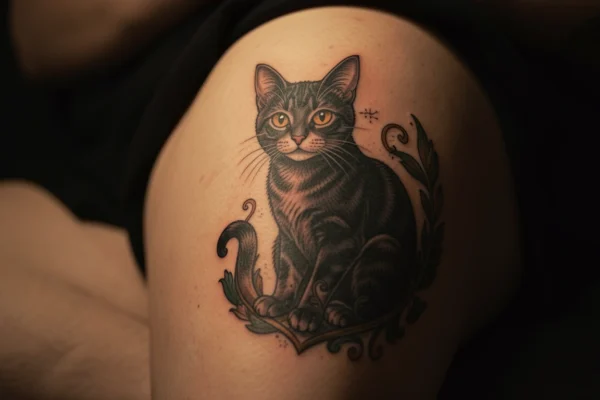
This ankle tattoo pairs a small animal motif with tiny stars and a secondary cat figure, showing how a wolf could sit comfortably in a compact scene. For a delicate wolf tattoo for women consider scaling the wolf so it reads from a short distance and use sparse dotwork for stars to avoid crowding the composition. Ask your artist about line thickness and how they will keep details crisp around curved anatomy like the ankle bone.
Minimal paw accent
This simple paw design shows how a tiny motif can carry symbolic meaning without full animal portraiture. For someone who wants a subtle wolf association, a small paw on the ankle reads like a quiet nod and requires less surface detail than a head. Discuss with your artist whether to include faint fur texture or keep the paw outline pure; texture adds character but needs slightly larger scale to remain legible over years.
Wolf with butterfly contrast
A black and white standing wolf paired with a butterfly highlights contrast between strength and delicacy, a useful approach for feminine placements. If you like that juxtaposition, request lighter linework on the butterfly and a touch more structure on the wolf so each element reads at the same viewing distance. Placement on a forearm or calf gives enough room for both figures to breathe without merging into one shape.
Stylized fox alternative
This fox design demonstrates how canid features can translate into a slim, leg friendly tattoo. If you prefer a delicate wolf tattoo for women but like the sleek silhouette here, ask the artist to adapt ear shape and muzzle length to suggest wolf anatomy while keeping the same minimal rendering. The leg placement shown gives a long vertical canvas that suits flowing fur lines and small floral accents around the figure.
Decorative wolf crown
A wolf adorned with flowers and a central arrow provides a bohemian option that mixes organic and geometric cues. For a delicate interpretation choose single line floral details and replace the bold arrow with a thin ornamental line so the overall piece remains soft. Consider where the crown sits relative to the wolf head; high contrast between head and floral elements affects how the design scales down for smaller placements like the upper arm or back of the shoulder.
Side of foot wolf
A lateral foot tattoo emphasizes silhouette and contour, letting a curled wolf shape follow the natural line of the foot. Foot skin and movement affect healing and detail retention, so ask for slightly bolder lines than you might pick for the forearm. If you want delicate shading, discuss how the artist will place it to avoid heavy fill that can blur on this area as the skin shifts during walking and shoe wear.
Floral chest composition
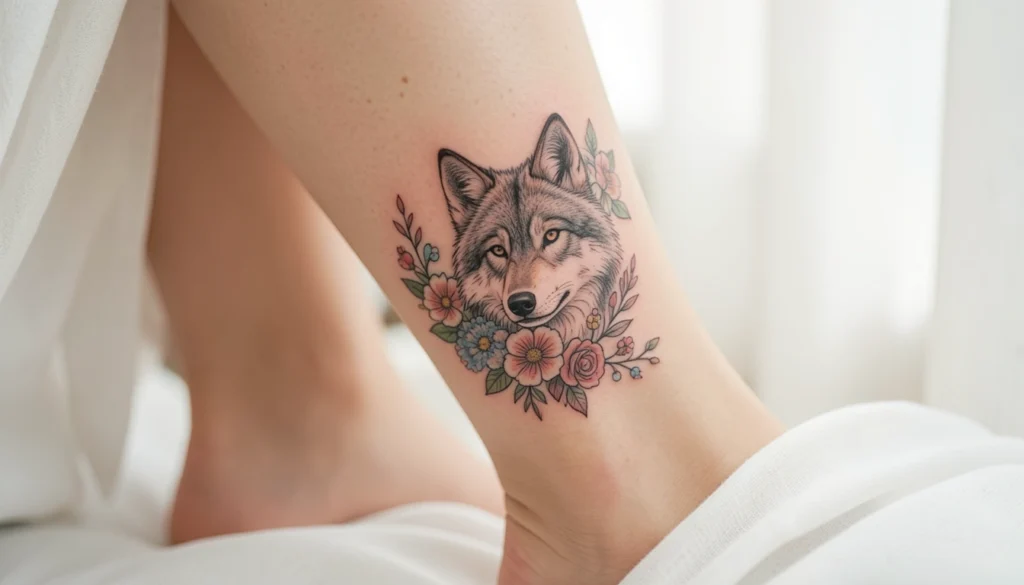
A wolf image combined with flowers over the chest offers a broader, feminine layout where the animal can be framed by petals and stems. For a delicate wolf tattoo for women keep the wolf lines the focus and let flowers be airy background elements in lighter ink or dotwork. Chest placement allows for symmetry and breathing space, letting the design grow if you later want to expand into a larger chest or sternum piece.
Small upper back spot
A small back tattoo near the shoulder blade is a discreet location that still gives the artist room to add fine detail. Select a slightly larger size than an ear behind the neck so the delicate wolf head keeps facial definition. Ask about how the skin in that area moves during stretching and exercise so you know what to expect in the first months of healing and in the long term.
Woman and wolf portrait
A combined portrait of a woman and a wolf shows how narrative elements can work in a single composition; this style leans toward illustrative detail. If you want a delicate take, request simplified facial features, limited heavy shading, and more line space between the two figures. Clarify how much realism you want so the artist knows whether to prioritize tiny fur strokes or clear, open contour lines that read smaller.
Stars woven into hair
This concept uses star motifs threaded into hair or fur to create a cosmic, feminine feel around the wolf. For a delicate wolf tattoo for women try small star dots or faint hollow stars rather than heavy black fill so they function as accents. Placement on the arm or upper shoulder lets the stars trail with body curves, so talk to the artist about how the composition will look when you move your arm.
Upper back animal block
A larger upper back piece gives space for an animal scene without cramping each element, useful if you want a soft but detailed wolf with background flora. For delicate work maintain open highlights on the wolf face so eyes and snout stay legible. If you anticipate future additions, discuss how this piece will integrate into a larger back layout so spacing is planned from the start.
Curled tail silhouette
A curled tail and rear profile can read elegantly as a small silhouette and works well in narrow placements like ribs or inner arm. Keep linework consistent to preserve the silhouette and use minimal internal detail to maintain clarity. Ask for a stencil preview to see how the curve aligns with your body; small shifts in placement can change how balanced the shape looks on a curved surface.
Head with leaf accents
A wolf head decorated with leaves brings an organic touch and frames the face without heavy fill. For a delicate interpretation pick thin botanical lines and let leaves overlap only softly so the wolf remains the focal point. Consider placement along the collarbone or upper arm where the leaves can curve with the muscles and the head can angle naturally toward the viewer.
Lower back outline
A lower back or stomach outline piece shows how minimal linework can reference a wolf without dense detail, letting the negative space define the shape. Small outlines work well when you want subtlety, but confirm with your artist that the lines will be thick enough to resist quick blurring in a resting area. If you plan clothing choices that expose the area rarely, a delicate outline might be an excellent discreet choice.
Neck and shoulder placement
A shoulder and neck placement can frame the jawline with a wolf head and allow natural movement to animate the design. For delicate details here, ask about slightly bolder anchor lines around the eye and jaw to keep expression as the skin stretches. Also discuss how visible you want the piece to be in professional and social environments since this area is often on display.
Behind ear small mark
A tiny mark behind the ear gives maximum discretion and can suggest a wolf motif with a minimalist outline or a single eye and ear. Because this spot is small, limit internal shading and focus on elegant contour lines. Check pain expectations and aftercare with the artist since the skin behind the ear is thin and healing differs from fleshier locations.
Botanical black and white
Black and white floral drawings are a clear example of how adding flowers around a wolf can soften a composition and make it feel explicitly feminine. If you want a delicate wolf tattoo for women pair fine floral linework with a simplified wolf head, keeping contrast low so nothing overpowers the head. Ask whether the artist will use single needle work or a set of fine liners for crisp petal edges.
Eyes highlighted in color
A mostly monochrome wolf with colored eyes or butterfly accents shows how a single pop of color can focus attention. For delicate designs keep color sparing and muted to preserve the overall soft feel. Clarify whether the color will be solid or softly shaded, as dense color requires larger surface area to avoid patchiness over time.
Decorative arrow motif
A wolf composition with a central arrow balances organic and directional elements, which can give a piece narrative while preserving delicacy. Ask your artist to render the arrow in thin lines and to reduce heavy fill around the arrow shaft so it does not compete with the wolf face. This approach suits sternum or upper chest placements where symmetry matters.
Moon and treeline scene
A wolf in front of a moon and trees reads as a classic scene that adapts well to a shoulder blade or upper arm canvas. To keep the piece delicate, simplify the treeline into light silhouettes and use stippling for moon texture rather than solid black. Ask the artist how they plan transitions between the wolf and the background to maintain depth without heavy ink blocks.
Side arm wolf
A wolf along the outer arm makes the animal appear elongated and graceful while staying visible when you wear short sleeves. For a delicate look, request flowing fur lines and restrained shading to keep the image light. Consider how the piece will look from various angles and whether you want the wolf facing toward or away from the hand; that choice affects visual movement and wearer preference.
How to prepare and protect a delicate wolf tattoo
Choosing a delicate wolf tattoo involves thinking through placement, size, and the kind of linework the artist will use. For tight, fine line pieces pick an artist who specializes in single needle or ultra fine liner work and review healed examples of similar scale. Placement will affect both comfort and longevity; areas that rub against clothing or shoes need slightly bolder anchor lines to resist faster blurring. Skin texture matters as well, so if you have stretch marks, very dry skin, or areas that sunburn easily, talk candidly about how those conditions influence detail over time.
During consultation bring clear references that show the scale you want and any specific elements such as flowers, stars, or a butterfly paired with the wolf. Ask the artist how they will adapt photographic or drawn references into tattoo stencils and what size they recommend to maintain detail. Plan aftercare with the artist and follow their guidance on cleaning and sun protection because a delicate piece benefits from cautious healing and ongoing SPF use to preserve line crispness. If you anticipate future additions, request placement adjustments now so the work can be expanded without awkward overlaps.
Frequently Asked Questions
The best placement depends on how visible you want the piece and how much detail it will contain. Areas such as the inner forearm, side of the ribcage, ankle, or behind the ear are common for delicate wolf tattoos for women because they offer a balance between discreet visibility and enough flat surface for fine lines. Inner arm and ribs allow the artist to use slightly longer lines and light shading, which helps maintain texture without crowding. If you prefer a small motif that can be easily hidden choose the ankle or behind the ear, remembering those areas can be more sensitive and may need slightly stronger anchor lines to remain crisp during healing. Discuss movement, clothing contact, and your daily exposure to sun with the artist so they can choose placement that supports long term legibility and minimal distortion.
Facial detail requires enough space so eyes, muzzle, and fur texture do not blur together as the tattoo ages. For fine line work aim for at least two to three inches across for a wolf head with recognizable facial features; smaller sizes work only with very simplified shapes and may lose tiny strokes over time. Ask to see healed photos from your artist of similar size and subject to confirm the result you expect. Artists often recommend slightly increasing the stencil size if you want subtle shading or small floral elements around the head so everything reads together at normal viewing distances. If you want a tiny symbol rather than a portrait choose a silhouette or minimal outline instead of intricate fur and facial lines.
Yes, combining flowers with a delicate wolf design works well if the composition maintains clear hierarchy and breathing room. Use lighter line weight and dotwork for floral accents so they act as supporting elements and do not compete with the wolf head. Space is important; keep a small margin between critical facial lines and overlapping petals to prevent visual merging as the piece ages. Another option is to place flowers as a light crown or framing band rather than filling the same area, which helps the wolf remain the focal point. During consultation bring reference images that show how much floral detail you like and ask the artist to create a few layout options at different scales to evaluate clarity.
Look for an artist whose portfolio shows healed fine line animal portraits or botanical work at the scale you want. Request healed photos rather than fresh work because initial crispness can hide how the lines settle over months. Ask about the needles and machines they use for single needle or ultra fine line techniques and whether they recommend small adjustments to your reference to improve long term clarity. During a consultation evaluate their approach to line weight, stencil fidelity, and shading restraint; an experienced artist will explain how they adapt thin details for skin texture and will suggest the minimum size to preserve expression. Check reviews that mention durability of small pieces and if possible speak with clients who had similar work done by that artist.
Aftercare is crucial for delicate pieces because early scabbing, improper cleansing, or sun exposure can blur fine lines. Follow your artist’s specific cleaning and moisturizing plan and resist picking at scabs to avoid line breakage. Keep fresh tattoos out of direct sun and wear SPF once healed; even small daily exposure gradually fades fine line contrast. Use gentle, non scented moisturizers during healing and avoid vigorous exfoliation in the tattoo area later on. If you notice any raised scabbing or prolonged irritation contact your artist or a medical professional; early intervention can prevent uneven healing that damages delicate elements.
Fine line work can appear to fade faster because it relies on thin strokes and subtle contrast, but proper technique and aftercare significantly affect longevity. Bold designs with heavy black fill hide slight fading better, while delicate lines show wear more readily. Factors that affect fade include placement, sun exposure, skin type, and how much friction the area receives from clothing. To extend life choose UV protection, avoid prolonged abrasion, and consider touch ups with your artist after the first year if outlines soften. Selecting slightly thicker anchor lines for critical features can also preserve important expression while maintaining an overall delicate look.
Bring clear reference images that show the exact scale, style, and elements you want, and label the ones you like most to explain priorities. Ask the artist how they will adapt the reference for skin contour, what minimum size they recommend, and whether certain shading choices should be simplified for durability. Inquire about healing expectations for your chosen placement, request to see healed examples, and ask about pricing and session time for the size you want. Discuss expansion plans up front if you may later add flowers, stars, or additional animals so the initial piece is composed with future growth in mind. Finally, ask about realistic timelines for touch ups and what aftercare they recommend to protect fine line clarity.
Choosing a delicate wolf tattoo for women comes down to selecting the right balance between scale, line weight, and supporting elements. Narrow your choices by picking three favorites in different sizes and noting whether you prefer silhouette, portrait, or an integrated floral scene. Save those references and write down what you like about each one before your consultation. The most practical next step is to ask an experienced fine line artist to mock up stencils at actual size so you can see how each option sits on your body before committing.