I still get a little thrill every time I look at large Japanese tattoo designs – they feel timeless, dramatic, and somehow calming all at once. Growing up, I collected images of koi, dragons, and pagodas on sticky notes, and now I scroll through designs the way some people scroll playlists.
This little guide exists because I wanted to share the best large Japanese tattoo designs I’ve pinned over the years, the ones that made me gasp and then save them to a million boards. I’ve gotten one full-sleeve inspired by the style and chatted with several artists about sizing and flow, so a few of these tips come from actually sitting in a studio chair.
Below you’ll find 11 Japanese-inspired pieces with my honest takes, sizing thoughts, and a couple of real-life notes about working with artists – plus a short how-to section so you can make these designs work for you.
These 11 Large Japanese Tattoo Designs Will Make You Want to Book an Appointment
Tiger & Dragon Clash
I love that classic contrast of tiger and dragon here – such a dynamic composition for a back piece or chest. The balance of fierce animals feels so emblematic of large Japanese tattoo designs, where mythology and power meet beautiful linework. If I were placing this, I’d let it breathe on the shoulder blades and flow into the spine for maximum drama, honestly.
Colorful Animal Collage
This assortment of colored tigers and lions would make an amazing sleeve foundation, especially if you like pops of unexpected hues. My first artist suggested mixing muted tones with one bright focal color, and that trick really made a design sing on my arm. You can see how these pieces could become cohesive within a larger Japanese-themed layout.
Floral Dragon Heads
The way the dragon heads curl around flowers is dreamlike and very wearable as a thigh or ribcage panel. I remember tracing a similar sketch for hours before committing to placement – patience pays off when designing large Japanese tattoo designs. Pop some subtle shading in the florals so the dragons stay the focal point.
Blue Flame Dragon
Blue flames give this dragon a modern twist while keeping that traditional silhouette, and it reads beautifully on a full-back piece. My friend actually used blue like this to tie in other cooler tones across her sleeve, which made everything feel intentional rather than random. Consider skin tone when choosing blues – contrast matters for longevity.
Pagoda Moon Scene
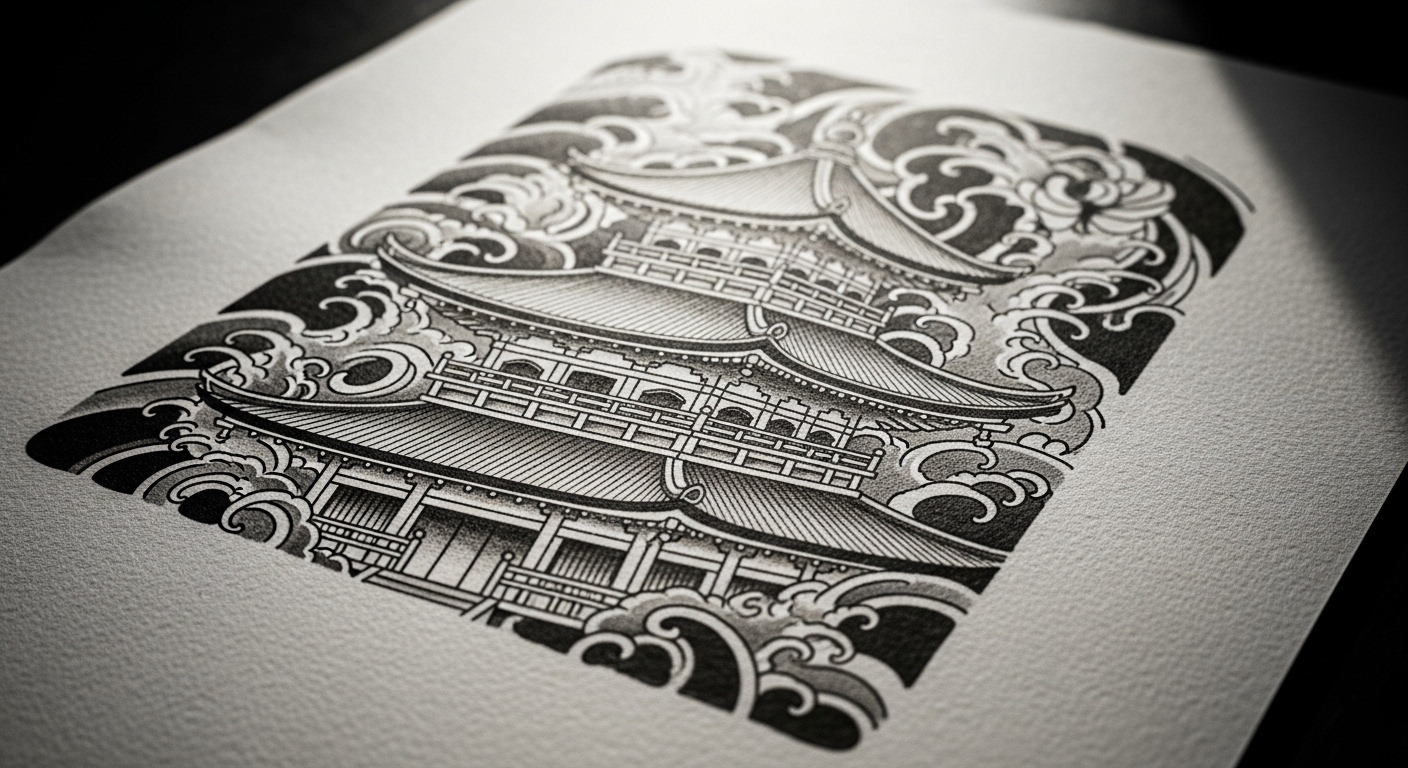
This ink pagoda with flowers and a full moon could be serene as a shoulder cap or wrapped around the calf. I’ve always been drawn to negative space in large Japanese tattoo designs, and that moon here gives the whole piece a breathing room I adore. If you want subtlety with cultural motifs, this is the mood to aim for.
Minimal Blue Dragon Sketch
The sketchy style of this blue dragon is perfect if you want the energy of a large piece without feeling too heavy. I got a similar textured line once and loved how it aged – it looked like a drawing that had been animated on my skin. This kind of design is also great for mixing into a larger Japanese-themed sleeve later on.
Bird Study on Paper
Someone holding a big bird drawing gives me serious custom-design vibes, which is exactly how many traditional Japanese motifs get modernized. I once watched an artist trace a paper study like this directly onto transfer paper, and the final tattoo kept the draft’s original motion – it was wild. If you love hand-drawn character, ask your artist to preserve that from the sketch stage.
Koi & Pagoda Sleeve
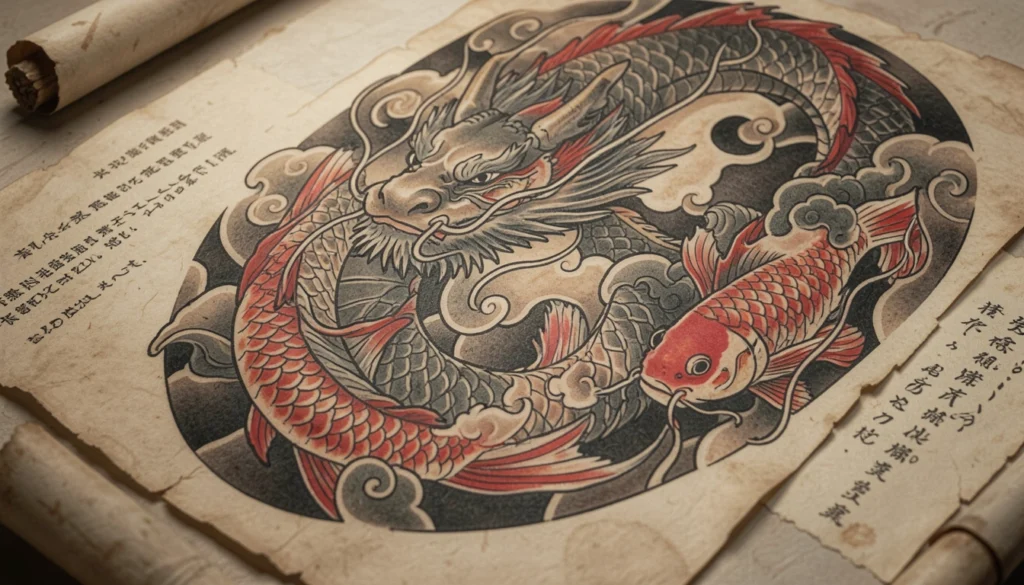
The koi, waves, and pagoda composition reads like a classic sleeve template that never gets old. I have a small koi detail on my forearm and people always ask about the story behind it, which goes to show how personal these large Japanese tattoo designs can feel. Think about how the koi’s movement will wrap around muscle to keep it alive as you flex and move.
Hand-Drawn Reference
Holding a drawing like this is such a good reminder that custom pieces start on paper – it’s literal proof that artists plan the flow. My artist once swapped a floral for a chrysanthemum at the last minute, and the whole design read better, so be flexible in consultations. Wait, actually sometimes those last-minute swaps become the part you love most.
Chest & Arm Integration
This photo of a man with chest and arm tattoos shows how large Japanese tattoo designs can integrate across planes of the body for a natural flow. When I considered a half-back to sleeve piece, my artist mapped out how the chest would anchor the composition, which made me feel way more confident. If you want cohesion, plan transitions between areas instead of treating them as separate tattoos.
Koi and Lily Arm Piece
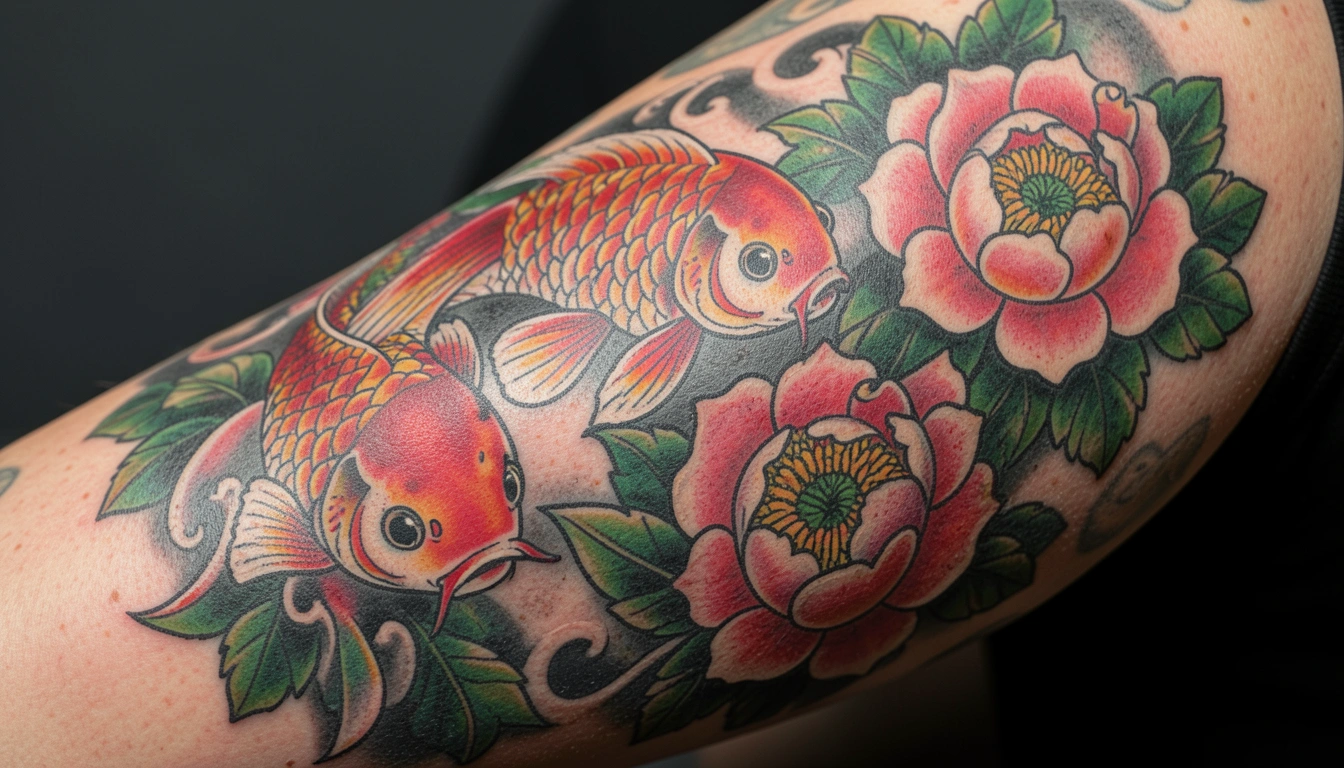
This koi and lily design is so elegant on the forearm – it’s playful and timeless in equal measure. I once covered up a small floral with a koi element and it transformed the whole story of my arm, so don’t underestimate the narrative power of these motifs. Large Japanese tattoo designs often tell stories, and this one reads like calm water meeting gentle motion.
How to Actually Make This Work For You
Think of these tips like a friendly cheat sheet: first, plan the flow before the details – map how a dragon, koi, or wave will move with your anatomy and ask your artist to draw the full layout on tracing paper so you can see the rhythm; second, pick one or two anchor elements (a dragon head, a pagoda, a large flower) and let other motifs sit in supporting roles so the piece doesn’t get noisy; third, be realistic about sessions and aftercare – large Japanese tattoo designs need time to settle and sometimes color touch-ups later, so budget both money and patience. Also, ask about ink longevity and how colors age on your skin tone so the vibrancy you love now doesn’t surprise you later.
Frequently Asked Questions
Large Japanese tattoo designs usually need a broad canvas like the back, chest, or a full arm to let the dragon, koi, and waves flow naturally; talk to your artist about how the elements will wrap around muscles so the piece reads as one story rather than a collage.
Absolutely – modern color palettes can refresh classic motifs, but make sure your artist plans the palette so colors support the linework and don’t fight for attention; a single pop color often ties a full piece together.
Bring lots of references, ask about session length and pricing, request to see healed photos of similar scale work, and clarify aftercare expectations so you know what healing will actually look like in real life.
Surface healing is usually a few weeks but full settling can take months, and color pieces or intricate shading sometimes need touch-ups after healing to achieve that final, crisp finish.
Okay, if you made it this far – nice! Large Japanese tattoo designs are equal parts story and structure, and I hope these pins sparked at least one idea you want to keep. Save the ones you love, share them with your artist, or send this to a friend who’s been saying they need a new ink plan – I promise you’ll feel less overwhelmed after a short chat with a pro. Thanks for scrolling with me, and if you end up booking something, tell me all about it – I live for the reveal photos.