I have been obsessed with temple imagery for years and something about a traditional japanese temple tattoo always makes me pause – it feels like slow, intentional storytelling inked into skin. When I first started collecting reference photos I realized pagodas and temple steps are such a quiet way to carry a place with you, and a design like this can be soft or bold depending on line weight and negative space.
I wrote this because you asked for real ideas that actually translate to skin – not just pretty pictures. After getting my own small pagoda-style piece, I learned what works on arms versus thighs and what looks awkward when scaled down, so I wanted to share what I’ve learned about choosing and placing a traditional japanese temple tattoo.
Below you’ll find 27 pins that show pagodas, gates, steps, and placements so you can save your favorites and picture how a temple tattoo might read on your body – plus tips on making it personal and wearable.
These 27 Traditional Japanese Temple Tattoo Ideas Will Make You Want to Book an Appointment
Tall Pagoda Silhouette
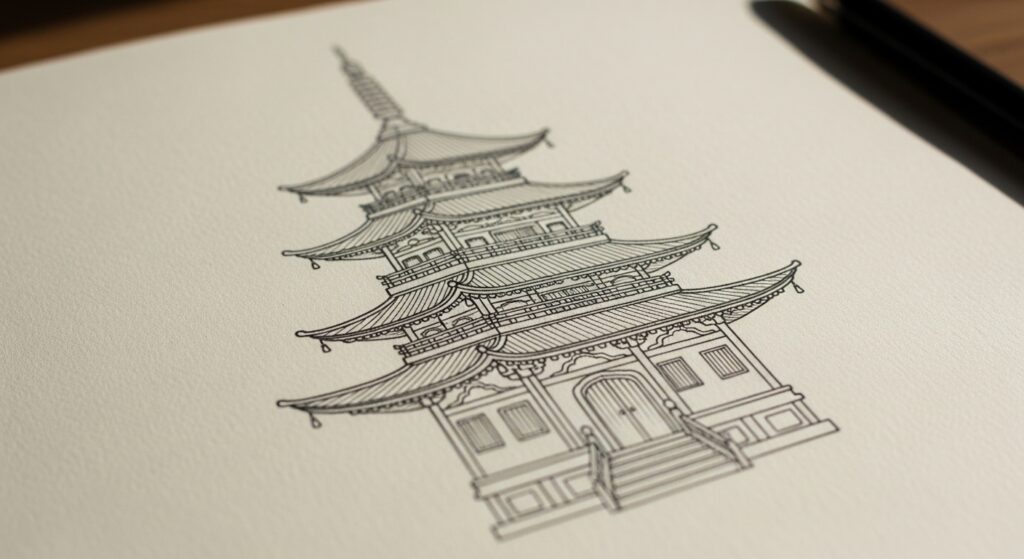
This simple black and white pagoda drawing is everything I love about temple tattoos – clean lines and dramatic verticality. I imagine this as a spine or forearm piece because the stacked roofs look gorgeous following a natural line. If you like architectural balance, a traditional japanese temple tattoo in silhouette can be timeless.
Boat and Pagoda Scene
A tiny boat floating in front of a building with pagodas creates a lovely narrative; it feels like travel inked into skin. You could tuck this along the rib or calf and it would still read like a full scene. I once sketched a similar idea for a friend and we decided to emphasize foggy negative space for mood – it was such a vibe.
Arm Pagoda with Florals
This arm tattoo blends flowers and a pagoda in a soft black palette and shows how you can pair nature with architecture. If you want something delicate, ask your artist for thinner line work and lighter shading so the pagoda stays readable among blooms. You’ll adore how a traditional japanese temple tattoo reads when paired with floral motifs – it feels both feminine and stoic.
Minimal Pagoda Sketch
This minimal pagoda drawing proves you don’t need heavy ink to make a statement. Small, single-needle lines can still convey the stepped roofs and give you a subtle nod to a temple without committing to a full back piece. If you’re shy about tattoos, this style makes a traditional japanese temple tattoo feel wearable every day.
Casual Arm Shot
The cropped arm photo shows how a pagoda or temple element sits naturally when wrapped around the forearm. Positioning matters here – rotate the pagoda slightly and it will flow with movement. You’ll find that a traditional japanese temple tattoo can be discreet or bold based on scale and placement.
Thigh Backpiece Vibes
The back of the thigh is such a sensual spot for flowers and a pagoda, and this example blends both beautifully. I love that thigh pieces can be private and revealable depending on your mood. Consider a traditional japanese temple tattoo here if you want a larger canvas that ages nicely with your body.
Chest and Arm Combo
A chest-to-arm composition in front of cherry blossoms feels cinematic – like a portrait from a samurai film. You could echo the pagoda roofs with negative space on the chest for breathability. If you’re planning a multi-session piece, tell your artist you want a cohesive temple theme so the arm and chest feel like one story.
Pagoda Hill Landscape
This black and white hilltop pagoda reads like a little world you can carry. I always picture it with soft stippling to suggest distance and atmosphere. If you want your traditional japanese temple tattoo to feel like a memory, ask for subtle depth rather than dense black fill.
Arm with Red Accent
Here someone holds a red flower in front of a pagoda tattoo – that pop of color makes the whole thing sing. Thoughtful color choices like a single red blossom add focus without overpowering the temple design. You might not want full color, but a single accent can make a traditional japanese temple tattoo feel modern.
Ink Pagoda on Paper
This drawn pagoda with clouds is the kind of flash you’d bring straight to a shop. It’s a great reference for artists who tattoo in a sumi-e inspired style. If you’re into black ink tradition, this approach keeps your temple piece rooted in Japanese aesthetics while still being wearable.
Clouds and Pagoda Arm
A pagoda nestled in clouds over the arm looks almost like a dreamscape in motion. I’d recommend flowing the clouds around muscle contours so the design breathes with movement. You’ll see how a traditional japanese temple tattoo can feel soft even when it’s all black ink.
Pagoda Over Mountains
This sky-and-mountain composition gives the pagoda a sense of place and scale. For larger back pieces, this type of layered scene reads beautifully. If you want your pagoda to feel like part of a landscape, include trees and mountains for context.
Bridge and Blossom Scene
The bridge with cherry blossoms in front of a pagoda is pure poetry and perfect for a side torso or back piece. I once sketched a similar layout and the client loved how the bridge created a horizontal counterpoint to the pagoda’s vertical lines. That balance is why a traditional japanese temple tattoo can sit well across different body parts.
Snowy Pagoda Steps
Red pillars on a snowy pagoda drawing make the architecture feel sacred and cold in the best way. A little color in structural elements can highlight form without turning the piece into a full color sleeve. If you’re into seasonal vibes, this is a lovely direction for a temple tattoo.
Waterfall Pagoda Backdrop
A waterfall with a pagoda perched above reads cinematic and would be stunning as a shoulder blade or back piece. The contrast of moving water and stable architecture is a metaphor I keep coming back to – stability amid movement. Consider using lighter inks for the waterfall so the pagoda remains the focal point.
Pagoda with Roses
Pairing roses with a pagoda is unexpected and modern, and I love how Western florals can mingle with Japanese architecture. Placement on an arm or leg lets you curve the roses around the structure for organic flow. A traditional japanese temple tattoo mixed with roses feels personal and a touch rebellious.
Floating Pagoda Drawing
This pagoda drawing with airy clouds gives off a meditative vibe, like a page from a travel journal. For wrists or smaller placements, keep the lines minimal so the temple still looks crisp. You can absolutely make a traditional japanese temple tattoo feel contemplative with negative space.
Pagoda Among Trees
A pagoda tucked into trees reads like secret architecture and is ideal for a shoulder, upper back, or rib. I remember hiding a tiny pagoda behind my arm in a sketch and loving how secretive it felt. If privacy appeals to you, choose placement that only shows when you want it to.
Forest Pagoda Painting
Black and white forest scenes around a pagoda make an atmospheric sleeve or half-back. Shading here creates depth but keep detail readable so the pagoda doesn’t get lost. Ask your artist to map the piece on paper first to make sure the temple reads at a glance.
Subtle Red Dot Accent
A tiny red dot beside a small pagoda is minimalism at its cutest and can be a gentle nod to Japanese aesthetics. Small accents like this are great for first tattoos because they’re quick and meaningful. You might call it your little shrine – honestly, it feels really personal.
Classic Ink Pagoda Drawing
This classic pagoda drawing is a reliable reference if you want a historically-inspired look. A clean outline with light cross-hatching helps texture appear without heavy shading. When choosing a traditional japanese temple tattoo, think about which era/style of Japanese art you most identify with.
Gate and Mountain Study
A torii gate with mountains behind it is symbolic and would work beautifully as a center-back or sternum piece. The gate can frame the rest of the design, which is great for compositional cohesion. If you’re after meaning, gates and steps speak to transition – a perfect note for a temple tattoo.
Steps to the Water
Steps leading down to water with a pagoda across the way feel almost cinematic – great for side ribs or a long vertical thigh piece. I once debated between steps or a gate for my own design and chose steps for the sense of journey. A traditional japanese temple tattoo that includes paths or steps invites narrative into your ink.
Floral Forearm Pagoda
Flowers in front of a pagoda on the back of the arm show how foreground and background can play together. If you want a compact piece with depth, stacking elements like this is smart. You’ll appreciate how a traditional japanese temple tattoo can feel layered without becoming cluttered.
Moonlit Pagoda Scene
A moon above the pagoda gives the piece a nocturnal, almost poetic mood that’s perfect for upper arm or back. I love night scenes because they offer contrast – dark sky, pale moon, crisp architecture. Choose subtle grey washes so the moon glows without heavy color.
Flower Cluster Tattoo
This tattoo focuses on flowers but hints at temple motifs and shows how you don’t need an entire pagoda to suggest a temple theme. Pairing florals with a small temple element gives you the vibe without architectural commitment. If you like suggestion over depiction, this approach is elegant and low-key.
Mountain Pagoda Portrait
A figure standing with a mountain and pagoda behind them reads like pilgrimage imagery and would be dramatic on a forearm or calf. I sketched something similar when I was figuring out shading techniques and discovered how much personality a temple scene can hold. This kind of composition makes a traditional japanese temple tattoo feel like a full story.
How to Actually Make This Work For You
Start by choosing where you want the piece to live – wrist and forearm demand smaller, clearer lines, while thigh and back give you room for atmosphere and landscape; once you have placement in mind, collect reference images that match the mood you want (architectural accuracy versus impressionistic clouds), then sit down with an artist whose portfolio shows both line work and shaded compositions and talk scale, negative space, and healing considerations so the pagoda reads well long-term – trust the artist to adapt perspective for the body, but bring the thematic items you love so the design stays personal.
Frequently Asked Questions
Size depends on where you want it – small pagoda icons are perfect for wrists and forearms while full temple scenes need bigger canvases like thighs or backs. Talk to your artist about scaling so the roofs and steps stay crisp as the piece heals.
You can go single-needle black work, sumi-e inspired washes, or mix delicate flowers and a single red accent for modern flair. Pick a style that matches your wardrobe and how bold you want your temple imagery to be.
For a full scene, choose the back, ribcage, or thigh so the composition can breathe; smaller scenes fit nicely on calves or forearms. Think about how the body’s curves can be used to emphasize the verticality of a pagoda.
Make it personal by adding flowers, a season, a sunrise or moon, or a tiny symbol that represents a memory to you. Collaborate with your artist so those elements are woven into the design and not just tacked on.
I hope these pins and notes helped you imagine your own traditional japanese temple tattoo in a way that actually feels doable – save what you love and send it to your artist. If one of these pieces sparked something, share it with a friend who gets your aesthetic; we always trade ideas and then end up booking appointments together. Thanks for hanging with me while I rambled about pagodas – wait, actually… I love them more than I thought I would.
More tattoo inspiration: You may also like full back japanese temple tattoo, 35 Delicate Meaningful Japanese Temple Tattoos That Tell a Story, and more blackwork japanese temple tattoo ideas.